 Add to Chrome
 Add to Firefox
 Add to Edge
ImagenWorld: Stress-Testing Image Generation Models with Explainable Human Evaluation on Open-ended Real-World Tasks
Mar 29, 2026
Advances in diffusion, autoregressive, and hybrid models have enabled high-quality image synthesis for tasks such as text-to-image, editing, and reference-guided composition. Yet, existing benchmarks remain limited, either focus on isolated tasks, cover only narrow domains, or provide opaque scores without explaining failure modes. We introduce \textbf{ImagenWorld}, a benchmark of 3.6K condition sets spanning six core tasks (generation and editing, with single or multiple references) and six topical domains (artworks, photorealistic images, information graphics, textual graphics, computer graphics, and screenshots). The benchmark is supported by 20K fine-grained human annotations and an explainable evaluation schema that tags localized object-level and segment-level errors, complementing automated VLM-based metrics. Our large-scale evaluation of 14 models yields several insights: (1) models typically struggle more in editing tasks than in generation tasks, especially in local edits. (2) models excel in artistic and photorealistic settings but struggle with symbolic and text-heavy domains such as screenshots and information graphics. (3) closed-source systems lead overall, while targeted data curation (e.g., Qwen-Image) narrows the gap in text-heavy cases. (4) modern VLM-based metrics achieve Kendall accuracies up to 0.79, approximating human ranking, but fall short of fine-grained, explainable error attribution. ImagenWorld provides both a rigorous benchmark and a diagnostic tool to advance robust image generation.

Comparative Study of Multilingual Idioms and Similes in Large Language Models
Oct 21, 2024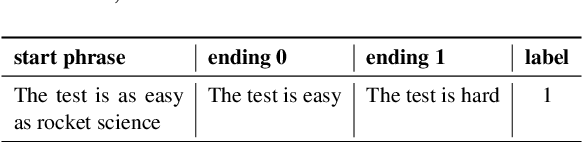
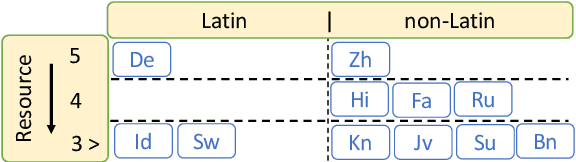
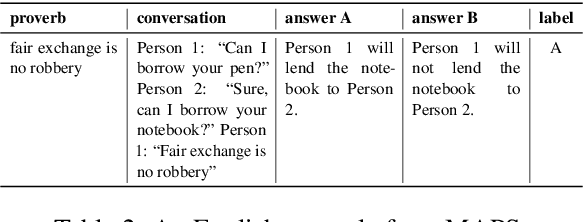
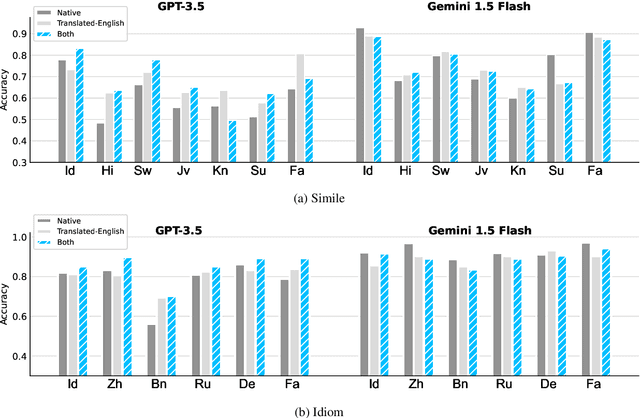
This study addresses the gap in the literature concerning the comparative performance of LLMs in interpreting different types of figurative language across multiple languages. By evaluating LLMs using two multilingual datasets on simile and idiom interpretation, we explore the effectiveness of various prompt engineering strategies, including chain-of-thought, few-shot, and English translation prompts. We extend the language of these datasets to Persian as well by building two new evaluation sets. Our comprehensive assessment involves both closed-source (GPT-3.5, GPT-4o mini, Gemini 1.5), and open-source models (Llama 3.1, Qwen2), highlighting significant differences in performance across languages and figurative types. Our findings reveal that while prompt engineering methods are generally effective, their success varies by figurative type, language, and model. We also observe that open-source models struggle particularly with low-resource languages in similes. Additionally, idiom interpretation is nearing saturation for many languages, necessitating more challenging evaluations.