 Add to Chrome
 Add to Firefox
 Add to Edge
EmeraldMind: A Knowledge Graph-Augmented Framework for Greenwashing Detection
Dec 15, 2025
As AI and web agents become pervasive in decision-making, it is critical to design intelligent systems that not only support sustainability efforts but also guard against misinformation. Greenwashing, i.e., misleading corporate sustainability claims, poses a major challenge to environmental progress. To address this challenge, we introduce EmeraldMind, a fact-centric framework integrating a domain-specific knowledge graph with retrieval-augmented generation to automate greenwashing detection. EmeraldMind builds the EmeraldGraph from diverse corporate ESG (environmental, social, and governance) reports, surfacing verifiable evidence, often missing in generic knowledge bases, and supporting large language models in claim assessment. The framework delivers justification-centric classifications, presenting transparent, evidence-backed verdicts and abstaining responsibly when claims cannot be verified. Experiments on a new greenwashing claims dataset demonstrate that EmeraldMind achieves competitive accuracy, greater coverage, and superior explanation quality compared to generic LLMs, without the need for fine-tuning or retraining.

Health Misinformation in Social Networks: A Survey of IT Approaches
Oct 24, 2024
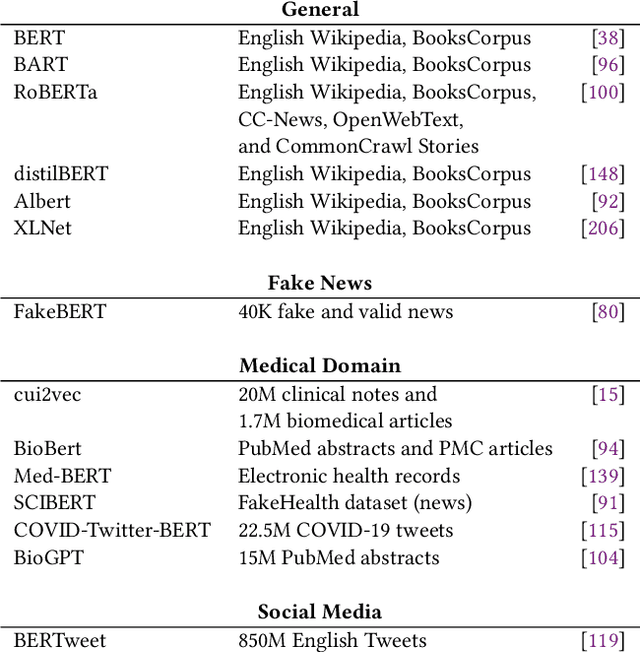
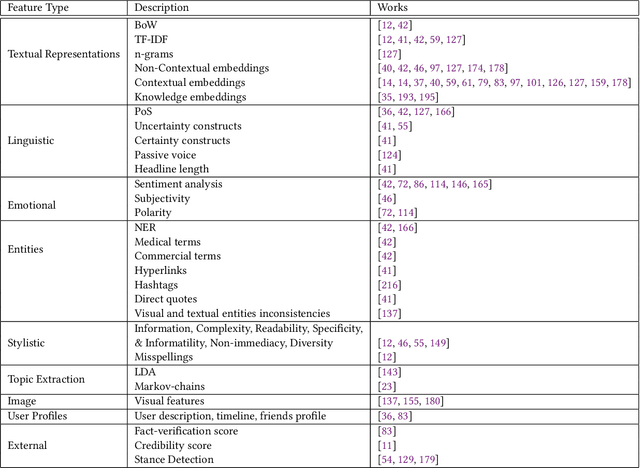
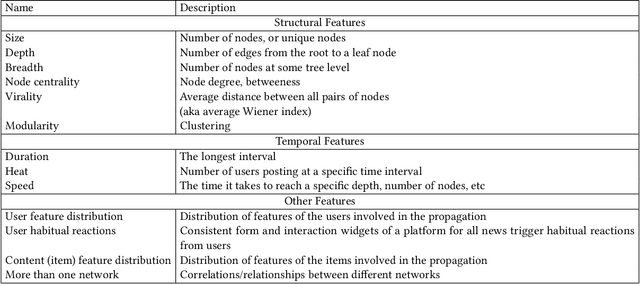
In this paper, we present a comprehensive survey on the pervasive issue of medical misinformation in social networks from the perspective of information technology. The survey aims at providing a systematic review of related research and helping researchers and practitioners navigate through this fast-changing field. Specifically, we first present manual and automatic approaches for fact-checking. We then explore fake news detection methods, using content, propagation features, or source features, as well as mitigation approaches for countering the spread of misinformation. We also provide a detailed list of several datasets on health misinformation and of publicly available tools. We conclude the survey with a discussion on the open challenges and future research directions in the battle against health misinformation.