 Add to Chrome
 Add to Firefox
 Add to Edge
MatrAIx: Simulating the World with 8.3 Billion Persona Agents
Aug 04, 2026
Human evaluation of AI systems and digital products is costly, slow, and difficult to scale. Offline evaluations are more scalable but often abstract away human diversity and interactive behavior. We therefore introduce MatrAIx, a population-scale simulated-user evaluation infrastructure for testing AI systems and digital products with heterogeneous users. MatrAIx has three core components: First, Persona 8B contains 8.3 billion persona records represented by 1,290 categorical dimensions. Records are either sampled from a dependency graph that preserves correlated attributes or derived from human-authored profiles. We release a quality-filtered coreset of approximately 1 million personas, comprising 599,847 human-grounded and 400,000 synthetic records. Second, the MatrAIx Playground provides four environments in which diverse users evaluate and interact with digital products: Survey, AI Chatbot, Web, and App. Third, MatrAIx provides 1,010 application tasks spanning more than 25 domains, including Commerce, Software, Finance, and Healthcare. We conducted 18,189 evaluation trials across eight representative tasks. Persona agents were powered by three LLMs: Claude Opus 4.8, GPT 5.5, and Claude Haiku 4.5. The resulting feedback captures how decisions and preferences vary across persona backgrounds, including hesitation after a price increase, willingness to continue after an AI assistant fails, and latency tolerance. We conducted two main validation studies: First, a 400-trial controlled study evaluated persona adherence across ten behavioral attributes and all four environments. The declared behavior was expressed or correctly suppressed in 366 trials (91.5%). Second, human and LLM judges evaluated the extraction quality of human-grounded personas. Overall, MatrAIx provides an end-to-end infrastructure for evaluating AI systems and digital products with diverse simulated human users.

A Tour of Visualization Techniques for Computer Vision Datasets
Apr 19, 2022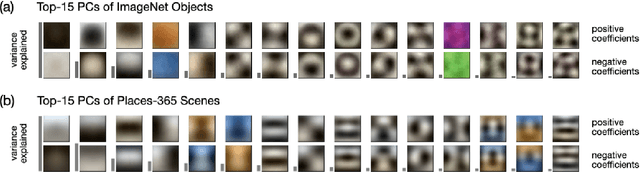
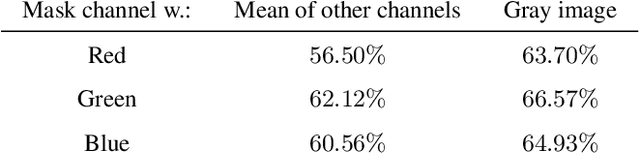
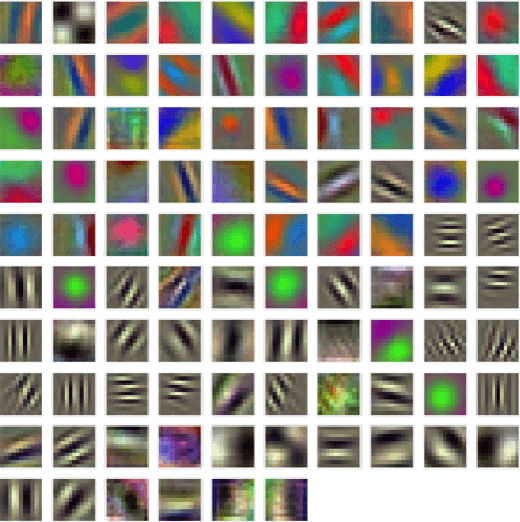
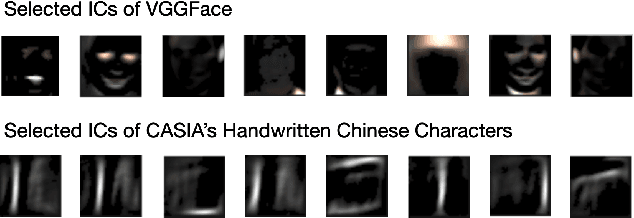
We survey a number of data visualization techniques for analyzing Computer Vision (CV) datasets. These techniques help us understand properties and latent patterns in such data, by applying dataset-level analysis. We present various examples of how such analysis helps predict the potential impact of the dataset properties on CV models and informs appropriate mitigation of their shortcomings. Finally, we explore avenues for further visualization techniques of different modalities of CV datasets as well as ones that are tailored to support specific CV tasks and analysis needs.
To Schedule or not to Schedule: Extracting Task Specific Temporal Entities and Associated Negation Constraints
Nov 15, 2020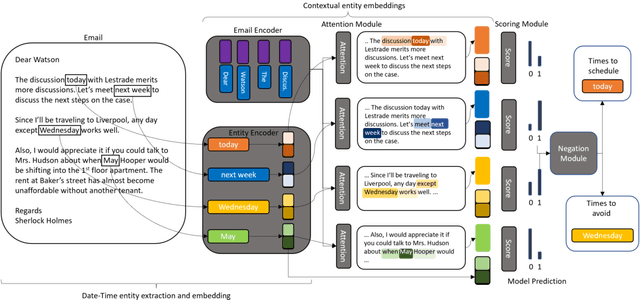
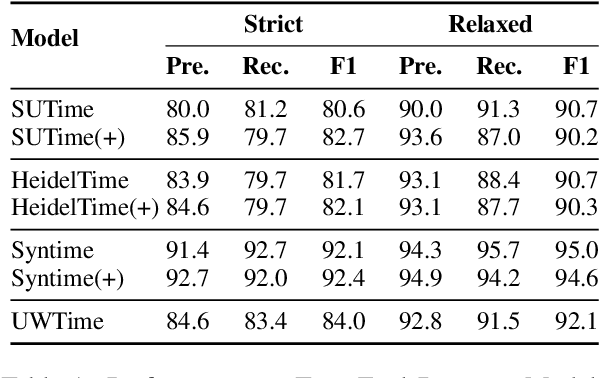
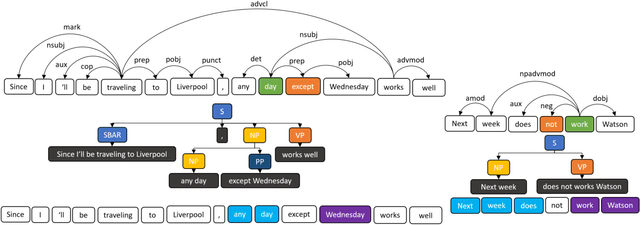
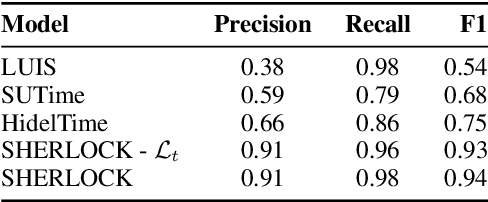
State of the art research for date-time entity extraction from text is task agnostic. Consequently, while the methods proposed in literature perform well for generic date-time extraction from texts, they don't fare as well on task specific date-time entity extraction where only a subset of the date-time entities present in the text are pertinent to solving the task. Furthermore, some tasks require identifying negation constraints associated with the date-time entities to correctly reason over time. We showcase a novel model for extracting task-specific date-time entities along with their negation constraints. We show the efficacy of our method on the task of date-time understanding in the context of scheduling meetings for an email-based digital AI scheduling assistant. Our method achieves an absolute gain of 19\% f-score points compared to baseline methods in detecting the date-time entities relevant to scheduling meetings and a 4\% improvement over baseline methods for detecting negation constraints over date-time entities.
ScopeIt: Scoping Task Relevant Sentences in Documents
Feb 23, 2020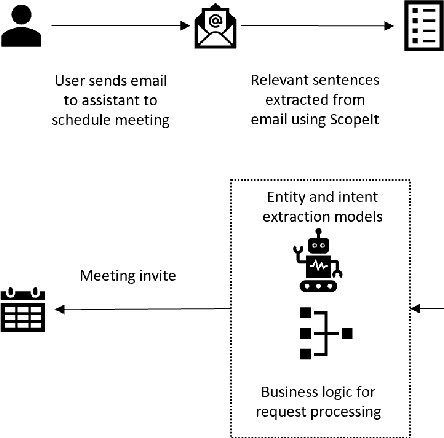
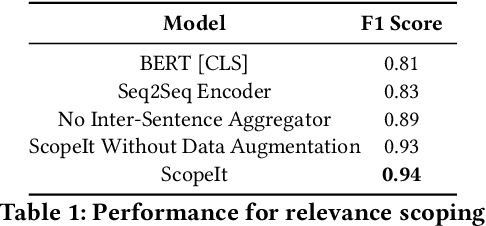
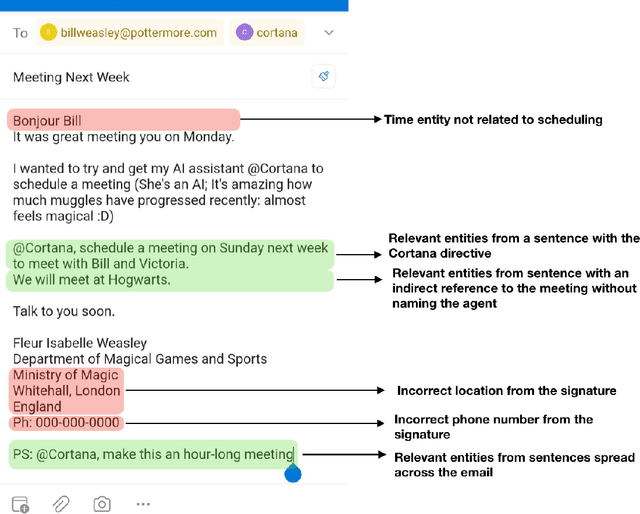
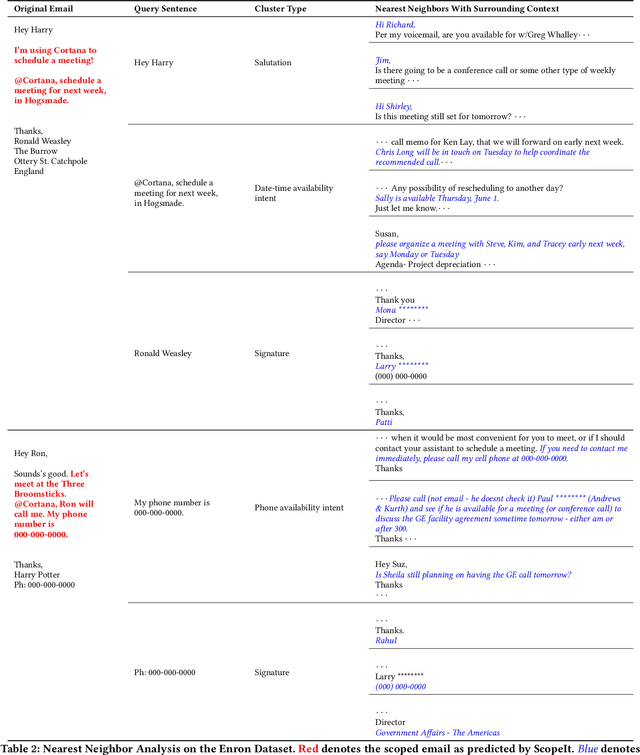
Intelligent assistants like Cortana, Siri, Alexa, and Google Assistant are trained to parse information when the conversation is synchronous and short; however, for email-based conversational agents, the communication is asynchronous, and often contains information irrelevant to the assistant. This makes it harder for the system to accurately detect intents, extract entities relevant to those intents and thereby perform the desired action. We present a neural model for scoping relevant information for the agent from a large query. We show that when used as a preprocessing step, the model improves performance of both intent detection and entity extraction tasks. We demonstrate the model's impact on Scheduler (Cortana is the persona of the agent, while Scheduler is the name of the service. We use them interchangeably in the context of this paper.) - a virtual conversational meeting scheduling assistant that interacts asynchronously with users through email. The model helps the entity extraction and intent detection tasks requisite by Scheduler achieve an average gain of 35% in precision without any drop in recall. Additionally, we demonstrate that the same approach can be used for component level analysis in large documents, such as signature block identification.