 Add to Chrome
 Add to Firefox
 Add to Edge
Uncertainty Quantification for Quantum Computing
Mar 26, 2026
This review is designed to introduce mathematicians and computational scientists to quantum computing (QC) through the lens of uncertainty quantification (UQ) by presenting a mathematically rigorous and accessible narrative for understanding how noise and intrinsic randomness shape quantum computational outcomes in the language of mathematics. By grounding quantum computation in statistical inference, we highlight how mathematical tools such as probabilistic modeling, stochastic analysis, Bayesian inference, and sensitivity analysis, can directly address error propagation and reliability challenges in today's quantum devices. We also connect these methods to key scientific priorities in the field, including scalable uncertainty-aware algorithms and characterization of correlated errors. The purpose is to narrow the conceptual divide between applied mathematics, scientific computing and quantum information sciences, demonstrating how mathematically rooted UQ methodologies can guide validation, error mitigation, and principled algorithm design for emerging quantum technologies, in order to address challenges and opportunities present in modern-day quantum high performance and fault-tolerant quantum computing paradigms.

An End-to-End Deep Learning Method for Solving Nonlocal Allen-Cahn and Cahn-Hilliard Phase-Field Models
Oct 11, 2024
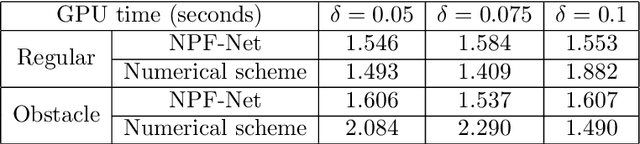
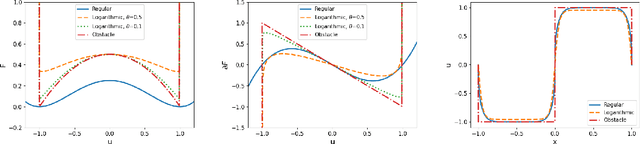
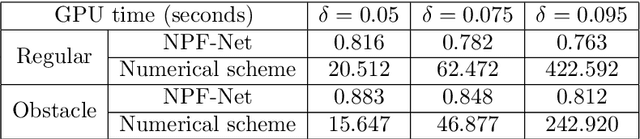
We propose an efficient end-to-end deep learning method for solving nonlocal Allen-Cahn (AC) and Cahn-Hilliard (CH) phase-field models. One motivation for this effort emanates from the fact that discretized partial differential equation-based AC or CH phase-field models result in diffuse interfaces between phases, with the only recourse for remediation is to severely refine the spatial grids in the vicinity of the true moving sharp interface whose width is determined by a grid-independent parameter that is substantially larger than the local grid size. In this work, we introduce non-mass conserving nonlocal AC or CH phase-field models with regular, logarithmic, or obstacle double-well potentials. Because of non-locality, some of these models feature totally sharp interfaces separating phases. The discretization of such models can lead to a transition between phases whose width is only a single grid cell wide. Another motivation is to use deep learning approaches to ameliorate the otherwise high cost of solving discretized nonlocal phase-field models. To this end, loss functions of the customized neural networks are defined using the residual of the fully discrete approximations of the AC or CH models, which results from applying a Fourier collocation method and a temporal semi-implicit approximation. To address the long-range interactions in the models, we tailor the architecture of the neural network by incorporating a nonlocal kernel as an input channel to the neural network model. We then provide the results of extensive computational experiments to illustrate the accuracy, structure-preserving properties, predictive capabilities, and cost reductions of the proposed method.