 Add to Chrome
 Add to Firefox
 Add to Edge
nD-RoPE: A Generalized RoPE for n-Dimensional Position Embedding
Jun 10, 2026
Rotary Position Embedding (RoPE) is widely adopted in Transformer models, yet its extension to high-dimensional domains lacks a unified theoretical formulation. Most existing approaches either apply rotations independently along each axis or empirically mix frequencies, which limits cross-dimensional interactions and yields direction-dependent representations. To address these limitations, we propose nD-RoPE, a decomposition-free generalization of RoPE to arbitrary dimensions. From a translation-invariant formulation in continuous Hilbert space, we derive a spectral condition for isotropy that requires treating positions and frequencies as coupled \(n\)-dimensional vectors. We instantiate this formulation with a multi-scale regular-simplex wave-vector design, which provides non-degenerate spatial coverage and a symmetric, directionally balanced second-order response. Experiments across images, videos, and point clouds demonstrate consistent performance gains and improved generalization in high-dimensional settings.

ST-ProC: A Graph-Prototypical Framework for Robust Semi-Supervised Travel Mode Identification
Nov 17, 2025Travel mode identification (TMI) from GPS trajectories is critical for urban intelligence, but is hampered by the high cost of annotation, leading to severe label scarcity. Prevailing semi-supervised learning (SSL) methods are ill-suited for this task, as they suffer from catastrophic confirmation bias and ignore the intrinsic data manifold. We propose ST-ProC, a novel graph-prototypical multi-objective SSL framework to address these limitations. Our framework synergizes a graph-prototypical core with foundational SSL Support. The core exploits the data manifold via graph regularization, prototypical anchoring, and a novel, margin-aware pseudo-labeling strategy to actively reject noise. This core is supported and stabilized by foundational contrastive and teacher-student consistency losses, ensuring high-quality representations and robust optimization. ST-ProC outperforms all baselines by a significant margin, demonstrating its efficacy in real-world sparse-label settings, with a performance boost of 21.5% over state-of-the-art methods like FixMatch.
GridPE: Unifying Positional Encoding in Transformers with a Grid Cell-Inspired Framework
Jun 11, 2024
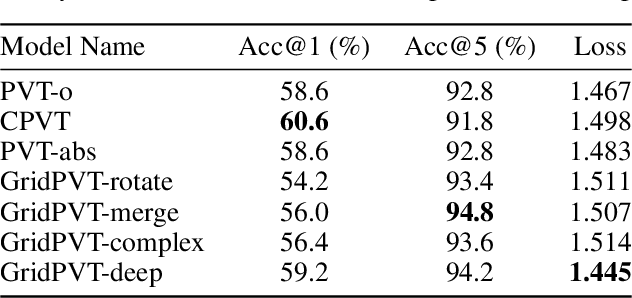


Understanding spatial location and relationships is a fundamental capability for modern artificial intelligence systems. Insights from human spatial cognition provide valuable guidance in this domain. Recent neuroscientific discoveries have highlighted the role of grid cells as a fundamental neural component for spatial representation, including distance computation, path integration, and scale discernment. In this paper, we introduce a novel positional encoding scheme inspired by Fourier analysis and the latest findings in computational neuroscience regarding grid cells. Assuming that grid cells encode spatial position through a summation of Fourier basis functions, we demonstrate the translational invariance of the grid representation during inner product calculations. Additionally, we derive an optimal grid scale ratio for multi-dimensional Euclidean spaces based on principles of biological efficiency. Utilizing these computational principles, we have developed a **Grid**-cell inspired **Positional Encoding** technique, termed **GridPE**, for encoding locations within high-dimensional spaces. We integrated GridPE into the Pyramid Vision Transformer architecture. Our theoretical analysis shows that GridPE provides a unifying framework for positional encoding in arbitrary high-dimensional spaces. Experimental results demonstrate that GridPE significantly enhances the performance of transformers, underscoring the importance of incorporating neuroscientific insights into the design of artificial intelligence systems.
PlanGPT: Enhancing Urban Planning with Tailored Language Model and Efficient Retrieval
Feb 29, 2024


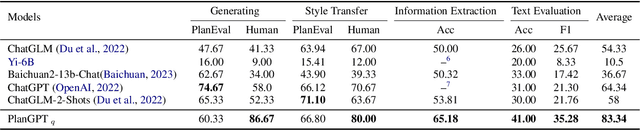
In the field of urban planning, general-purpose large language models often struggle to meet the specific needs of planners. Tasks like generating urban planning texts, retrieving related information, and evaluating planning documents pose unique challenges. To enhance the efficiency of urban professionals and overcome these obstacles, we introduce PlanGPT, the first specialized Large Language Model tailored for urban and spatial planning. Developed through collaborative efforts with institutions like the Chinese Academy of Urban Planning, PlanGPT leverages a customized local database retrieval framework, domain-specific fine-tuning of base models, and advanced tooling capabilities. Empirical tests demonstrate that PlanGPT has achieved advanced performance, delivering responses of superior quality precisely tailored to the intricacies of urban planning.