 Add to Chrome
 Add to Firefox
 Add to Edge
An Adapter-free Fine-tuning Approach for Tuning 3D Foundation Models
Mar 24, 2026
Point cloud foundation models demonstrate strong generalization, yet adapting them to downstream tasks remains challenging in low-data regimes. Full fine-tuning often leads to overfitting and significant drift from pre-trained representations, while existing parameter-efficient fine-tuning (PEFT) methods mitigate this issue by introducing additional trainable components at the cost of increased inference-time latency. We propose Momentum-Consistency Fine-Tuning (MCFT), an adapter-free approach that bridges the gap between full and parameter-efficient fine-tuning. MCFT selectively fine-tunes a portion of the pre-trained encoder while enforcing a momentum-based consistency constraint to preserve task-agnostic representations. Unlike PEFT methods, MCFT introduces no additional representation learning parameters beyond a standard task head, maintaining the original model's parameter count and inference efficiency. We further extend MCFT with two variants: a semi-supervised framework that leverages abundant unlabeled data to enhance few-shot performance, and a pruning-based variant that improves computational efficiency through structured layer removal. Extensive experiments on object recognition and part segmentation benchmarks demonstrate that MCFT consistently outperforms prior methods, achieving a 3.30% gain in 5-shot settings and up to a 6.13% improvement with semi-supervised learning, while remaining well-suited for resource-constrained deployment.

Point Cloud as a Foreign Language for Multi-modal Large Language Model
Mar 10, 2026Multi-modal large language models (MLLMs) have shown remarkable progress in integrating visual and linguistic understanding. Recent efforts have extended these capabilities to 3D understanding through encoder-based architectures that rely on pre-trained 3D encoders to extract geometric features. However, such approaches suffer from semantic misalignment between geometric and linguistic spaces, resolution sensitivity, and substantial computational overhead. In this work, we present SAGE, the first end-to-end 3D MLLM that directly processes raw point clouds without relying on a pre-trained 3D encoder. Our approach introduces a lightweight 3D tokenizer that combines geometric sampling and neighbourhood aggregation with vector quantization to convert point clouds into discrete tokens--treating 3D data as a foreign language that naturally extends the LLM's vocabulary. Furthermore, to enhance the model's reasoning capability on complex 3D tasks, we propose a preference optimization training strategy with a semantic alignment-based reward, specifically designed for open-ended 3D question answering where responses are descriptive. Extensive experiments across diverse 3D understanding benchmarks demonstrate that our end-to-end approach outperforms existing encoder-based methods while offering significant advantages in computational efficiency, generalization across LLM backbones, and robustness to input resolution variations. Code is available at: github.com/snehaputul/SAGE3D.
Time series forecasting with Hahn Kolmogorov-Arnold networks
Jan 25, 2026Recent Transformer- and MLP-based models have demonstrated strong performance in long-term time series forecasting, yet Transformers remain limited by their quadratic complexity and permutation-equivariant attention, while MLPs exhibit spectral bias. We propose HaKAN, a versatile model based on Kolmogorov-Arnold Networks (KANs), leveraging Hahn polynomial-based learnable activation functions and providing a lightweight and interpretable alternative for multivariate time series forecasting. Our model integrates channel independence, patching, a stack of Hahn-KAN blocks with residual connections, and a bottleneck structure comprised of two fully connected layers. The Hahn-KAN block consists of inter- and intra-patch KAN layers to effectively capture both global and local temporal patterns. Extensive experiments on various forecasting benchmarks demonstrate that our model consistently outperforms recent state-of-the-art methods, with ablation studies validating the effectiveness of its core components.
Enhancing Rotation-Invariant 3D Learning with Global Pose Awareness and Attention Mechanisms
Nov 11, 2025Recent advances in rotation-invariant (RI) learning for 3D point clouds typically replace raw coordinates with handcrafted RI features to ensure robustness under arbitrary rotations. However, these approaches often suffer from the loss of global pose information, making them incapable of distinguishing geometrically similar but spatially distinct structures. We identify that this limitation stems from the restricted receptive field in existing RI methods, leading to Wing-tip feature collapse, a failure to differentiate symmetric components (e.g., left and right airplane wings) due to indistinguishable local geometries. To overcome this challenge, we introduce the Shadow-informed Pose Feature (SiPF), which augments local RI descriptors with a globally consistent reference point (referred to as the 'shadow') derived from a learned shared rotation. This mechanism enables the model to preserve global pose awareness while maintaining rotation invariance. We further propose Rotation-invariant Attention Convolution (RIAttnConv), an attention-based operator that integrates SiPFs into the feature aggregation process, thereby enhancing the model's capacity to distinguish structurally similar components. Additionally, we design a task-adaptive shadow locating module based on the Bingham distribution over unit quaternions, which dynamically learns the optimal global rotation for constructing consistent shadows. Extensive experiments on 3D classification and part segmentation benchmarks demonstrate that our approach substantially outperforms existing RI methods, particularly in tasks requiring fine-grained spatial discrimination under arbitrary rotations.
LuKAN: A Kolmogorov-Arnold Network Framework for 3D Human Motion Prediction
Aug 06, 2025
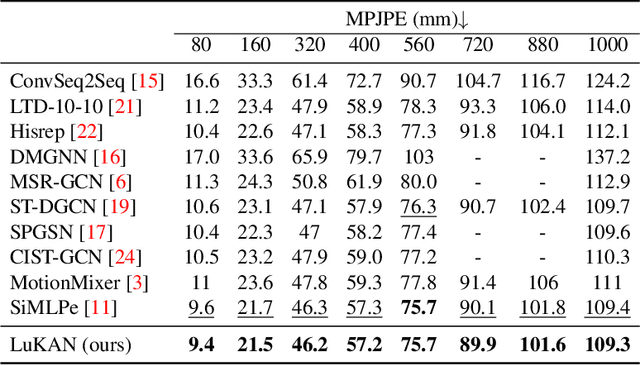
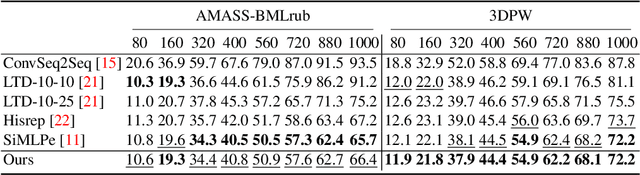
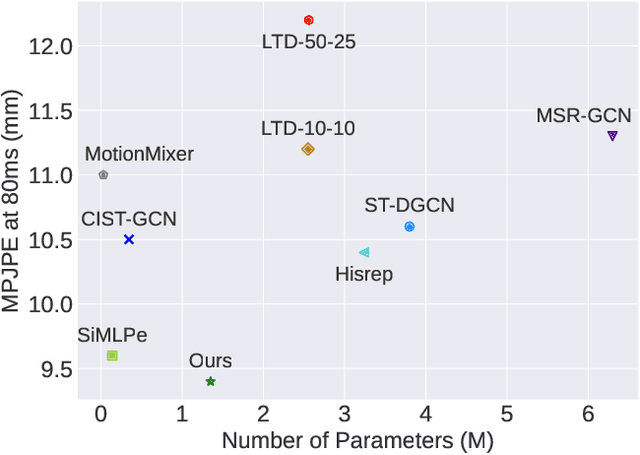
The goal of 3D human motion prediction is to forecast future 3D poses of the human body based on historical motion data. Existing methods often face limitations in achieving a balance between prediction accuracy and computational efficiency. In this paper, we present LuKAN, an effective model based on Kolmogorov-Arnold Networks (KANs) with Lucas polynomial activations. Our model first applies the discrete wavelet transform to encode temporal information in the input motion sequence. Then, a spatial projection layer is used to capture inter-joint dependencies, ensuring structural consistency of the human body. At the core of LuKAN is the Temporal Dependency Learner, which employs a KAN layer parameterized by Lucas polynomials for efficient function approximation. These polynomials provide computational efficiency and an enhanced capability to handle oscillatory behaviors. Finally, the inverse discrete wavelet transform reconstructs motion sequences in the time domain, generating temporally coherent predictions. Extensive experiments on three benchmark datasets demonstrate the competitive performance of our model compared to strong baselines, as evidenced by both quantitative and qualitative evaluations. Moreover, its compact architecture coupled with the linear recurrence of Lucas polynomials, ensures computational efficiency.
Improving 3D Semi-supervised Learning by Effectively Utilizing All Unlabelled Data
Sep 21, 2024Semi-supervised learning (SSL) has shown its effectiveness in learning effective 3D representation from a small amount of labelled data while utilizing large unlabelled data. Traditional semi-supervised approaches rely on the fundamental concept of predicting pseudo-labels for unlabelled data and incorporating them into the learning process. However, we identify that the existing methods do not fully utilize all the unlabelled samples and consequently limit their potential performance. To address this issue, we propose AllMatch, a novel SSL-based 3D classification framework that effectively utilizes all the unlabelled samples. AllMatch comprises three modules: (1) an adaptive hard augmentation module that applies relatively hard augmentations to the high-confident unlabelled samples with lower loss values, thereby enhancing the contribution of such samples, (2) an inverse learning module that further improves the utilization of unlabelled data by learning what not to learn, and (3) a contrastive learning module that ensures learning from all the samples in both supervised and unsupervised settings. Comprehensive experiments on two popular 3D datasets demonstrate a performance improvement of up to 11.2% with 1% labelled data, surpassing the SOTA by a significant margin. Furthermore, AllMatch exhibits its efficiency in effectively leveraging all the unlabelled data, demonstrated by the fact that only 10% of labelled data reaches nearly the same performance as fully-supervised learning with all labelled data. The code of our work is available at: https://github.com/snehaputul/AllMatch.
Clarifying Myths About the Relationship Between Shape Bias, Accuracy, and Robustness
Jun 07, 2024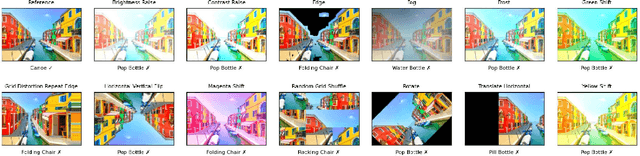
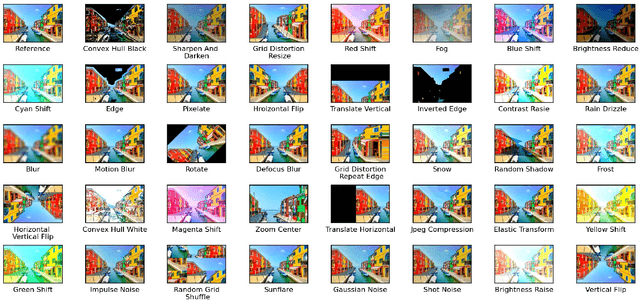
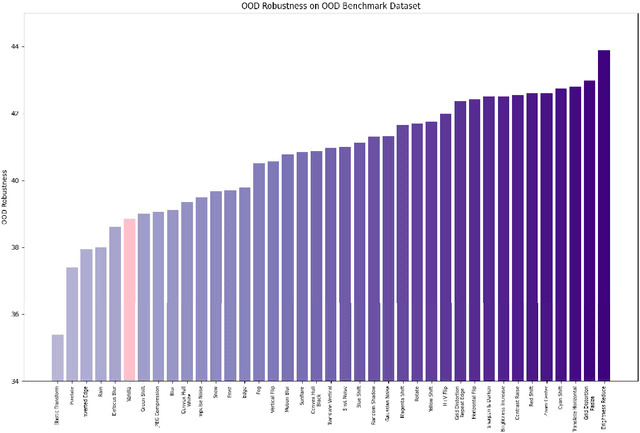
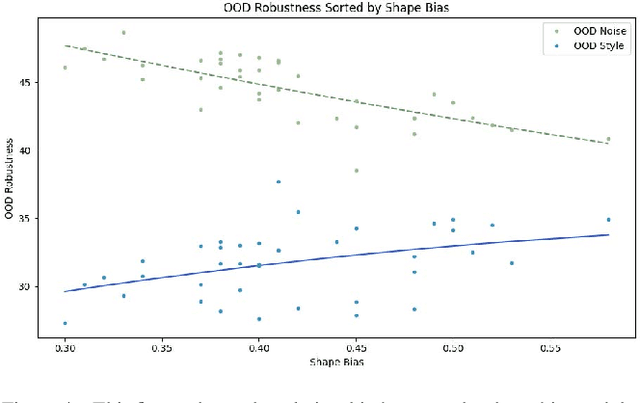
Deep learning models can perform well when evaluated on images from the same distribution as the training set. However, applying small perturbations in the forms of noise, artifacts, occlusions, blurring, etc. to a model's input image and feeding the model with out-of-distribution (OOD) data can significantly drop the model's accuracy, making it not applicable to real-world scenarios. Data augmentation is one of the well-practiced methods to improve model robustness against OOD data; however, examining which augmentation type to choose and how it affects the OOD robustness remains understudied. There is a growing belief that augmenting datasets using data augmentations that improve a model's bias to shape-based features rather than texture-based features results in increased OOD robustness for Convolutional Neural Networks trained on the ImageNet-1K dataset. This is usually stated as ``an increase in the model's shape bias results in an increase in its OOD robustness". Based on this hypothesis, some works in the literature aim to find augmentations with higher effects on model shape bias and use those for data augmentation. By evaluating 39 types of data augmentations on a widely used OOD dataset, we demonstrate the impact of each data augmentation on the model's robustness to OOD data and further show that the mentioned hypothesis is not true; an increase in shape bias does not necessarily result in higher OOD robustness. By analyzing the results, we also find some biases in the ImageNet-1K dataset that can easily be reduced using proper data augmentation. Our evaluation results further show that there is not necessarily a trade-off between in-domain accuracy and OOD robustness, and choosing the proper augmentations can help increase both in-domain accuracy and OOD robustness simultaneously.
* 7 pages, 4 figures
PatchSVD: A Non-uniform SVD-based Image Compression Algorithm
Jun 07, 2024Storing data is particularly a challenge when dealing with image data which often involves large file sizes due to the high resolution and complexity of images. Efficient image compression algorithms are crucial to better manage data storage costs. In this paper, we propose a novel region-based lossy image compression technique, called PatchSVD, based on the Singular Value Decomposition (SVD) algorithm. We show through experiments that PatchSVD outperforms SVD-based image compression with respect to three popular image compression metrics. Moreover, we compare PatchSVD compression artifacts with those of Joint Photographic Experts Group (JPEG) and SVD-based image compression and illustrate some cases where PatchSVD compression artifacts are preferable compared to JPEG and SVD artifacts.
* 8 pages, 6 figures
Unveiling Hidden Factors: Explainable AI for Feature Boosting in Speech Emotion Recognition
Jun 01, 2024Speech emotion recognition (SER) has gained significant attention due to its several application fields, such as mental health, education, and human-computer interaction. However, the accuracy of SER systems is hindered by high-dimensional feature sets that may contain irrelevant and redundant information. To overcome this challenge, this study proposes an iterative feature boosting approach for SER that emphasizes feature relevance and explainability to enhance machine learning model performance. Our approach involves meticulous feature selection and analysis to build efficient SER systems. In addressing our main problem through model explainability, we employ a feature evaluation loop with Shapley values to iteratively refine feature sets. This process strikes a balance between model performance and transparency, which enables a comprehensive understanding of the model's predictions. The proposed approach offers several advantages, including the identification and removal of irrelevant and redundant features, leading to a more effective model. Additionally, it promotes explainability, facilitating comprehension of the model's predictions and the identification of crucial features for emotion determination. The effectiveness of the proposed method is validated on the SER benchmarks of the Toronto emotional speech set (TESS), Berlin Database of Emotional Speech (EMO-DB), Ryerson Audio-Visual Database of Emotional Speech and Song (RAVDESS), and Surrey Audio-Visual Expressed Emotion (SAVEE) datasets, outperforming state-of-the-art methods. These results highlight the potential of the proposed technique in developing accurate and explainable SER systems. To the best of our knowledge, this is the first work to incorporate model explainability into an SER framework.
* Published in: Springer Nature International Journal of Applied Intelligence (2024)
Iterative Feature Boosting for Explainable Speech Emotion Recognition
May 31, 2024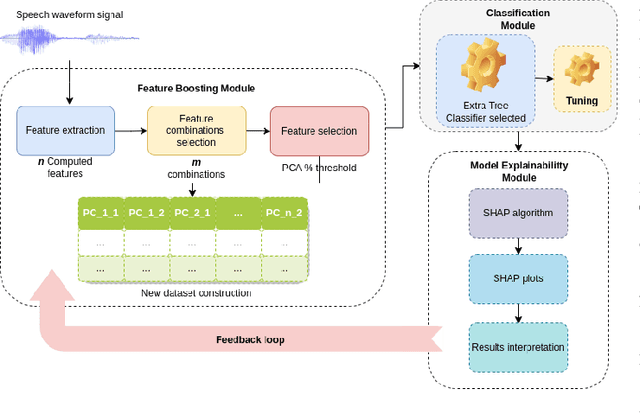
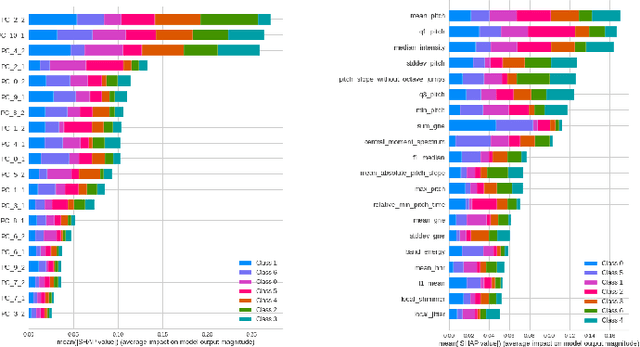
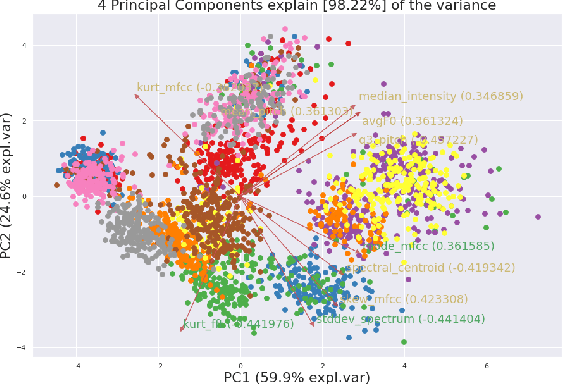
In speech emotion recognition (SER), using predefined features without considering their practical importance may lead to high dimensional datasets, including redundant and irrelevant information. Consequently, high-dimensional learning often results in decreasing model accuracy while increasing computational complexity. Our work underlines the importance of carefully considering and analyzing features in order to build efficient SER systems. We present a new supervised SER method based on an efficient feature engineering approach. We pay particular attention to the explainability of results to evaluate feature relevance and refine feature sets. This is performed iteratively through feature evaluation loop, using Shapley values to boost feature selection and improve overall framework performance. Our approach allows thus to balance the benefits between model performance and transparency. The proposed method outperforms human-level performance (HLP) and state-of-the-art machine learning methods in emotion recognition on the TESS dataset.
* Published in: 2023 International Conference on Machine Learning and Applications (ICMLA)