 Add to Chrome
 Add to Firefox
 Add to Edge
Suicide Risk Assessment from AI-powered Video Surveillance: An Interpretable Framework for Prevention in Metro Stations
May 25, 2026
Understanding and monitoring human behavior in metro stations play an important role in supporting suicide prevention efforts, where early identification of high-risk situations can enable timely intervention. This requires assessing suicide risk from a surveillance video by jointly reasoning about the behavior of each passenger, his/her spatial context, and temporal dynamics. However, this assessment using videos captured by surveillance cameras is challenging, as it demands accurate perception of human motion, understanding of platform geometry, and aggregation of heterogeneous behavioral cues over time. In this work, we formalize the task of Suicide Risk Assessment (SRA) in metro stations and introduce the first interpretable framework that addresses this challenge. Unlike approaches that focus on isolated subtasks or attempt to infer intent directly, our formulation assesses suicide risk from accumulated evidence by incorporating person tracking, activity recognition, semantic segmentation of the platform, and trajectory-driven risk heatmap modeling. By formalizing SRA as a distinct task and benchmarking a complete operational pipeline achieving 83.2% ROC-AUC on real surveillance data, this work highlights the complexity of suicide risk assessment and opens new directions for research on interpretable AI systems for social good.

Unveiling Hidden Factors: Explainable AI for Feature Boosting in Speech Emotion Recognition
Jun 01, 2024Speech emotion recognition (SER) has gained significant attention due to its several application fields, such as mental health, education, and human-computer interaction. However, the accuracy of SER systems is hindered by high-dimensional feature sets that may contain irrelevant and redundant information. To overcome this challenge, this study proposes an iterative feature boosting approach for SER that emphasizes feature relevance and explainability to enhance machine learning model performance. Our approach involves meticulous feature selection and analysis to build efficient SER systems. In addressing our main problem through model explainability, we employ a feature evaluation loop with Shapley values to iteratively refine feature sets. This process strikes a balance between model performance and transparency, which enables a comprehensive understanding of the model's predictions. The proposed approach offers several advantages, including the identification and removal of irrelevant and redundant features, leading to a more effective model. Additionally, it promotes explainability, facilitating comprehension of the model's predictions and the identification of crucial features for emotion determination. The effectiveness of the proposed method is validated on the SER benchmarks of the Toronto emotional speech set (TESS), Berlin Database of Emotional Speech (EMO-DB), Ryerson Audio-Visual Database of Emotional Speech and Song (RAVDESS), and Surrey Audio-Visual Expressed Emotion (SAVEE) datasets, outperforming state-of-the-art methods. These results highlight the potential of the proposed technique in developing accurate and explainable SER systems. To the best of our knowledge, this is the first work to incorporate model explainability into an SER framework.
* Published in: Springer Nature International Journal of Applied Intelligence (2024)
Iterative Feature Boosting for Explainable Speech Emotion Recognition
May 31, 2024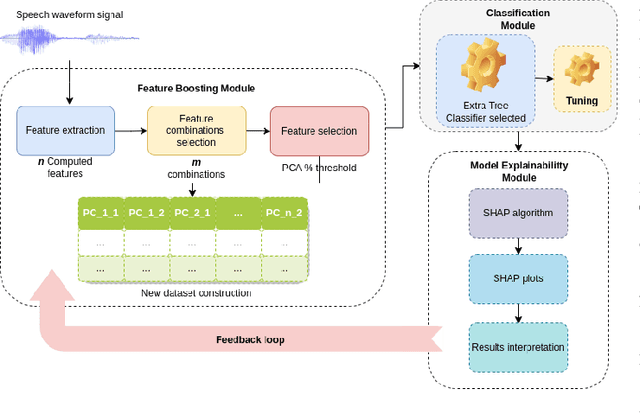
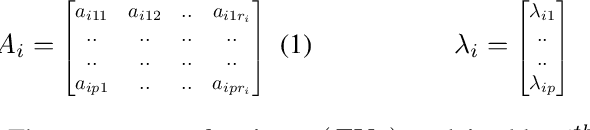
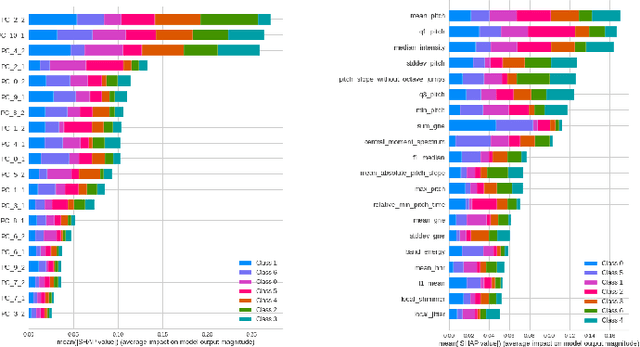
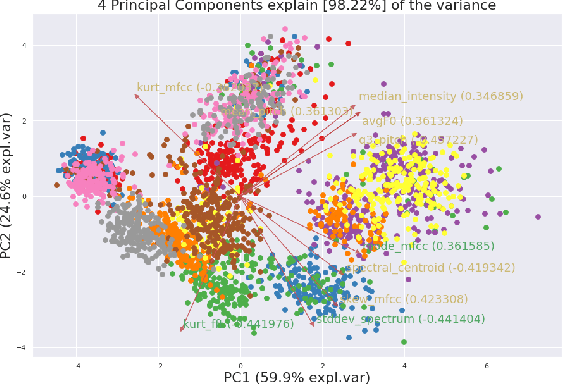
In speech emotion recognition (SER), using predefined features without considering their practical importance may lead to high dimensional datasets, including redundant and irrelevant information. Consequently, high-dimensional learning often results in decreasing model accuracy while increasing computational complexity. Our work underlines the importance of carefully considering and analyzing features in order to build efficient SER systems. We present a new supervised SER method based on an efficient feature engineering approach. We pay particular attention to the explainability of results to evaluate feature relevance and refine feature sets. This is performed iteratively through feature evaluation loop, using Shapley values to boost feature selection and improve overall framework performance. Our approach allows thus to balance the benefits between model performance and transparency. The proposed method outperforms human-level performance (HLP) and state-of-the-art machine learning methods in emotion recognition on the TESS dataset.
* Published in: 2023 International Conference on Machine Learning and Applications (ICMLA)