 Add to Chrome
 Add to Firefox
 Add to Edge
A VAE-Driven Multi-Task Satellite-Aided Semantic Communication Framework for 6G-Enabled Connected Autonomous Vehicles
Jul 15, 2026
The development of smart transportation systems and the introduction of 6G wireless communication technologies have significantly changed vehicle network topologies. Future connected autonomous vehicle (CAV) networks require bandwidth-efficient, reliable, and low-latency communication for safety-critical applications such as traffic sign recognition and decision-making. Conventional communication systems transmit raw data regardless of task relevance, which is inefficient in resource-constrained satellite channels where uplink bandwidth is scarce and propagation losses are large. Semantic communication addresses this limitation by transmitting task-relevant information instead of full signal representations. It extracts and conveys essential semantic features and leverages deep learning to optimize task performance at the receiver. Therefore, we present a Variational Autoencoder (VAE)-based multi-task semantic communication framework for satellite-assisted autonomous driving. Unlike deterministic autoencoder-based methods, the proposed model uses probabilistic latent representations for more robust and efficient encoding. The learned features are transmitted over noisy wireless channels to perform traffic sign reconstruction and classification. The framework is trained end-to-end to jointly optimize both tasks. Results show that the proposed approach achieves significant bandwidth reduction of up to 87.23\% to 98.17\% while maintaining stable performance across varying signal-to-noise ratio conditions.

Domain-Aware Hybrid Quantum Learning via Correlation-Guided Circuit Design for Crime Pattern Analytics
Apr 11, 2026Crime pattern analysis is critical for law enforcement and predictive policing, yet the surge in criminal activities from rapid urbanization creates high-dimensional, imbalanced datasets that challenge traditional classification methods. This study presents a quantum-classical comparison framework for crime analytics, evaluating four computational paradigms: quantum models, classical baseline machine learning models, and two hybrid quantum-classical architectures. Using 16-year crime statistics, we systematically assess classification performance and computational efficiency under rigorous cross-validation methods. Experimental results show that quantum-inspired approaches, particularly QAOA, achieve up to 84.6% accuracy, while requiring fewer trainable parameters than classical baselines, suggesting practical advantages for memory-constrained edge deployment. The proposed correlation-aware circuit design demonstrates the potential of incorporating domain-specific feature relationships into quantum models. Furthermore, hybrid approaches exhibit competitive training efficiency, making them suitable candidates for resource-constrained environments. The framework's low computational overhead and compact parameter footprint suggest potential advantages for wireless sensor network deployments in smart city surveillance systems, where distributed nodes perform localized crime analytics with minimal communication costs. Our findings provide a preliminary empirical assessment of quantum-enhanced machine learning for structured crime data and motivate further investigation with larger datasets and realistic quantum hardware considerations.
A Novel Edge-Assisted Quantum-Classical Hybrid Framework for Crime Pattern Learning and Classification
Apr 08, 2026Crime pattern analysis is critical for law enforcement and predictive policing, yet the surge in criminal activities from rapid urbanization creates high-dimensional, imbalanced datasets that challenge traditional classification methods. This study presents a quantum-classical comparison framework for crime analytics, evaluating four computational paradigms: quantum models, classical baseline machine learning models, and two hybrid quantum-classical architectures. Using 16-year Bangladesh crime statistics, we systematically assess classification performance and computational efficiency under rigorous cross-validation methods. Experimental results show that quantum-inspired approaches, particularly QAOA, achieve up to 84.6% accuracy, while requiring fewer trainable parameters than classical baselines, suggesting practical advantages for memory-constrained edge deployment. The proposed correlation-aware circuit design demonstrates the potential of incorporating domain-specific feature relationships into quantum models. Furthermore, hybrid approaches exhibit competitive training efficiency, making them suitable candidates for resource-constrained environments. The framework's low computational overhead and compact parameter footprint suggest potential advantages for wireless sensor network deployments in smart city surveillance systems, where distributed nodes perform localized crime analytics with minimal communication costs. Our findings provide a preliminary empirical assessment of quantum-enhanced machine learning for structured crime data and motivate further investigation with larger datasets and realistic quantum hardware considerations.
PSO-XAI: A PSO-Enhanced Explainable AI Framework for Reliable Breast Cancer Detection
Oct 23, 2025Breast cancer is considered the most critical and frequently diagnosed cancer in women worldwide, leading to an increase in cancer-related mortality. Early and accurate detection is crucial as it can help mitigate possible threats while improving survival rates. In terms of prediction, conventional diagnostic methods are often limited by variability, cost, and, most importantly, risk of misdiagnosis. To address these challenges, machine learning (ML) has emerged as a powerful tool for computer-aided diagnosis, with feature selection playing a vital role in improving model performance and interpretability. This research study proposes an integrated framework that incorporates customized Particle Swarm Optimization (PSO) for feature selection. This framework has been evaluated on a comprehensive set of 29 different models, spanning classical classifiers, ensemble techniques, neural networks, probabilistic algorithms, and instance-based algorithms. To ensure interpretability and clinical relevance, the study uses cross-validation in conjunction with explainable AI methods. Experimental evaluation showed that the proposed approach achieved a superior score of 99.1\% across all performance metrics, including accuracy and precision, while effectively reducing dimensionality and providing transparent, model-agnostic explanations. The results highlight the potential of combining swarm intelligence with explainable ML for robust, trustworthy, and clinically meaningful breast cancer diagnosis.
A Data-Driven Odyssey in Solar Vehicles
Oct 23, 2024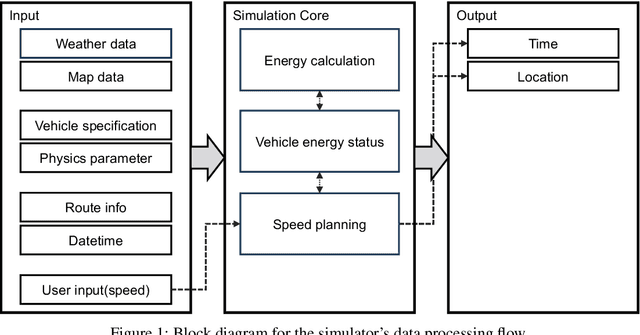
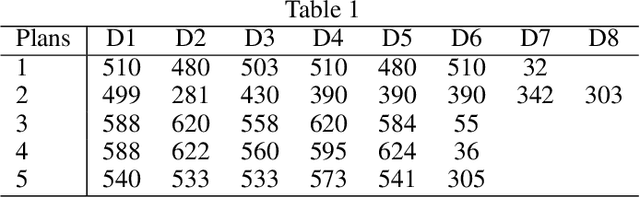
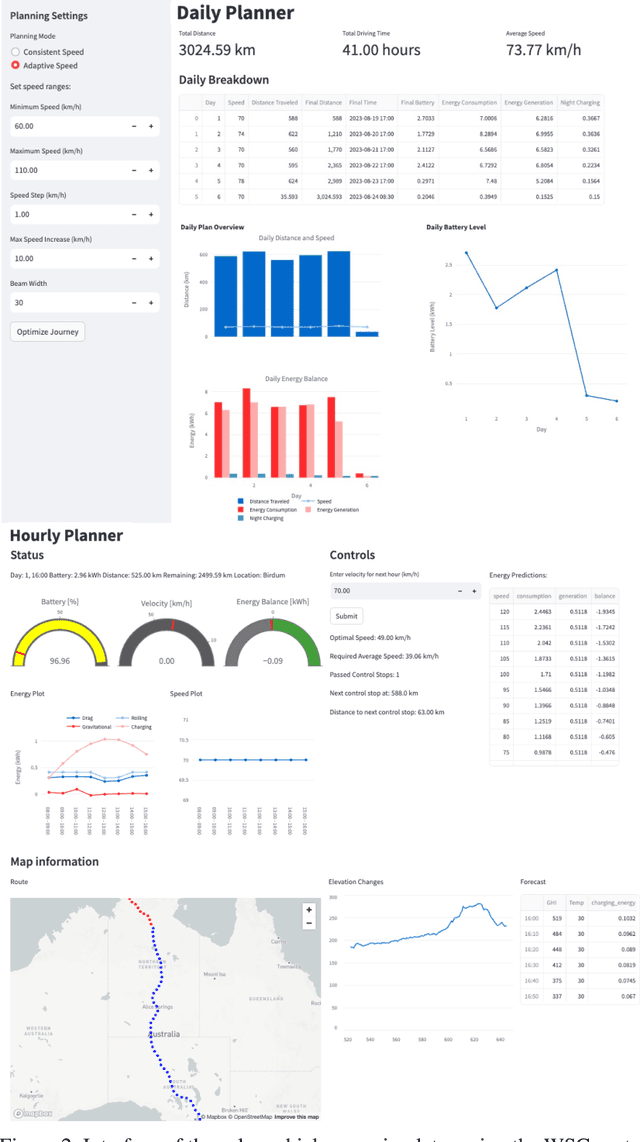
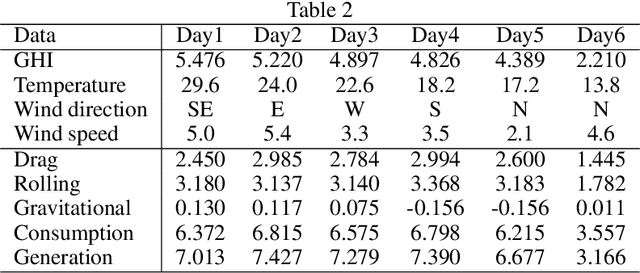
Solar vehicles, which simultaneously produce and consume energy, require meticulous energy management. However, potential users often feel uncertain about their operation compared to conventional vehicles. This study presents a simulator designed to help users understand long-distance travel in solar vehicles and recognize the importance of proper energy management. By utilizing Google Maps data and weather information, the simulator replicates real-world driving conditions and provides a dashboard displaying vehicle status, updated hourly based on user-inputted speed. Users can explore various speed policy scenarios and receive recommendations for optimal driving strategies. The simulator's effectiveness was validated using the route of the World Solar Challenge (WSC). This research enables users to monitor energy dynamics before a journey, enhancing their understanding of energy management and informing appropriate speed decisions.