 Add to Chrome
 Add to Firefox
 Add to Edge
Efficient Online LLM Watermark Detection via Rao-Blackwellized E-Processes
Jul 24, 2026
As large language models (LLMs) are increasingly deployed, reliable and efficient mechanisms for distinguishing AI-generated text from human-written content have become essential. Statistical watermarking has emerged as a promising solution, yet most existing methods are typically fixed-horizon procedures, precluding valid early stopping in streaming generation. In this paper, we develop an efficient online watermark detection framework with anytime-valid inference based on Rao-Blackwellized e-processes, enabling recursive token-level evidence updates without storing the full history. In particular, we instantiate the framework for the Gumbel-max watermark and reduce the original token-level dependence testing problem to a pivot-induced sequential testing problem with an explicit null distribution. Theoretically, we prove anytime-valid Type I error control under arbitrary optional stopping and establish positive asymptotic log-growth under watermarking, implying consistency of the proposed stopping rules. Simulations and experiments on real LLM-generated text demonstrate efficient online detection with rigorous anytime-valid guarantees.

GAttNHP: Group Attention Neural Hawkes Process for Extrapolation Reasoning in Temporal Knowledge Graphs
Jul 16, 2026Temporal Knowledge Graphs (TKGs) record how facts evolve over time, but forecasting future events on a TKG remains difficult for three reasons: (i) long-range temporal dependencies are hard to encode; (ii) events on different chains mutually excite or inhibit one another in ways that snapshot-level models cannot express; and (iii) inter-arrival times are heavy-tailed and statistically sparse, so deterministic time predictors are unreliable. We address these three issues with a single framework, the \textbf{Group Attention Neural Hawkes Process (GAttNHP)}, built around three matched components. First, a self-attention encoder casts each subject--relation chain as a continuous-time point process and captures the lingering excitation of distant history. Second, a semantic soft-grouping module turns globally learnable Hawkes priors into an analytical cross-attention mask, so chains share excitation patterns through their latent group memberships rather than through exhaustive pairwise computation. Third, a Non-Crossing Quantile (NCQ) regression head replaces mean-based time prediction, providing calibrated, monotonically ordered quantile estimates that remain stable under heavy-tailed inter-arrival distributions. On six benchmark TKG datasets, GAttNHP improves over state-of-the-art baselines on both entity prediction and time prediction, and ablations confirm that its largest gains arise on the long-tail event chains where existing models fail most severely.
Robust Sequential Experimental Design for A/B Testing
May 13, 2026Experimental design has emerged as a powerful approach for improving the sample efficiency of A/B testing, yet existing designs rely critically on correctly specified models. We study robust sequential experimental design under model misspecification and develop a unified framework that covers both contextual bandit and dynamic settings. Theoretically, we prove that our design bounds the worst-case mean squared error of the estimated treatment effect. Empirically, we demonstrate the effectiveness of the proposed approach using synthetic and real-world datasets from a leading technology company.
Beyond Passive Aggregation: Active Auditing and Topology-Aware Defense in Decentralized Federated Learning
Mar 19, 2026Decentralized Federated Learning (DFL) remains highly vulnerable to adaptive backdoor attacks designed to bypass traditional passive defense metrics. To address this limitation, we shift the defensive paradigm toward a novel active, interventional auditing framework. First, we establish a dynamical model to characterize the spatiotemporal diffusion of adversarial updates across complex graph topologies. Second, we introduce a suite of proactive auditing metrics, stochastic entropy anomaly, randomized smoothing Kullback-Leibler divergence, and activation kurtosis. These metrics utilize private probes to stress-test local models, effectively exposing latent backdoors that remain invisible to conventional static detection. Furthermore, we implement a topology-aware defense placement strategy to maximize global aggregation resilience. We provide theoretical property for the system's convergence under co-evolving attack and defense dynamics. Numeric empirical evaluations across diverse architectures demonstrate that our active framework is highly competitive with state-of-the-art defenses in mitigating stealthy, adaptive backdoors while preserving primary task utility.
An Analysis of Switchback Designs in Reinforcement Learning
Mar 26, 2024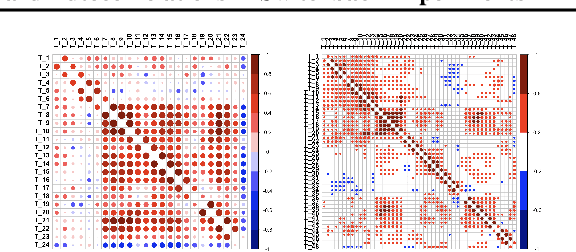
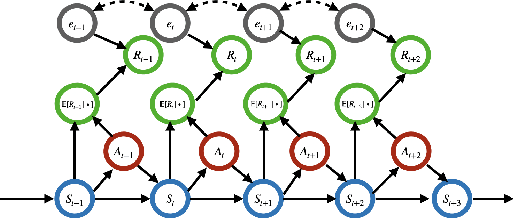

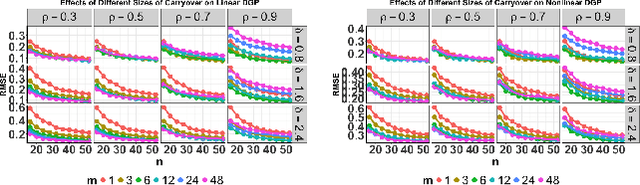
This paper offers a detailed investigation of switchback designs in A/B testing, which alternate between baseline and new policies over time. Our aim is to thoroughly evaluate the effects of these designs on the accuracy of their resulting average treatment effect (ATE) estimators. We propose a novel "weak signal analysis" framework, which substantially simplifies the calculations of the mean squared errors (MSEs) of these ATEs in Markov decision process environments. Our findings suggest that (i) when the majority of reward errors are positively correlated, the switchback design is more efficient than the alternating-day design which switches policies in a daily basis. Additionally, increasing the frequency of policy switches tends to reduce the MSE of the ATE estimator. (ii) When the errors are uncorrelated, however, all these designs become asymptotically equivalent. (iii) In cases where the majority of errors are negative correlated, the alternating-day design becomes the optimal choice. These insights are crucial, offering guidelines for practitioners on designing experiments in A/B testing. Our analysis accommodates a variety of policy value estimators, including model-based estimators, least squares temporal difference learning estimators, and double reinforcement learning estimators, thereby offering a comprehensive understanding of optimal design strategies for policy evaluation in reinforcement learning.