 Add to Chrome
 Add to Firefox
 Add to Edge
Vision-Language Semantic Grounding for Multi-Domain Crop-Weed Segmentation
Feb 27, 2026
Fine-grained crop-weed segmentation is essential for enabling targeted herbicide application in precision agriculture. However, existing deep learning models struggle to generalize across heterogeneous agricultural environments due to reliance on dataset-specific visual features. We propose Vision-Language Weed Segmentation (VL-WS), a novel framework that addresses this limitation by grounding pixel-level segmentation in semantically aligned, domain-invariant representations. Our architecture employs a dual-encoder design, where frozen Contrastive Language-Image Pretraining (CLIP) embeddings and task-specific spatial features are fused and modulated via Feature-wise Linear Modulation (FiLM) layers conditioned on natural language captions. This design enables image level textual descriptions to guide channel-wise feature refinement while preserving fine-grained spatial localization. Unlike prior works restricted to training and evaluation on single-source datasets, VL-WS is trained on a unified corpus that includes close-range ground imagery (robotic platforms) and high-altitude UAV imagery, covering diverse crop types, weed species, growth stages, and sensing conditions. Experimental results across four benchmark datasets demonstrate the effectiveness of our framework, with VL-WS achieving a mean Dice score of 91.64% and outperforming the CNN baseline by 4.98%. The largest gains occur on the most challenging weed class, where VL-WS attains 80.45% Dice score compared to 65.03% for the best baseline, representing a 15.42% improvement. VL-WS further maintains stable weed segmentation performance under limited target-domain supervision, indicating improved generalization and data efficiency. These findings highlight the potential of vision-language alignment to enable scalable, label-efficient segmentation models deployable across diverse real-world agricultural domains.

destroR: Attacking Transfer Models with Obfuscous Examples to Discard Perplexity
Nov 13, 2025

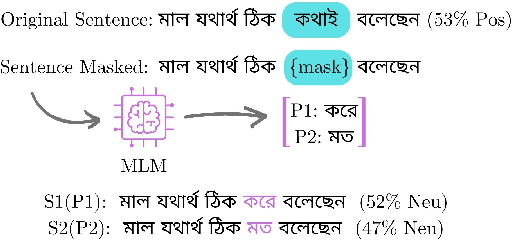
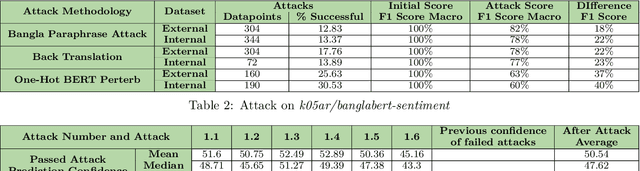
Advancements in Machine Learning & Neural Networks in recent years have led to widespread implementations of Natural Language Processing across a variety of fields with remarkable success, solving a wide range of complicated problems. However, recent research has shown that machine learning models may be vulnerable in a number of ways, putting both the models and the systems theyre used in at risk. In this paper, we intend to analyze and experiment with the best of existing adversarial attack recipes and create new ones. We concentrated on developing a novel adversarial attack strategy on current state-of-the-art machine learning models by producing ambiguous inputs for the models to confound them and then constructing the path to the future development of the robustness of the models. We will develop adversarial instances with maximum perplexity, utilizing machine learning and deep learning approaches in order to trick the models. In our attack recipe, we will analyze several datasets and focus on creating obfuscous adversary examples to put the models in a state of perplexity, and by including the Bangla Language in the field of adversarial attacks. We strictly uphold utility usage reduction and efficiency throughout our work.