 Add to Chrome
 Add to Firefox
 Add to Edge
One-Shot Data Selection for Medical Image Classification via Graph Coverage
Jun 20, 2026
Training medical image classifiers on entire datasets is wasteful when annotation budgets are limited: not all samples contribute equally, yet acquiring expert labels is expensive. Active learning reduces annotation cost through iterative querying, but assumes repeated access to an oracle and requires multiple rounds of model training. One-shot geometry-based methods such as facility location avoid retraining but operate on pairwise distances that ignore the local structure of the data manifold. We propose a graph-based one-shot selection method that operates entirely on frozen foundation model embeddings. Given embeddings from a pretrained encoder, we construct a k-nearest neighbor graph over all training samples and derive a two-term coverage kernel from the heat diffusion kernel, capturing both direct and two-hop neighborhood relationships. Greedy facility location on this kernel selects class-balanced subsets that maximize coverage of the data manifold. The two-term kernel matches the full spectral heat kernel in selection behavior while reducing computation to sparse matrix operations with a single hyperparameter. We evaluate on five MedMNIST datasets spanning histopathology, radiology, and microscopy, comparing against both training-dynamics and geometry-based baselines. Our method achieves the highest balanced accuracy on nine of ten dataset-ratio conditions, with the largest gains on class-imbalanced datasets where global graph construction captures cross-class structure that per-class methods miss, all without any model training during selection. Code is available at https://github.com/zahiriddin-rustamov/graph-coverage-selection.

Measuring Curriculum Alignment across Topical Coverage, Competency, and Cognitive Depth: A Longitudinal Framework Applied to CS2013 and CS2023
Jun 17, 2026Undergraduate computer science is governed by international curricular guidelines revised about once a decade, yet programs lack a reliable, reproducible way to measure how completely they cover the current guidelines and how that coverage shifts when the guidelines are restructured. We address this with a human-in-the-loop pipeline that measures a program's coverage of an external body of knowledge, applied longitudinally to one accredited BSc in Computer Science against Computer Science Curricula 2013 (CS2013) and 2023 (CS2023). The pipeline represents the program and each guideline as structured corpora, generates candidate course-to-knowledge-unit matches by semantic retrieval, and confirms them through human judgment under an explicit coverage definition. Of seven benchmarked retrievers, a reciprocal-rank-fusion ensemble was strongest, and a reputed long-context model underperformed a small sentence model, so retriever choice must be measured. Both maps were validated by an independent second rater (Cohen's kappa 0.64 for CS2023, 0.69 for CS2013). The program covers 49.7% of CS2023 and 50.9% of CS2013 knowledge units, near-constant across a decade. Extending the same retrieve-then-confirm design to competency articulation and cognitive depth shows that the program articulates the competency for ~88% of covered units under each guideline, yet delivers it at the recommended depth for 76% of present units under CS2023 against 95% under CS2013, a gap reflecting the newer guideline's raised expectations, not the program. The longitudinal comparison separates persistent structural gaps (parallel and distributed computing, foundations of programming languages, systems fundamentals), uncovered against both guidelines and ABET, from differences that reflect the standard's evolution. The instrument is reusable and available from the authors on request.
An NLP-Driven Framework for Curriculum-Labor Market Alignment: Schema-Constrained LLM Extraction, ESCO-Anchored Semantic Matching, and Multi-Dimensional Gap Quantification
Jun 01, 2026Schema-constrained information extraction from diverse educational and labor-market corpora remains an open challenge in natural language processing because existing pipelines rely primarily on lexical-surface methods that cannot recover implicit competencies, lack grounding in shared taxonomies, and provide no formal measures of extraction reliability or document-level completeness. To address these limitations, this paper proposes a four-stage NLP framework that combines (i) schema-constrained prompting of a two-model frontier-LLM ensemble against a JSON Schema-enforced seven-slot competency formalism, (ii) Sentence-BERT (SBERT) alignment of the extracted records against an eleven-domain ESCO v1.2.1 controlled vocabulary, (iii) a two-tier adjudication protocol that resolves inter-model disagreements, and (iv) a verification mechanism that combines per-slot Cohen's kappa, schema conformance, and document-level completeness audits. The framework is instantiated for a critical application in higher-education quality assurance, namely curriculum-labor market alignment for the ABET-accredited BSc Computer Science program at the United Arab Emirates University. The pipeline extracts 400 competency records from the 85-course 2025-2026 study plan and aligns them, under a five-scope analysis ranging from the computing core to a probability-weighted student trajectory, with 30 job postings (483 requirement clauses) at an SBERT cosine threshold of 0.50. The extractor achieves Cohen's kappa of 0.79 on the skill slot, with 100% schema conformance and 100% document-level completeness. The alignment surfaces interpretable supply-demand gaps of 25.0% in general and transversal skills, 13.8% in algorithms and computational theory, and 12.2% in software engineering and project management, with a near-zero 1.8% gap in artificial intelligence and data science despite 38.6% supply coverage.
The Nonverbal Syntax Framework: An Evidence-Based Tiered System for Inferring Learner States from Observable Behavioral Cues
Apr 28, 2026Understanding learners' cognitive and affective states underpins adaptive educational systems and effective teaching. Although research links nonverbal cues to internal states, no framework calibrates them to evidence. We present the Nonverbal Syntax Framework, drawn from a systematic review of 908 studies and 17,043 cue-state mappings (Turaev et al., 2026). The framework addresses three challenges: terminological fragmentation (behaviors described inconsistently), evidence heterogeneity (single observations to replicated findings), and state ambiguity (similar patterns indicating multiple states). Normalization consolidated 5,537 state labels into 2,010 canonical states (63.7%) and 11,521 cues into 6,434 normalized cues (44.2%) across nine behavioral channels. Dual-evidence assessment separately evaluates Component Evidence (coverage of cues and states) and Relationship Evidence (independent studies per cue-state link). 52% of "Very High" relationships rest on one paper, so separation enables calibrated rather than overconfident inference from preliminary findings. The framework's four levels comprise a Cue Vocabulary of 6,434 indicators classified as observable/instrumental; State Clusters linking 2,010 states to indicative cues; State Profiles with multimodal behavioral signatures and actionable specifications; and Discriminative Analysis distinguishing 1,215 confusable state pairs. We identify 480 actionable R1-R4 relationships (three or more independent papers), the replicated core of six decades of research, covering 35.5% of mappings across 47 key learning states and 111 distinct indicators. The remaining 91.5% (9,653 single-paper findings) form exploratory hypotheses for replication. The framework gives researchers an empirical foundation for identifying gaps, practitioners evidence-based tools for state inference, and technologists validated features for multimodal detection.
Abnormal Head Movements in Neurological Conditions: A Knowledge-Based Dataset with Application to Cervical Dystonia
Apr 02, 2026Abnormal head movements (AHMs) manifest across a broad spectrum of neurological disorders; however, the absence of a multi-condition resource integrating kinematic measurements, clinical severity scores, and patient demographics constitutes a persistent barrier to the development of AI-driven diagnostic tools. To address this gap, this study introduces NeuroPose-AHM, a knowledge-based dataset of neurologically induced AHMs constructed through a multi-LLM extraction framework applied to 1,430 peer-reviewed publications. The dataset contains 2,756 patient-group-level records spanning 57 neurological conditions, derived from 846 AHM-relevant papers. Inter-LLM reliability analysis confirms robust extraction performance, with study-level classification achieving strong agreement (kappa = 0.822). To demonstrate the dataset's analytical utility, a four-task framework is applied to cervical dystonia (CD), the condition most directly defined by pathological head movement. First, Task 1 performs multi-label AHM type classification (F1 = 0.856). Task 2 constructs the Head-Neck Severity Index (HNSI), a unified metric that normalizes heterogeneous clinical rating scales. The clinical relevance of this index is then evaluated in Task 3, where HNSI is validated against real-world CD patient data, with aligned severe-band proportions (6.7%) providing a preliminary plausibility indication for index calibration within the high severity range. Finally, Task 4 performs bridge analysis between movement-type probabilities and HNSI scores, producing significant correlations (p less than 0.001). These results demonstrate the analytical utility of NeuroPose-AHM as a structured, knowledge-based resource for neurological AHM research. The NeuroPose-AHM dataset is publicly available on Zenodo (https://doi.org/10.5281/zenodo.19386862).
Scalable Graph Attention-based Instance Selection via Mini-Batch Sampling and Hierarchical Hashing
Feb 27, 2025Instance selection (IS) is important in machine learning for reducing dataset size while keeping key characteristics. Current IS methods often struggle with capturing complex relationships in high-dimensional spaces and scale with large datasets. This paper introduces a graph attention-based instance selection (GAIS) method that uses attention mechanisms to identify informative instances through their structural relationships in graph representations. We present two approaches for scalable graph construction: a distance-based mini-batch sampling technique that reduces computation through strategic batch processing, and a hierarchical hashing approach that allows for efficient similarity computation through random projections. The mini-batch approach keeps class distributions through stratified sampling, while the hierarchical hashing method captures relationships at multiple granularities through single-level, multi-level, and multi-view variants. Experiments across 39 datasets show that GAIS achieves reduction rates above 96\% while maintaining or improving model performance relative to state-of-the-art IS methods. The findings shows that the distance-based mini-batch approach offers an optimal balance of efficiency and effectiveness for large-scale datasets, while multi-view variants provide superior performance for complex, high-dimensional data, demonstrating that attention-based importance scoring can effectively identify instances crucial for maintaining decision boundaries without requiring exhaustive pairwise comparisons.
GAIS: A Novel Approach to Instance Selection with Graph Attention Networks
Dec 26, 2024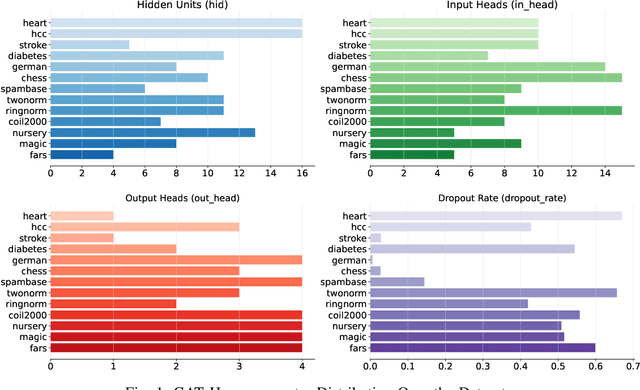
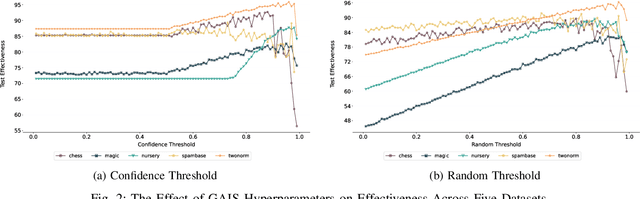
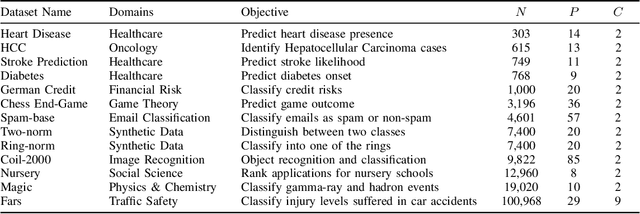
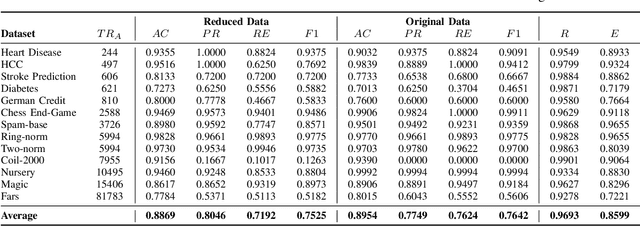
Instance selection (IS) is a crucial technique in machine learning that aims to reduce dataset size while maintaining model performance. This paper introduces a novel method called Graph Attention-based Instance Selection (GAIS), which leverages Graph Attention Networks (GATs) to identify the most informative instances in a dataset. GAIS represents the data as a graph and uses GATs to learn node representations, enabling it to capture complex relationships between instances. The method processes data in chunks, applies random masking and similarity thresholding during graph construction, and selects instances based on confidence scores from the trained GAT model. Experiments on 13 diverse datasets demonstrate that GAIS consistently outperforms traditional IS methods in terms of effectiveness, achieving high reduction rates (average 96\%) while maintaining or improving model performance. Although GAIS exhibits slightly higher computational costs, its superior performance in maintaining accuracy with significantly reduced training data makes it a promising approach for graph-based data selection.
GAT-RWOS: Graph Attention-Guided Random Walk Oversampling for Imbalanced Data Classification
Dec 20, 2024Class imbalance poses a significant challenge in machine learning (ML), often leading to biased models favouring the majority class. In this paper, we propose GAT-RWOS, a novel graph-based oversampling method that combines the strengths of Graph Attention Networks (GATs) and random walk-based oversampling. GAT-RWOS leverages the attention mechanism of GATs to guide the random walk process, focusing on the most informative neighbourhoods for each minority node. By performing attention-guided random walks and interpolating features along the traversed paths, GAT-RWOS generates synthetic minority samples that expand class boundaries while preserving the original data distribution. Extensive experiments on a diverse set of imbalanced datasets demonstrate the effectiveness of GAT-RWOS in improving classification performance, outperforming state-of-the-art oversampling techniques. The proposed method has the potential to significantly improve the performance of ML models on imbalanced datasets and contribute to the development of more reliable classification systems.
Unsupervised Automatic Speech Recognition: A Review
Jun 09, 2021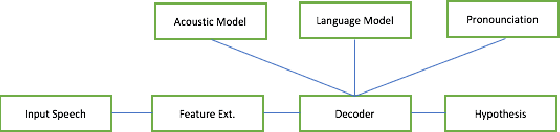
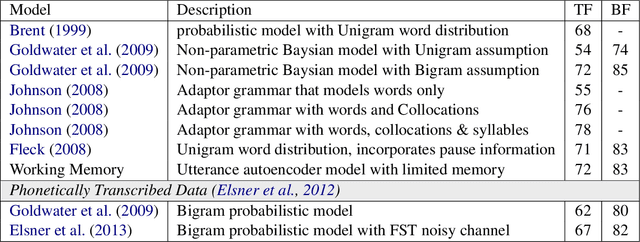

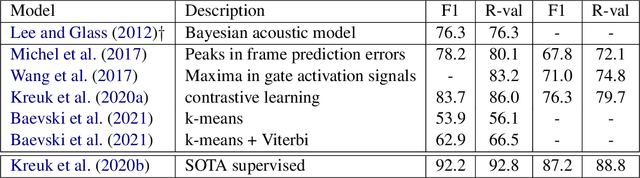
Automatic Speech Recognition (ASR) systems can be trained to achieve remarkable performance given large amounts of manually transcribed speech, but large labeled data sets can be difficult or expensive to acquire for all languages of interest. In this paper, we review the research literature to identify models and ideas that could lead to fully unsupervised ASR, including unsupervised segmentation of the speech signal, unsupervised mapping from speech segments to text, and semi-supervised models with nominal amounts of labeled examples. The objective of the study is to identify the limitations of what can be learned from speech data alone and to understand the minimum requirements for speech recognition. Identifying these limitations would help optimize the resources and efforts in ASR development for low-resource languages.
A Novel Image Segmentation Enhancement Technique based on Active Contour and Topological Alignments
Jun 02, 2011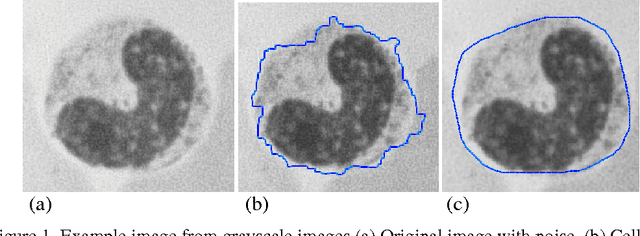
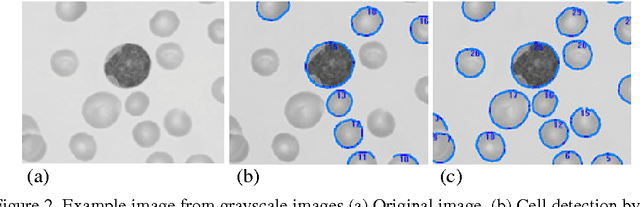
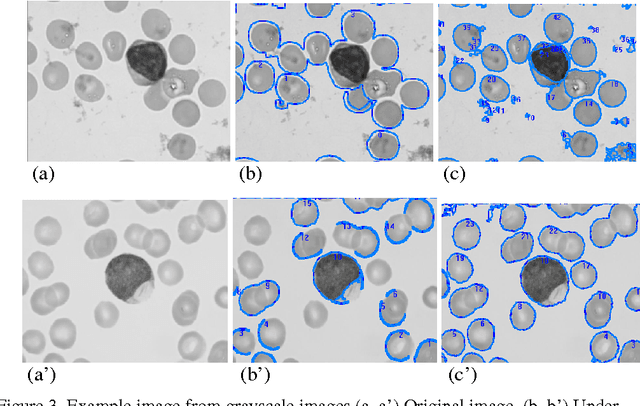
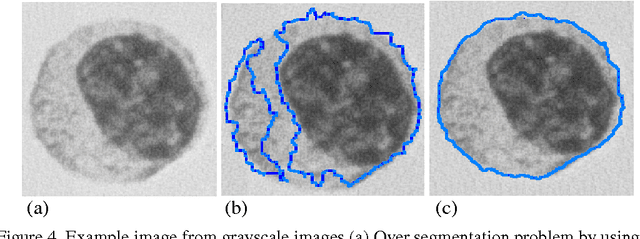
Topological alignments and snakes are used in image processing, particularly in locating object boundaries. Both of them have their own advantages and limitations. To improve the overall image boundary detection system, we focused on developing a novel algorithm for image processing. The algorithm we propose to develop will based on the active contour method in conjunction with topological alignments method to enhance the image detection approach. The algorithm presents novel technique to incorporate the advantages of both Topological Alignments and snakes. Where the initial segmentation by Topological Alignments is firstly transformed into the input of the snake model and begins its evolvement to the interested object boundary. The results show that the algorithm can deal with low contrast images and shape cells, demonstrate the segmentation accuracy under weak image boundaries, which responsible for lacking accuracy in image detecting techniques. We have achieved better segmentation and boundary detecting for the image, also the ability of the system to improve the low contrast and deal with over and under segmentation.
* 7 pages