 Add to Chrome
 Add to Firefox
 Add to Edge
One-Shot Data Selection for Medical Image Classification via Graph Coverage
Jun 20, 2026
Training medical image classifiers on entire datasets is wasteful when annotation budgets are limited: not all samples contribute equally, yet acquiring expert labels is expensive. Active learning reduces annotation cost through iterative querying, but assumes repeated access to an oracle and requires multiple rounds of model training. One-shot geometry-based methods such as facility location avoid retraining but operate on pairwise distances that ignore the local structure of the data manifold. We propose a graph-based one-shot selection method that operates entirely on frozen foundation model embeddings. Given embeddings from a pretrained encoder, we construct a k-nearest neighbor graph over all training samples and derive a two-term coverage kernel from the heat diffusion kernel, capturing both direct and two-hop neighborhood relationships. Greedy facility location on this kernel selects class-balanced subsets that maximize coverage of the data manifold. The two-term kernel matches the full spectral heat kernel in selection behavior while reducing computation to sparse matrix operations with a single hyperparameter. We evaluate on five MedMNIST datasets spanning histopathology, radiology, and microscopy, comparing against both training-dynamics and geometry-based baselines. Our method achieves the highest balanced accuracy on nine of ten dataset-ratio conditions, with the largest gains on class-imbalanced datasets where global graph construction captures cross-class structure that per-class methods miss, all without any model training during selection. Code is available at https://github.com/zahiriddin-rustamov/graph-coverage-selection.

A Spatio-temporal Attention-based Model for Infant Movement Assessment from Videos
May 20, 2021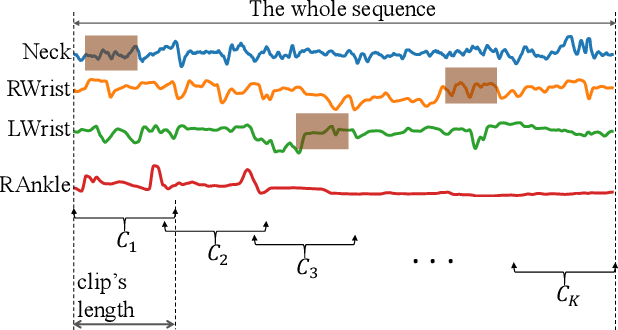
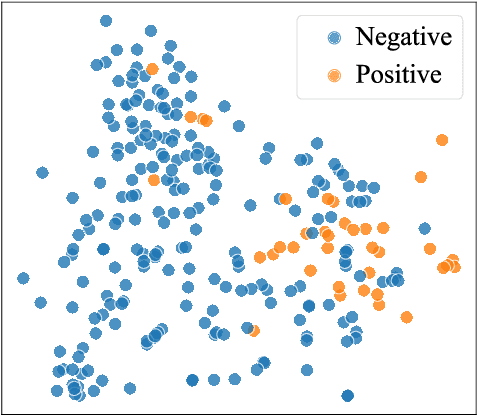
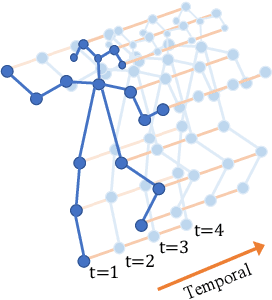

The absence or abnormality of fidgety movements of joints or limbs is strongly indicative of cerebral palsy in infants. Developing computer-based methods for assessing infant movements in videos is pivotal for improved cerebral palsy screening. Most existing methods use appearance-based features and are thus sensitive to strong but irrelevant signals caused by background clutter or a moving camera. Moreover, these features are computed over the whole frame, thus they measure gross whole body movements rather than specific joint/limb motion. Addressing these challenges, we develop and validate a new method for fidgety movement assessment from consumer-grade videos using human poses extracted from short clips. Human poses capture only relevant motion profiles of joints and limbs and are thus free from irrelevant appearance artifacts. The dynamics and coordination between joints are modeled using spatio-temporal graph convolutional networks. Frames and body parts that contain discriminative information about fidgety movements are selected through a spatio-temporal attention mechanism. We validate the proposed model on the cerebral palsy screening task using a real-life consumer-grade video dataset collected at an Australian hospital through the Cerebral Palsy Alliance, Australia. Our experiments show that the proposed method achieves the ROC-AUC score of 81.87%, significantly outperforming existing competing methods with better interpretability.