 Add to Chrome
 Add to Firefox
 Add to Edge
Tracing the Heart: An Evidence-Linked Pipeline for Heart-Failure Feature Engineering
Aug 06, 2026
Electronic health record (EHR) feature engineering is a major bottleneck in clinical research and AI, accounting for 39-45% of data scientists' workload. This is especially pronounced in heart failure, which affects an estimated 6.7 million U.S. adults and requires integrating fragmented EHR data with disease-specific, guideline-based clinical reasoning. Existing rule-based and large language model (LLM)-based approaches offer only partial automation with limited maintainability and evidence traceability. We developed the Nimblemind Multi-Agent System (nMAS), an evidence-linked, rubric-grounded pipeline for automated heart-failure feature engineering, and evaluated it on 500 dummy patient records from nine EHR source tables. nMAS generated 132 structured and 70 rubric-scored aggregated features, verified for structural integrity, rubric compliance, and provenance, and audited by a restricted LLM. Adding the aggregated features improved held-out AUROC from 0.895 to 0.963 for HFrEF and 0.870 to 0.910 for HFpEF phenotyping, and an independent LLM-based rubric assessment of evidence support and methodological soundness scored the features at 81.5% of maximum points. These results demonstrate the feasibility of automated, auditable feature engineering for complex cardiovascular EHR data, though evaluation was limited to a single-institution cohort and external validation is needed.

Finding H. pylori in the Fine Print: Evidence-Linked Multi-Agent Case Finding from Gastric Biopsy Reports
Jul 07, 2026Data from Singapore indicated that about 31% of the population had evidence of Helicobacter pylori infection. Persistent H. pylori infection is associated with chronic active gastritis and peptic ulcer disease, and its eradication is key to gastric cancer prevention. However, evidence supporting \textit{H. pylori} positivity and H. pylori-associated gastritis may be distributed across heterogeneous coded and free-text report fields and may require contextual interpretation of assertion and negation, limiting keyword search, and making manual review difficult to scale. We conducted a retrospective pilot evaluation of the Nimblemind Multi-Agent System (nMAS), a field-name-driven, evidence-linked extraction workflow, using 54 de-identified gastric biopsy pathology reports from a large healthcare system in Singapore. Four clinician-scoped binary fields were evaluated: gastric/stomach biopsy, biopsy status, H. pylori positivity, and H. pylori-associated gastritis. Across 216 feature-case decisions, nMAS correctly classified 213, corresponding to 98.61% overall accuracy. A separately implemented UMA-style MiniMax M2.5 comparator produced similar aggregate and per-field classification metrics. Although predictive performance was similar, nMAS maintained unified report-level outputs with supporting source sentences; the demonstrated contribution is therefore workflow integration and traceability rather than predictive superiority. Under an illustrative, unmeasured scenario, reviewing 1,000 reports at five minutes per manual review versus five seconds per evidence-linked verification would reduce review time from 83.3 to 1.4 staff-hours, corresponding to 81.9 staff-hours and about USD~6,100 in potential staff-time value. Larger multi-institutional studies should evaluate evidence-span correctness, clinician verification time, and generalizability.
BluTrain: A C++/CUDA Framework for AI Systems
Jun 23, 2026Progress in deep learning is, at scale, more a matter of systems engineering than of modelling: the behaviour of a model in training (its throughput, its memory footprint, and the numerical fidelity of the result) is determined less by the architecture itself than by how that architecture is expressed on the hardware. To achieve absolute control over this hardware expression while abstracting away systems complexity to make modelling seamless and eliminating the need for repetitive orchestration logic, BluTrain was architected from first principles as a robust, lightweight, and architecture-general training framework in standard C++ and the core CUDA programming model. Every layer is implemented natively: a typed tensor module with reverse-mode autograd, a linear-algebra library, a caching allocator, a multi-mode distributed-execution module, and an MLIR-based deep-learning compiler. In formal evaluations training a 124M-parameter GPT-2 baseline in FP32 on an 8-GPU 6000 Ada system, BluTrain outperforms industry-standard baselines in both throughput (sustaining an average of 407K tokens/s versus PyTorch's 395K tokens/s) and memory efficiency (achieving up to a 22% footprint reduction), while strictly preserving numerical fidelity and converging to a marginally lower final validation loss. With every layer explicitly open to native tuning, the performance ceiling is the framework's own to raise.
Toxic HallucinAItions: Perturbing Prompts and Tracing LLM Circuits
May 29, 2026Large language models (LLMs) are increasingly deployed in conversational settings where user tone ranges from polite to adversarial or toxic, yet less is known about whether toxic language in otherwise semantically equivalent prompts can degrade factual reliability. We study how lexical and tone-based prompt perturbations affect the factual reliability of LLMs. Using controlled prompt variations across polite, random, and three toxicity levels, we evaluate five LLMs on ARC-Easy, GSM8K, and MMLU. We find that toxic lexical perturbations consistently reduce factual accuracy and increase uncertainty, while polite phrasing yields limited and inconsistent changes. To examine whether these answer inconsistencies correspond to internal changes, we conduct attribution-graph analyses of model activations and influences. We find that increasing toxicity selectively amplifies perturbation-sensitive variant nodes while relatively stable core reasoning nodes remain more invariant. These findings position prompt tone as a critical dimension of LLM reliability and provide behavioral and mechanistic evidence that surface-level lexical variation can alter factual outputs and internal computation.
Modeling Narrative Archetypes in Conspiratorial Narratives: Insights from Singapore-Based Telegram Groups
Dec 10, 2025Conspiratorial discourse is increasingly embedded within digital communication ecosystems, yet its structure and spread remain difficult to study. This work analyzes conspiratorial narratives in Singapore-based Telegram groups, showing that such content is woven into everyday discussions rather than confined to isolated echo chambers. We propose a two-stage computational framework. First, we fine-tune RoBERTa-large to classify messages as conspiratorial or not, achieving an F1-score of 0.866 on 2,000 expert-labeled messages. Second, we build a signed belief graph in which nodes represent messages and edge signs reflect alignment in belief labels, weighted by textual similarity. We introduce a Signed Belief Graph Neural Network (SiBeGNN) that uses a Sign Disentanglement Loss to learn embeddings that separate ideological alignment from stylistic features. Using hierarchical clustering on these embeddings, we identify seven narrative archetypes across 553,648 messages: legal topics, medical concerns, media discussions, finance, contradictions in authority, group moderation, and general chat. SiBeGNN yields stronger clustering quality (cDBI = 8.38) than baseline methods (13.60 to 67.27), supported by 88 percent inter-rater agreement in expert evaluations. Our analysis shows that conspiratorial messages appear not only in clusters focused on skepticism or distrust, but also within routine discussions of finance, law, and everyday matters. These findings challenge common assumptions about online radicalization by demonstrating that conspiratorial discourse operates within ordinary social interaction. The proposed framework advances computational methods for belief-driven discourse analysis and offers applications for stance detection, political communication studies, and content moderation policy.
Using Audio Data to Facilitate Depression Risk Assessment in Primary Health Care
Oct 17, 2023


Telehealth is a valuable tool for primary health care (PHC), where depression is a common condition. PHC is the first point of contact for most people with depression, but about 25% of diagnoses made by PHC physicians are inaccurate. Many other barriers also hinder depression detection and treatment in PHC. Artificial intelligence (AI) may help reduce depression misdiagnosis in PHC and improve overall diagnosis and treatment outcomes. Telehealth consultations often have video issues, such as poor connectivity or dropped calls. Audio-only telehealth is often more practical for lower-income patients who may lack stable internet connections. Thus, our study focused on using audio data to predict depression risk. The objectives were to: 1) Collect audio data from 24 people (12 with depression and 12 without mental health or major health condition diagnoses); 2) Build a machine learning model to predict depression risk. TPOT, an autoML tool, was used to select the best machine learning algorithm, which was the K-nearest neighbors classifier. The selected model had high performance in classifying depression risk (Precision: 0.98, Recall: 0.93, F1-Score: 0.96). These findings may lead to a range of tools to help screen for and treat depression. By developing tools to detect depression risk, patients can be routed to AI-driven chatbots for initial screenings. Partnerships with a range of stakeholders are crucial to implementing these solutions. Moreover, ethical considerations, especially around data privacy and potential biases in AI models, need to be at the forefront of any AI-driven intervention in mental health care.
ChatGPT and Bard Responses to Polarizing Questions
Jul 13, 2023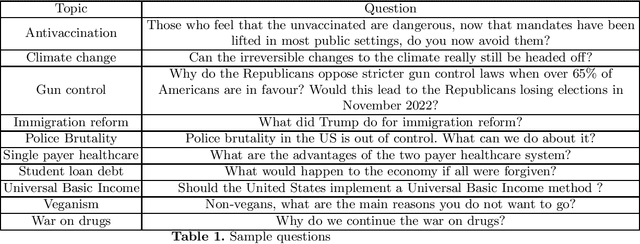

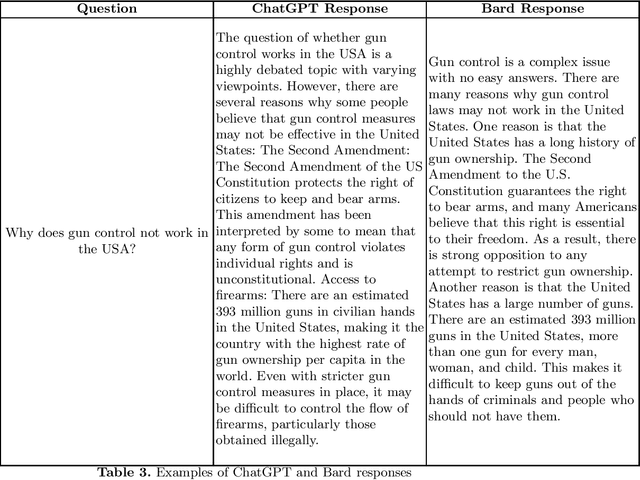
Recent developments in natural language processing have demonstrated the potential of large language models (LLMs) to improve a range of educational and learning outcomes. Of recent chatbots based on LLMs, ChatGPT and Bard have made it clear that artificial intelligence (AI) technology will have significant implications on the way we obtain and search for information. However, these tools sometimes produce text that is convincing, but often incorrect, known as hallucinations. As such, their use can distort scientific facts and spread misinformation. To counter polarizing responses on these tools, it is critical to provide an overview of such responses so stakeholders can determine which topics tend to produce more contentious responses -- key to developing targeted regulatory policy and interventions. In addition, there currently exists no annotated dataset of ChatGPT and Bard responses around possibly polarizing topics, central to the above aims. We address the indicated issues through the following contribution: Focusing on highly polarizing topics in the US, we created and described a dataset of ChatGPT and Bard responses. Broadly, our results indicated a left-leaning bias for both ChatGPT and Bard, with Bard more likely to provide responses around polarizing topics. Bard seemed to have fewer guardrails around controversial topics, and appeared more willing to provide comprehensive, and somewhat human-like responses. Bard may thus be more likely abused by malicious actors. Stakeholders may utilize our findings to mitigate misinformative and/or polarizing responses from LLMs
How is Fatherhood Framed Online in Singapore?
Jul 08, 2023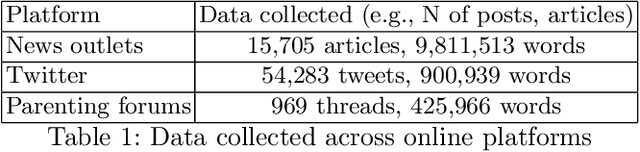
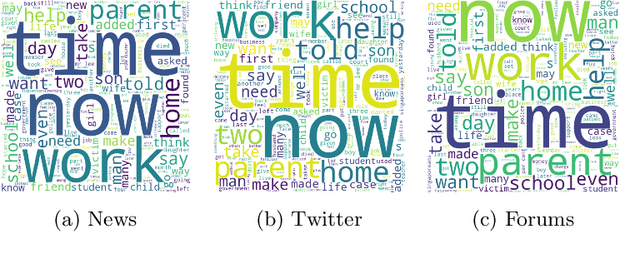
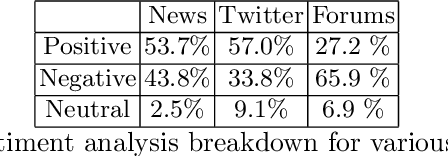
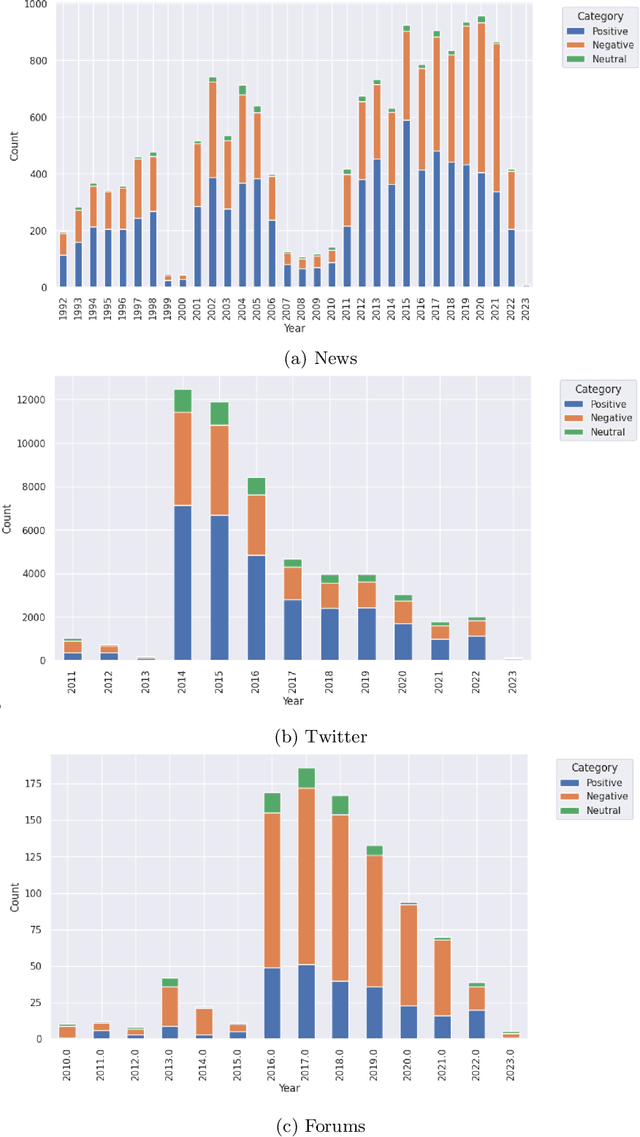
The proliferation of discussion about fatherhood in Singapore attests to its significance, indicating the need for an exploration of how fatherhood is framed, aiding policy-making around fatherhood in Singapore. Sound and holistic policy around fatherhood in Singapore may reduce stigma and apprehension around being a parent, critical to improving the nations flagging birth rate. We analyzed 15,705 articles and 56,221 posts to study how fatherhood is framed in Singapore across a range of online platforms (news outlets, parenting forums, Twitter). We used NLP techniques to understand these differences. While fatherhood was framed in a range of ways on the Singaporean online environment, it did not seem that fathers were framed as central to the Singaporean family unit. A strength of our work is how the different techniques we have applied validate each other.
Explainable and High-Performance Hate and Offensive Speech Detection
Jun 26, 2022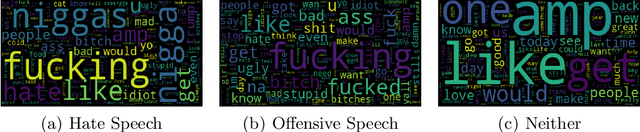
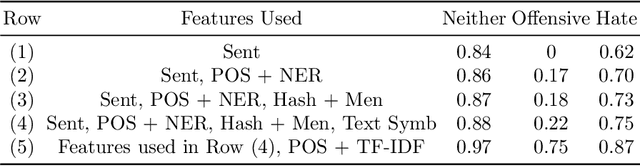

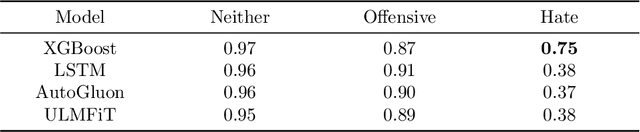
The spread of information through social media platforms can create environments possibly hostile to vulnerable communities and silence certain groups in society. To mitigate such instances, several models have been developed to detect hate and offensive speech. Since detecting hate and offensive speech in social media platforms could incorrectly exclude individuals from social media platforms, which can reduce trust, there is a need to create explainable and interpretable models. Thus, we build an explainable and interpretable high performance model based on the XGBoost algorithm, trained on Twitter data. For unbalanced Twitter data, XGboost outperformed the LSTM, AutoGluon, and ULMFiT models on hate speech detection with an F1 score of 0.75 compared to 0.38 and 0.37, and 0.38 respectively. When we down-sampled the data to three separate classes of approximately 5000 tweets, XGBoost performed better than LSTM, AutoGluon, and ULMFiT; with F1 scores for hate speech detection of 0.79 vs 0.69, 0.77, and 0.66 respectively. XGBoost also performed better than LSTM, AutoGluon, and ULMFiT in the down-sampled version for offensive speech detection with F1 score of 0.83 vs 0.88, 0.82, and 0.79 respectively. We use Shapley Additive Explanations (SHAP) on our XGBoost models' outputs to makes it explainable and interpretable compared to LSTM, AutoGluon and ULMFiT that are black-box models.