 Add to Chrome
 Add to Firefox
 Add to Edge
PAPA: Online Personalized Active Preference Alignment
Jul 01, 2026
Diffusion models are highly effective at modeling complex data distributions, including images and text. However, in applications like personalized recommender systems, the objective often shifts to modeling specific regions of the distribution that maximize user preferences-initially unknown but gradually uncovered through interactive feedback. This can naturally be framed as a reinforcement learning problem, where the goal is to fine-tune a diffusion model to maximize a reward function based on preferences. However, the main challenge lies in learning a parameterized reward model, which typically requires large-scale preference data-something that is often not feasible in practice. In this work, we introduce Personalized Active Preference Alignment PAPA, a novel method that bypasses the requirement for a parametrized reward model by directly optimizing the diffusion model using real-time user feedback. PAPA enables feedback-efficient preference alignment, drawing inspiration from the variational inference framework. We demonstrate PAPA's effectiveness through extensive experiments and ablation studies across diverse class-conditioned and fine-grained alignment tasks. Additionally, based on theoretical insights, we propose an enhanced fine-tuning strategy, referred to as EPAPA, that requires less computational budget and accelerates the fine-tuning process, further boosting PAPA's suitability for real-world deployment. Our code is made publicly available at https://github.com/NasikNafi/papa.

ORBIT-2: Scaling Exascale Vision Foundation Models for Weather and Climate Downscaling
May 07, 2025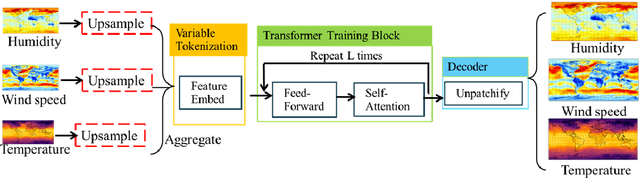
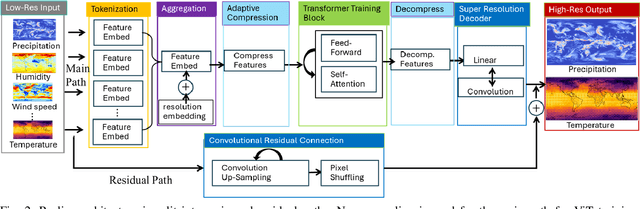
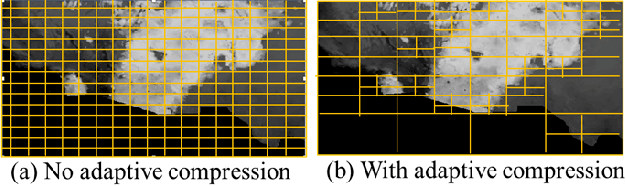
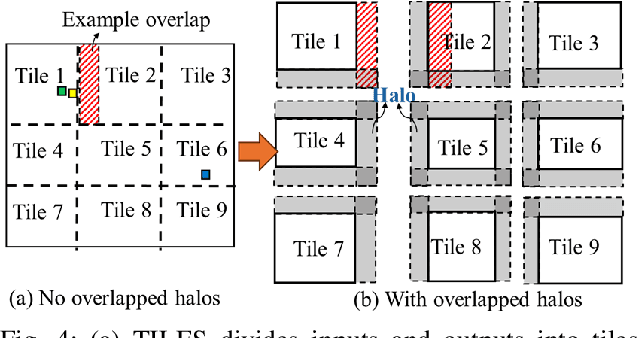
Sparse observations and coarse-resolution climate models limit effective regional decision-making, underscoring the need for robust downscaling. However, existing AI methods struggle with generalization across variables and geographies and are constrained by the quadratic complexity of Vision Transformer (ViT) self-attention. We introduce ORBIT-2, a scalable foundation model for global, hyper-resolution climate downscaling. ORBIT-2 incorporates two key innovations: (1) Residual Slim ViT (Reslim), a lightweight architecture with residual learning and Bayesian regularization for efficient, robust prediction; and (2) TILES, a tile-wise sequence scaling algorithm that reduces self-attention complexity from quadratic to linear, enabling long-sequence processing and massive parallelism. ORBIT-2 scales to 10 billion parameters across 32,768 GPUs, achieving up to 1.8 ExaFLOPS sustained throughput and 92-98% strong scaling efficiency. It supports downscaling to 0.9 km global resolution and processes sequences up to 4.2 billion tokens. On 7 km resolution benchmarks, ORBIT-2 achieves high accuracy with R^2 scores in the range of 0.98 to 0.99 against observation data.