 Add to Chrome
 Add to Firefox
 Add to Edge
Bootstrap Flow-Map Tree Sampling Enables Online Feedback Driven Search
Jul 03, 2026
In many scientific and engineering domains, maximizing discovery within a limited sampling budget demands strategic, observation-guided exploration. While generative models have enabled training-free reward alignment, current methods typically excel in local searches within narrow regions of the underlying distribution. These approaches struggle when preferences are unknown a priori and only revealed through sequential feedback-a scenario demanding broad exploration to uncover high-utility regions. To address this, we introduce Bootstrap Flow-Map-Tree (a.k.a BFMT), a novel computationally efficient sampling framework designed for history-aware global search and alignment under sampling budget constraints. BFMT enables full tree-path construction from any tree depth using a single function evaluation, drastically reducing computational overhead while providing critical foresight for sequential sampling. By enabling dynamic transition time steps scheduling, BFMT efficiently allocates its sampling budget, smoothly transitioning from broad global exploration to fine-grained local refinement of high-utility modes discovered through exploration. Extensive experiments and ablations across diverse search and alignment tasks demonstrate that BFMT substantially outperforms baseline approaches.

Sequentially-Controlled Interactive Multi-Particle Flow-Maps for Online Feedback-Driven Search
Jul 01, 2026While generative models have enabled training-free reward alignment, current methods typically excel in local exploration within narrow regions of the underlying distribution. These approaches struggle when preferences are unknown a priori and only revealed through sequential feedback-a scenario demanding broad exploration to uncover high-utility regions. To address this, we propose Sequentially-Controlled Interactive Multi-Particle Flow-Maps (IMPFM), a framework for sample-efficient online feedback-driven search. IMPFM progressively transports a group of interactive particles toward the target distribution, maintaining the broad coverage essential for heterogeneous preference alignment. IMPFM introduces a principled and efficient posterior sample sharing mechanism across particles powered by flow maps. By correcting individual particle drift with the collective posterior samples of the entire ensemble at each resampling step, the framework maximizes sample utility to enable global exploration while actively mitigating reward over-optimization, typical of standard control frameworks. Paired with a principled exploration-exploitation reweighting mechanism involving multi-particle interaction, this sequentially corrected multi-particle dynamics explicitly preserves structural diversity and overcomes the weight degeneracy inherent to standard SMC samplers. Crucially, we prove that the resulting sampling framework yields a multi-particle interaction-aware Feynman-Kac corrector that progressively steers the multi-particle system toward a KL-tilted target distribution, facilitating global exploration and preventing mode collapse. Extensive empirical evaluations and rigorous ablations across diverse search and alignment tasks confirm the efficacy of IMPFM over existing baselines.
PAPA: Online Personalized Active Preference Alignment
Jul 01, 2026Diffusion models are highly effective at modeling complex data distributions, including images and text. However, in applications like personalized recommender systems, the objective often shifts to modeling specific regions of the distribution that maximize user preferences-initially unknown but gradually uncovered through interactive feedback. This can naturally be framed as a reinforcement learning problem, where the goal is to fine-tune a diffusion model to maximize a reward function based on preferences. However, the main challenge lies in learning a parameterized reward model, which typically requires large-scale preference data-something that is often not feasible in practice. In this work, we introduce Personalized Active Preference Alignment PAPA, a novel method that bypasses the requirement for a parametrized reward model by directly optimizing the diffusion model using real-time user feedback. PAPA enables feedback-efficient preference alignment, drawing inspiration from the variational inference framework. We demonstrate PAPA's effectiveness through extensive experiments and ablation studies across diverse class-conditioned and fine-grained alignment tasks. Additionally, based on theoretical insights, we propose an enhanced fine-tuning strategy, referred to as EPAPA, that requires less computational budget and accelerates the fine-tuning process, further boosting PAPA's suitability for real-world deployment. Our code is made publicly available at https://github.com/NasikNafi/papa.
Adapting Actively on the Fly: Relevance-Guided Online Meta-Learning with Latent Concepts for Geospatial Discovery
Feb 19, 2026In many real-world settings, such as environmental monitoring, disaster response, or public health, with costly and difficult data collection and dynamic environments, strategically sampling from unobserved regions is essential for efficiently uncovering hidden targets under tight resource constraints. Yet, sparse and biased geospatial ground truth limits the applicability of existing learning-based methods, such as reinforcement learning. To address this, we propose a unified geospatial discovery framework that integrates active learning, online meta-learning, and concept-guided reasoning. Our approach introduces two key innovations built on a shared notion of *concept relevance*, which captures how domain-specific factors influence target presence: a *concept-weighted uncertainty sampling strategy*, where uncertainty is modulated by learned relevance based on readily-available domain-specific concepts (e.g., land cover, source proximity); and a *relevance-aware meta-batch formation strategy* that promotes semantic diversity during online-meta updates, improving generalization in dynamic environments. Our experiments include testing on a real-world dataset of cancer-causing PFAS (Per- and polyfluoroalkyl substances) contamination, showcasing our method's reliability at uncovering targets with limited data and a varying environment.
Online Feedback Efficient Active Target Discovery in Partially Observable Environments
May 10, 2025In various scientific and engineering domains, where data acquisition is costly, such as in medical imaging, environmental monitoring, or remote sensing, strategic sampling from unobserved regions, guided by prior observations, is essential to maximize target discovery within a limited sampling budget. In this work, we introduce Diffusion-guided Active Target Discovery (DiffATD), a novel method that leverages diffusion dynamics for active target discovery. DiffATD maintains a belief distribution over each unobserved state in the environment, using this distribution to dynamically balance exploration-exploitation. Exploration reduces uncertainty by sampling regions with the highest expected entropy, while exploitation targets areas with the highest likelihood of discovering the target, indicated by the belief distribution and an incrementally trained reward model designed to learn the characteristics of the target. DiffATD enables efficient target discovery in a partially observable environment within a fixed sampling budget, all without relying on any prior supervised training. Furthermore, DiffATD offers interpretability, unlike existing black-box policies that require extensive supervised training. Through extensive experiments and ablation studies across diverse domains, including medical imaging and remote sensing, we show that DiffATD performs significantly better than baselines and competitively with supervised methods that operate under full environmental observability.
An Advanced Ensemble Deep Learning Framework for Stock Price Prediction Using VAE, Transformer, and LSTM Model
Mar 28, 2025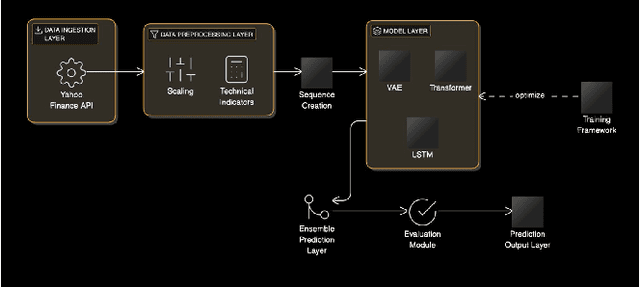
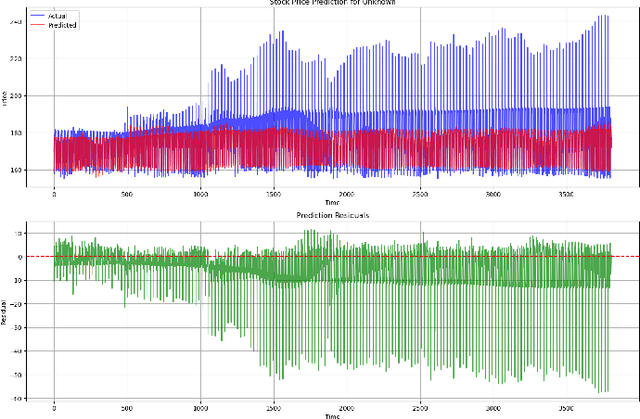
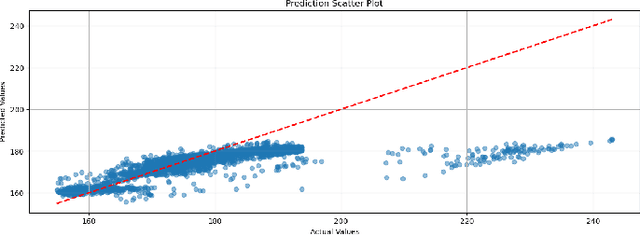
This research proposes a cutting-edge ensemble deep learning framework for stock price prediction by combining three advanced neural network architectures: The particular areas of interest for the research include but are not limited to: Variational Autoencoder (VAE), Transformer, and Long Short-Term Memory (LSTM) networks. The presented framework is aimed to substantially utilize the advantages of each model which would allow for achieving the identification of both linear and non-linear relations in stock price movements. To improve the accuracy of its predictions it uses rich set of technical indicators and it scales its predictors based on the current market situation. By trying out the framework on several stock data sets, and benchmarking the results against single models and conventional forecasting, the ensemble method exhibits consistently high accuracy and reliability. The VAE is able to learn linear representation on high-dimensional data while the Transformer outstandingly perform in recognizing long-term patterns on the stock price data. LSTM, based on its characteristics of being a model that can deal with sequences, brings additional improvements to the given framework, especially regarding temporal dynamics and fluctuations. Combined, these components provide exceptional directional performance and a very small disparity in the predicted results. The present solution has given a probable concept that can handle the inherent problem of stock price prediction with high reliability and scalability. Compared to the performance of individual proposals based on the neural network, as well as classical methods, the proposed ensemble framework demonstrates the advantages of combining different architectures. It has a very important application in algorithmic trading, risk analysis, and control and decision-making for finance professions and scholars.
Active Geospatial Search for Efficient Tenant Eviction Outreach
Dec 19, 2024Tenant evictions threaten housing stability and are a major concern for many cities. An open question concerns whether data-driven methods enhance outreach programs that target at-risk tenants to mitigate their risk of eviction. We propose a novel active geospatial search (AGS) modeling framework for this problem. AGS integrates property-level information in a search policy that identifies a sequence of rental units to canvas to both determine their eviction risk and provide support if needed. We propose a hierarchical reinforcement learning approach to learn a search policy for AGS that scales to large urban areas containing thousands of parcels, balancing exploration and exploitation and accounting for travel costs and a budget constraint. Crucially, the search policy adapts online to newly discovered information about evictions. Evaluation using eviction data for a large urban area demonstrates that the proposed framework and algorithmic approach are considerably more effective at sequentially identifying eviction cases than baseline methods.
GOMAA-Geo: GOal Modality Agnostic Active Geo-localization
Jun 04, 2024

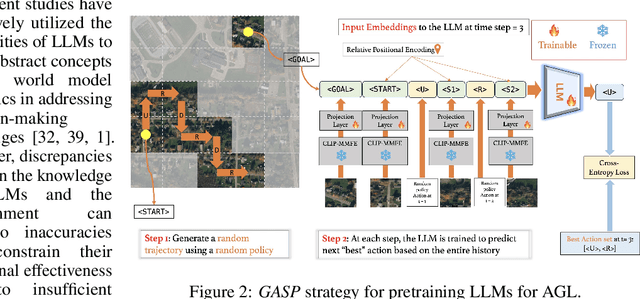

We consider the task of active geo-localization (AGL) in which an agent uses a sequence of visual cues observed during aerial navigation to find a target specified through multiple possible modalities. This could emulate a UAV involved in a search-and-rescue operation navigating through an area, observing a stream of aerial images as it goes. The AGL task is associated with two important challenges. Firstly, an agent must deal with a goal specification in one of multiple modalities (e.g., through a natural language description) while the search cues are provided in other modalities (aerial imagery). The second challenge is limited localization time (e.g., limited battery life, urgency) so that the goal must be localized as efficiently as possible, i.e. the agent must effectively leverage its sequentially observed aerial views when searching for the goal. To address these challenges, we propose GOMAA-Geo - a goal modality agnostic active geo-localization agent - for zero-shot generalization between different goal modalities. Our approach combines cross-modality contrastive learning to align representations across modalities with supervised foundation model pretraining and reinforcement learning to obtain highly effective navigation and localization policies. Through extensive evaluations, we show that GOMAA-Geo outperforms alternative learnable approaches and that it generalizes across datasets - e.g., to disaster-hit areas without seeing a single disaster scenario during training - and goal modalities - e.g., to ground-level imagery or textual descriptions, despite only being trained with goals specified as aerial views. Code and models are publicly available at https://github.com/mvrl/GOMAA-Geo/tree/main.
Amortized nonmyopic active search via deep imitation learning
May 23, 2024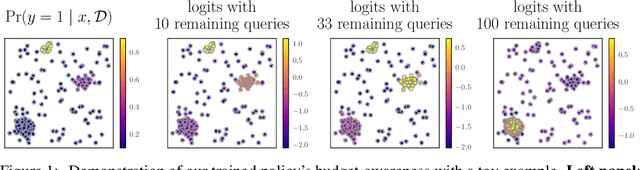
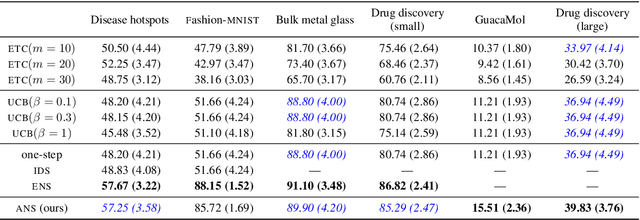


Active search formalizes a specialized active learning setting where the goal is to collect members of a rare, valuable class. The state-of-the-art algorithm approximates the optimal Bayesian policy in a budget-aware manner, and has been shown to achieve impressive empirical performance in previous work. However, even this approximate policy has a superlinear computational complexity with respect to the size of the search problem, rendering its application impractical in large spaces or in real-time systems where decisions must be made quickly. We study the amortization of this policy by training a neural network to learn to search. To circumvent the difficulty of learning from scratch, we appeal to imitation learning techniques to mimic the behavior of the expert, expensive-to-compute policy. Our policy network, trained on synthetic data, learns a beneficial search strategy that yields nonmyopic decisions carefully balancing exploration and exploitation. Extensive experiments demonstrate our policy achieves competitive performance at real-world tasks that closely approximates the expert's at a fraction of the cost, while outperforming cheaper baselines.
Attacks on Node Attributes in Graph Neural Networks
Feb 19, 2024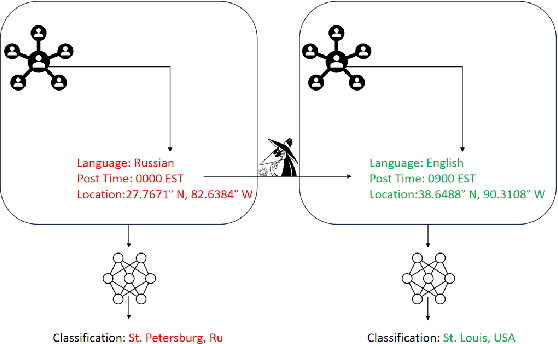
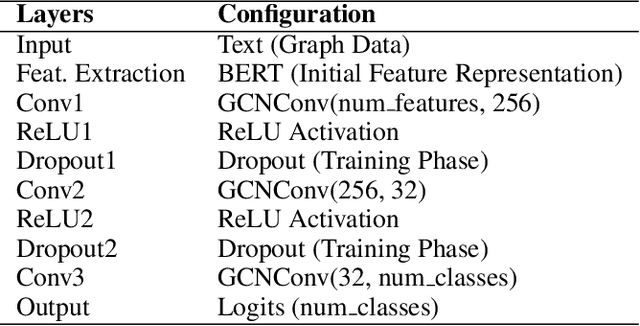
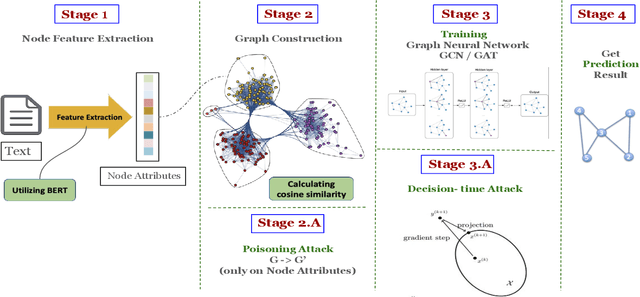
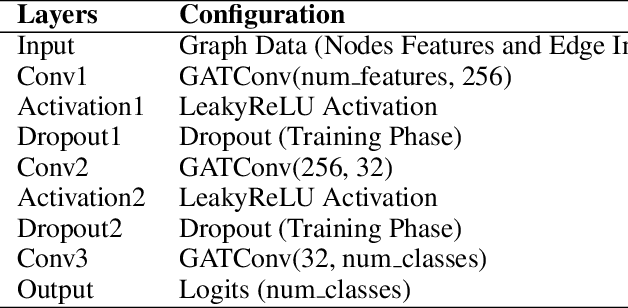
Graphs are commonly used to model complex networks prevalent in modern social media and literacy applications. Our research investigates the vulnerability of these graphs through the application of feature based adversarial attacks, focusing on both decision-time attacks and poisoning attacks. In contrast to state-of-the-art models like Net Attack and Meta Attack, which target node attributes and graph structure, our study specifically targets node attributes. For our analysis, we utilized the text dataset Hellaswag and graph datasets Cora and CiteSeer, providing a diverse basis for evaluation. Our findings indicate that decision-time attacks using Projected Gradient Descent (PGD) are more potent compared to poisoning attacks that employ Mean Node Embeddings and Graph Contrastive Learning strategies. This provides insights for graph data security, pinpointing where graph-based models are most vulnerable and thereby informing the development of stronger defense mechanisms against such attacks.