 Add to Chrome
 Add to Firefox
 Add to Edge
A Density-Matrix Framework for Electronic-Structure Analysis of Functional-Group and Salt Effects in Lithium-Metal Electrolytes
Jul 29, 2026
The reactivity of lithium-metal electrolytes arises from the interplay of molecular functional groups, Li$^+$ solvation, and salt-anion participation. This interplay operates through the redistribution of electron density across donor, anion, and cation centers, which is most directly read out from the electronic structure resolved in space. Quantum-chemical calculations deliver such readouts faithfully, yet become computationally demanding across this multidimensional design space, and machine-learning electronic-structure models seldom cover chemically diverse solvation shells or electrolyte-relevant readouts. Here, we present a density-matrix-centered AI platform (EMolStudio) for electronic-structure prediction and analysis. Its workflow integrates molecular functionalization, explicit Li$^+$ first-shell assembly, density-matrix prediction with idempotency projection, and readouts of frontier orbitals, electrostatic potential, Li$^+$-donor bond order, and electron localization. We apply EMolStudio to 163,655 functionalized molecules and 22,500 explicit Li$^+$ first-shell clusters across four lithium salts. We find that 1) at the molecular scale, functionalization distinguishes CO$_2$Me, CN, F/CF$_3$, and sulfonyl groups by chemically distinct changes in frontier levels, electrostatic potential, and Li$^+$-donor contact, consistent with $π^*$-acceptor, inductive, and polarization contributions, with sublinear accumulation at higher degrees of functionalization; 2) in explicit solvation shells, anion identity reshapes frontier-orbital localization: LiTDI anchors the HOMO on the anion across the entire library, whereas LiDFOB pairs an anion-hosted HOMO with strongly functional-group-dependent LUMO hosting. EMolStudio thereby translates functional-group and salt choices into electronic-structure hypotheses relevant to lithium-bond formation, desolvation, and interphase reactions.

Abnormal respiratory patterns classifier may contribute to large-scale screening of people infected with COVID-19 in an accurate and unobtrusive manner
Feb 12, 2020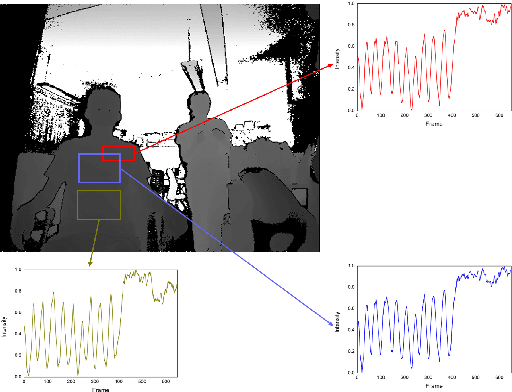
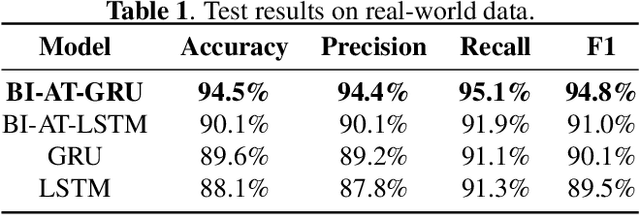
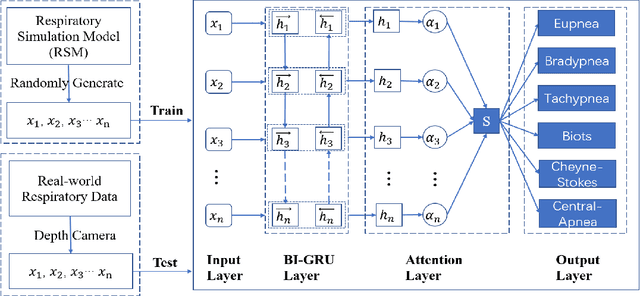
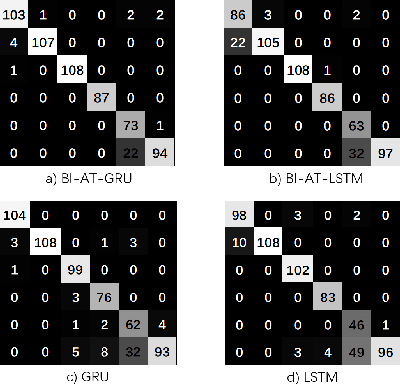
Research significance: During the epidemic prevention and control period, our study can be helpful in prognosis, diagnosis and screening for the patients infected with COVID-19 (the novel coronavirus) based on breathing characteristics. According to the latest clinical research, the respiratory pattern of COVID-19 is different from the respiratory patterns of flu and the common cold. One significant symptom that occurs in the COVID-19 is Tachypnea. People infected with COVID-19 have more rapid respiration. Our study can be utilized to distinguish various respiratory patterns and our device can be preliminarily put to practical use. Demo videos of this method working in situations of one subject and two subjects can be downloaded online. Research details: Accurate detection of the unexpected abnormal respiratory pattern of people in a remote and unobtrusive manner has great significance. In this work, we innovatively capitalize on depth camera and deep learning to achieve this goal. The challenges in this task are twofold: the amount of real-world data is not enough for training to get the deep model; and the intra-class variation of different types of respiratory patterns is large and the outer-class variation is small. In this paper, considering the characteristics of actual respiratory signals, a novel and efficient Respiratory Simulation Model (RSM) is first proposed to fill the gap between the large amount of training data and scarce real-world data. Subsequently, we first apply a GRU neural network with bidirectional and attentional mechanisms (BI-AT-GRU) to classify 6 clinically significant respiratory patterns (Eupnea, Tachypnea, Bradypnea, Biots, Cheyne-Stokes and Central-Apnea). The proposed deep model and the modeling ideas have the great potential to be extended to large scale applications such as public places, sleep scenario, and office environment.