 Add to Chrome
 Add to Firefox
 Add to Edge
Cognitive Platform Engineering for Autonomous Cloud Operations
Jan 24, 2026
Modern DevOps practices have accelerated software delivery through automation, CI/CD pipelines, and observability tooling,but these approaches struggle to keep pace with the scale and dynamism of cloud-native systems. As telemetry volume grows and configuration drift increases, traditional, rule-driven automation often results in reactive operations, delayed remediation, and dependency on manual expertise. This paper introduces Cognitive Platform Engineering, a next-generation paradigm that integrates sensing, reasoning, and autonomous action directly into the platform lifecycle. This paper propose a four-plane reference architecture that unifies data collection, intelligent inference, policy-driven orchestration, and human experience layers within a continuous feedback loop. A prototype implementation built with Kubernetes, Terraform, Open Policy Agent, and ML-based anomaly detection demonstrates improvements in mean time to resolution, resource efficiency, and compliance. The results show that embedding intelligence into platform operations enables resilient, self-adjusting, and intent-aligned cloud environments. The paper concludes with research opportunities in reinforcement learning, explainable governance, and sustainable self-managing cloud ecosystems.

Scalable Sequential Recommendation under Latency and Memory Constraints
Jan 13, 2026Sequential recommender systems must model long-range user behavior while operating under strict memory and latency constraints. Transformer-based approaches achieve strong accuracy but suffer from quadratic attention complexity, forcing aggressive truncation of user histories and limiting their practicality for long-horizon modeling. This paper presents HoloMambaRec, a lightweight sequential recommendation architecture that combines holographic reduced representations for attribute-aware embedding with a selective state space encoder for linear-time sequence processing. Item and attribute information are bound using circular convolution, preserving embedding dimensionality while encoding structured metadata. A shallow selective state space backbone, inspired by recent Mamba-style models, enables efficient training and constant-time recurrent inference. Experiments on Amazon Beauty and MovieLens-1M datasets demonstrate that HoloMambaRec consistently outperforms SASRec and achieves competitive performance with GRU4Rec under a constrained 10-epoch training budget, while maintaining substantially lower memory complexity. The design further incorporates forward-compatible mechanisms for temporal bundling and inference-time compression, positioning HoloMambaRec as a practical and extensible alternative for scalable, metadata-aware sequential recommendation.
Scalable Cloud-Native Architectures for Intelligent PMU Data Processing
Dec 23, 2025Phasor Measurement Units (PMUs) generate high-frequency, time-synchronized data essential for real-time power grid monitoring, yet the growing scale of PMU deployments creates significant challenges in latency, scalability, and reliability. Conventional centralized processing architectures are increasingly unable to handle the volume and velocity of PMU data, particularly in modern grids with dynamic operating conditions. This paper presents a scalable cloud-native architecture for intelligent PMU data processing that integrates artificial intelligence with edge and cloud computing. The proposed framework employs distributed stream processing, containerized microservices, and elastic resource orchestration to enable low-latency ingestion, real-time anomaly detection, and advanced analytics. Machine learning models for time-series analysis are incorporated to enhance grid observability and predictive capabilities. Analytical models are developed to evaluate system latency, throughput, and reliability, showing that the architecture can achieve sub-second response times while scaling to large PMU deployments. Security and privacy mechanisms are embedded to support deployment in critical infrastructure environments. The proposed approach provides a robust and flexible foundation for next-generation smart grid analytics.
A quantitative comparison of plantar soft tissue strainability distribution and homogeneity between ulcerated and non-ulcerated patients using strain elastography
Mar 28, 2022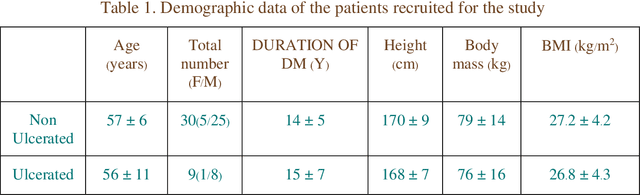
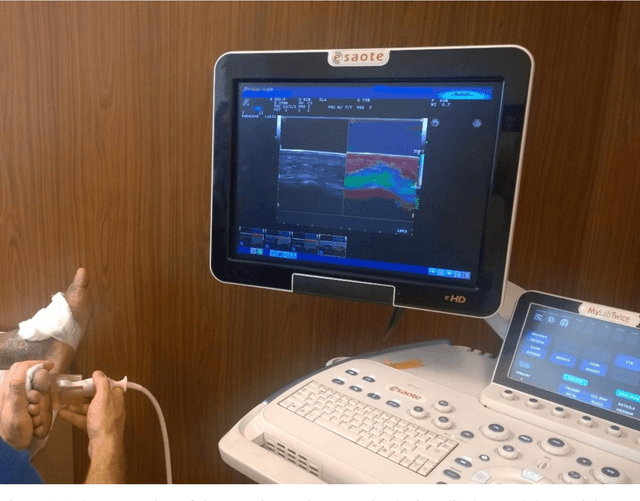
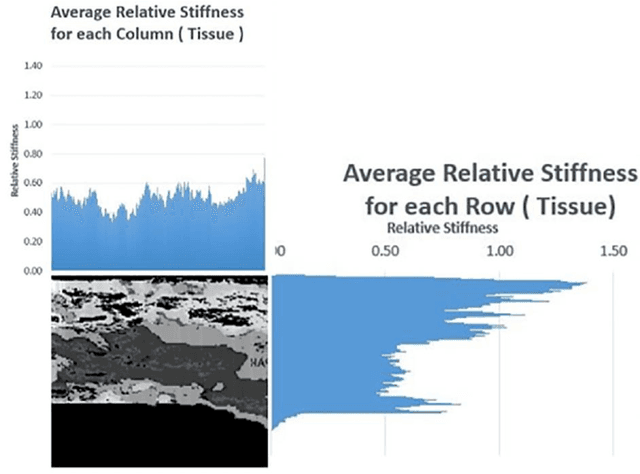
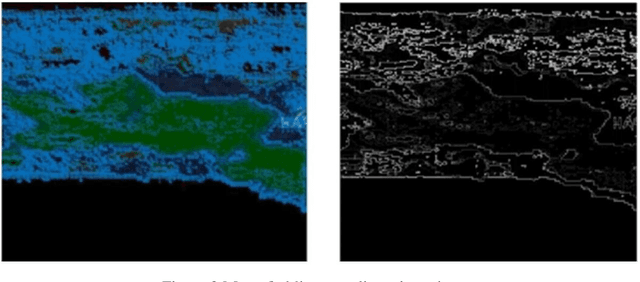
The primary objective of this study was to develop a method that allows accurate quantification of plantar soft tissue stiffness distribution and homogeneity. The secondary aim of this study is to investigate if the differences in soft tissue stiffness distribution and homogeneity can be detected between ulcerated and non-ulcerated foot. Novel measures of individual pixel stiffness, named as quantitative strainability (QS) and relative strainability (RS) were developed. SE data obtained from 39 (9 with active diabetic foot ulcers) patients with diabetic neuropathy. The patients with active diabetic foot ulcer had wound in parts of the foot other than the first metatarsal head and the heel where the elastography measures were conducted. RS was used to measure changes and gradients in the stiffness distribution of plantar soft tissues in participants with and without active diabetic foot ulcer. The plantar soft tissue homogeneity in superior-inferior direction in the left forefoot was significantly (p<0.05) higher in ulcerated group compared to non-ulcerated group. The assessment of homogeneity showed potentials to further explain the nature of the change in tissue that can increase internal stress . This can have implications in assessing the vulnerability to soft tissue damage and ulceration in diabetes.
* 16 pages, 8 figures, 1 table, 1 appendix