 Add to Chrome
 Add to Firefox
 Add to Edge
MorphDistill: Distilling Unified Morphological Knowledge from Pathology Foundation Models for Colorectal Cancer Survival Prediction
Apr 07, 2026
Background: Colorectal cancer (CRC) remains a leading cause of cancer-related mortality worldwide. Accurate survival prediction is essential for treatment stratification, yet existing pathology foundation models often overlook organ-specific features critical for CRC prognostication. Methods: We propose MorphDistill, a two-stage framework that distills complementary knowledge from multiple pathology foundation models into a compact CRC-specific encoder. In Stage I, a student encoder is trained using dimension-agnostic multi-teacher relational distillation with supervised contrastive regularization on large-scale colorectal datasets. This preserves inter-sample relationships from ten foundation models without explicit feature alignment. In Stage II, the encoder extracts patch-level features from whole-slide images, which are aggregated via attention-based multiple instance learning to predict five-year survival. Results: On the Alliance/CALGB 89803 cohort (n=424, stage III CRC), MorphDistill achieves an AUC of 0.68 (SD 0.08), an approximately 8% relative improvement over the strongest baseline (AUC 0.63). It also attains a C-index of 0.661 and a hazard ratio of 2.52 (95% CI: 1.73-3.65), outperforming all baselines. On an external TCGA cohort (n=562), it achieves a C-index of 0.628, demonstrating strong generalization across datasets and robustness across clinical subgroups. Conclusion: MorphDistill enables task-specific representation learning by integrating knowledge from multiple foundation models into a unified encoder. This approach provides an efficient strategy for prognostic modeling in computational pathology, with potential for broader oncology applications. Further validation across additional cohorts and disease stages is warranted.

Weakly Supervised Teacher-Student Framework with Progressive Pseudo-mask Refinement for Gland Segmentation
Mar 12, 2026Background and objectives: Colorectal cancer histopathological grading depends on accurate segmentation of glandular structures. Current deep learning approaches rely on large scale pixel level annotations that are labor intensive and difficult to obtain in routine clinical practice. Weakly supervised semantic segmentation offers a promising alternative. However, class activation map based methods often produce incomplete pseudo masks that emphasize highly discriminative regions and fail to supervise unannotated glandular structures. We propose a weakly supervised teacher student framework that leverages sparse pathologist annotations and an Exponential Moving Average stabilized teacher network to generate refined pseudo masks. Methods: The framework integrates confidence based filtering, adaptive fusion of teacher predictions with limited ground truth, and curriculum guided refinement to progressively segment unannotated glandular regions. The method was evaluated on an institutional colorectal cancer cohort from The Ohio State University Wexner Medical Center consisting of 60 hematoxylin and eosin stained whole slide images and on public datasets including the Gland Segmentation dataset, TCGA COAD, TCGA READ, and SPIDER. Results: On the Gland Segmentation dataset the framework achieved a mean Intersection over Union of 80.10 and a mean Dice coefficient of 89.10. Cross cohort evaluation demonstrated robust generalization on TCGA COAD and TCGA READ without additional annotations, while reduced performance on SPIDER reflected domain shift. Conclusions: The proposed framework provides an annotation efficient and generalizable approach for gland segmentation in colorectal histopathology.
PathoScribe: Transforming Pathology Data into a Living Library with a Unified LLM-Driven Framework for Semantic Retrieval and Clinical Integration
Mar 11, 2026Pathology underpins modern diagnosis and cancer care, yet its most valuable asset, the accumulated experience encoded in millions of narrative reports, remains largely inaccessible. Although institutions are rapidly digitizing pathology workflows, storing data without effective mechanisms for retrieval and reasoning risks transforming archives into a passive data repository, where institutional knowledge exists but cannot meaningfully inform patient care. True progress requires not only digitization, but the ability for pathologists to interrogate prior similar cases in real time while evaluating a new diagnostic dilemma. We present PathoScribe, a unified retrieval-augmented large language model (LLM) framework designed to transform static pathology archives into a searchable, reasoning-enabled living library. PathoScribe enables natural language case exploration, automated cohort construction, clinical question answering, immunohistochemistry (IHC) panel recommendation, and prompt-controlled report transformation within a single architecture. Evaluated on 70,000 multi-institutional surgical pathology reports, PathoScribe achieved perfect Recall@10 for natural language case retrieval and demonstrated high-quality retrieval-grounded reasoning (mean reviewer score 4.56/5). Critically, the system operationalized automated cohort construction from free-text eligibility criteria, assembling research-ready cohorts in minutes (mean 9.2 minutes) with 91.3% agreement to human reviewers and no eligible cases incorrectly excluded, representing orders-of-magnitude reductions in time and cost compared to traditional manual chart review. This work establishes a scalable foundation for converting digital pathology archives from passive storage systems into active clinical intelligence platforms.
RANGER: Sparsely-Gated Mixture-of-Experts with Adaptive Retrieval Re-ranking for Pathology Report Generation
Mar 04, 2026Pathology report generation remains a relatively under-explored downstream task, primarily due to the gigapixel scale and complex morphological heterogeneity of Whole Slide Images (WSIs). Existing pathology report generation frameworks typically employ transformer architectures, relying on a homogeneous decoder architecture and static knowledge retrieval integration. Such architectures limit generative specialization and may introduce noisy external guidance during the report generation process. To address these limitations, we propose RANGER, a sparsely-gated Mixture-of-Experts (MoE) framework with adaptive retrieval re-ranking for pathology report generation. Specifically, we integrate a sparsely gated MoE into the decoder, along with noisy top-$k$ routing and load-balancing regularization, to enable dynamic expert specialization across various diagnostic patterns. Additionally, we introduce an adaptive retrieval re-ranking module that selectively refines retrieved memory from a knowledge base before integration, reducing noise and improving semantic alignment based on visual feature representations. We perform extensive experiments on the PathText-BRCA dataset and demonstrate consistent improvements over existing approaches across standard natural language generation metrics. Our full RANGER model achieves optimal performance on PathText dataset, reaching BLEU-1 to BLEU-4 scores of 0.4598, 0.3044, 0.2036, and 0.1435, respectively, with METEOR of 0.1883, and ROUGE-L of 0.3038, validating the effectiveness of dynamic expert routing and adaptive knowledge refinement for semantically grounded pathology report generation.
Inferring Clinically Relevant Molecular Subtypes of Pancreatic Cancer from Routine Histopathology Using Deep Learning
Jan 06, 2026Molecular subtyping of PDAC into basal-like and classical has established prognostic and predictive value. However, its use in clinical practice is limited by cost, turnaround time, and tissue requirements, thereby restricting its application in the management of PDAC. We introduce PanSubNet, an interpretable deep learning framework that predicts therapy-relevant molecular subtypes directly from standard H&E-stained WSIs. PanSubNet was developed using data from 1,055 patients across two multi-institutional cohorts (PANCAN, n=846; TCGA, n=209) with paired histology and RNA-seq data. Ground-truth labels were derived using the validated Moffitt 50-gene signature refined by GATA6 expression. The model employs dual-scale architecture that fuses cellular-level morphology with tissue-level architecture, leveraging attention mechanisms for multi-scale representation learning and transparent feature attribution. On internal validation within PANCAN using five-fold cross-validation, PanSubNet achieved mean AUC of 88.5% with balanced sensitivity and specificity. External validation on the independent TCGA cohort without fine-tuning demonstrated robust generalizability (AUC 84.0%). PanSubNet preserved and, in metastatic disease, strengthened prognostic stratification compared to RNA-seq based labels. Prediction uncertainty linked to intermediate transcriptional states, not classification noise. Model predictions are aligned with established transcriptomic programs, differentiation markers, and DNA damage repair signatures. By enabling rapid, cost-effective molecular stratification from routine H&E-stained slides, PanSubNet offers a clinically deployable and interpretable tool for genetic subtyping. We are gathering data from two institutions to validate and assess real-world performance, supporting integration into digital pathology workflows and advancing precision oncology for PDAC.
Predicting Neo-Adjuvant Chemotherapy Response in Triple-Negative Breast Cancer Using Pre-Treatment Histopathologic Images
May 20, 2025Triple-negative breast cancer (TNBC) is an aggressive subtype defined by the lack of estrogen receptor (ER), progesterone receptor (PR), and human epidermal growth factor receptor 2 (HER2) expression, resulting in limited targeted treatment options. Neoadjuvant chemotherapy (NACT) is the standard treatment for early-stage TNBC, with pathologic complete response (pCR) serving as a key prognostic marker; however, only 40-50% of patients with TNBC achieve pCR. Accurate prediction of NACT response is crucial to optimize therapy, avoid ineffective treatments, and improve patient outcomes. In this study, we developed a deep learning model to predict NACT response using pre-treatment hematoxylin and eosin (H&E)-stained biopsy images. Our model achieved promising results in five-fold cross-validation (accuracy: 82%, AUC: 0.86, F1-score: 0.84, sensitivity: 0.85, specificity: 0.81, precision: 0.80). Analysis of model attention maps in conjunction with multiplexed immunohistochemistry (mIHC) data revealed that regions of high predictive importance consistently colocalized with tumor areas showing elevated PD-L1 expression, CD8+ T-cell infiltration, and CD163+ macrophage density - all established biomarkers of treatment response. Our findings indicate that incorporating IHC-derived immune profiling data could substantially improve model interpretability and predictive performance. Furthermore, this approach may accelerate the discovery of novel histopathological biomarkers for NACT and advance the development of personalized treatment strategies for TNBC patients.
Machine Learning-Based Analysis of Ebola Virus' Impact on Gene Expression in Nonhuman Primates
Jan 22, 2024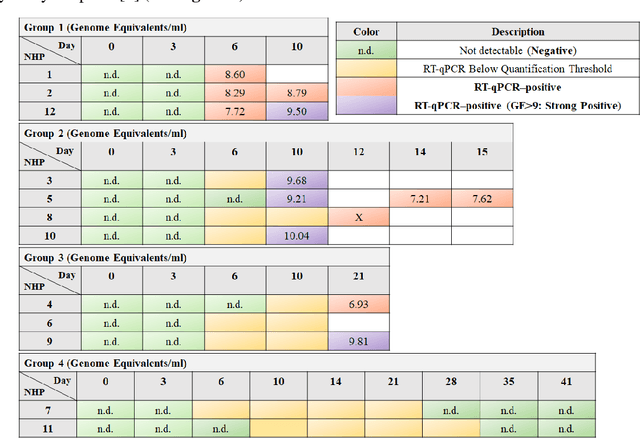

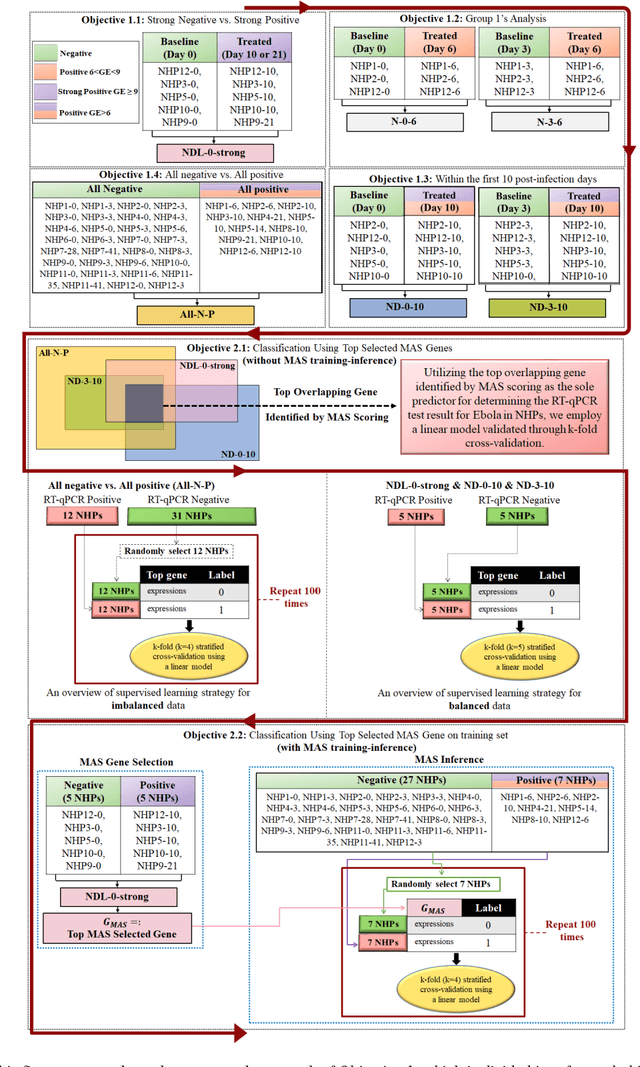

This study introduces the Supervised Magnitude-Altitude Scoring (SMAS) methodology, a machine learning-based approach, for analyzing gene expression data obtained from nonhuman primates (NHPs) infected with Ebola virus (EBOV). We utilize a comprehensive dataset of NanoString gene expression profiles from Ebola-infected NHPs, deploying the SMAS system for nuanced host-pathogen interaction analysis. SMAS effectively combines gene selection based on statistical significance and expression changes, employing linear classifiers such as logistic regression to accurately differentiate between RT-qPCR positive and negative NHP samples. A key finding of our research is the identification of IFI6 and IFI27 as critical biomarkers, demonstrating exceptional predictive performance with 100% accuracy and Area Under the Curve (AUC) metrics in classifying various stages of Ebola infection. Alongside IFI6 and IFI27, genes, including MX1, OAS1, and ISG15, were significantly upregulated, highlighting their essential roles in the immune response to EBOV. Our results underscore the efficacy of the SMAS method in revealing complex genetic interactions and response mechanisms during EBOV infection. This research provides valuable insights into EBOV pathogenesis and aids in developing more precise diagnostic tools and therapeutic strategies to address EBOV infection in particular and viral infection in general.
Cross-attention-based saliency inference for predicting cancer metastasis on whole slide images
Sep 18, 2023
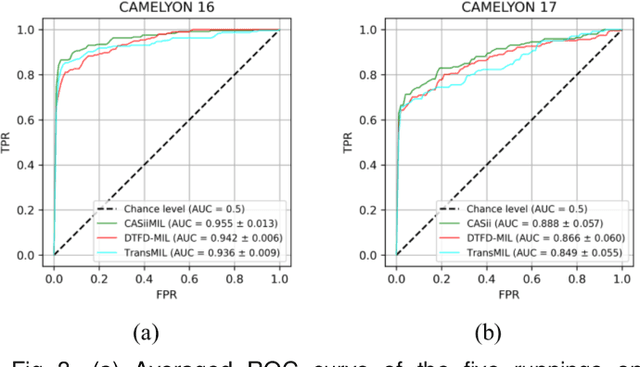

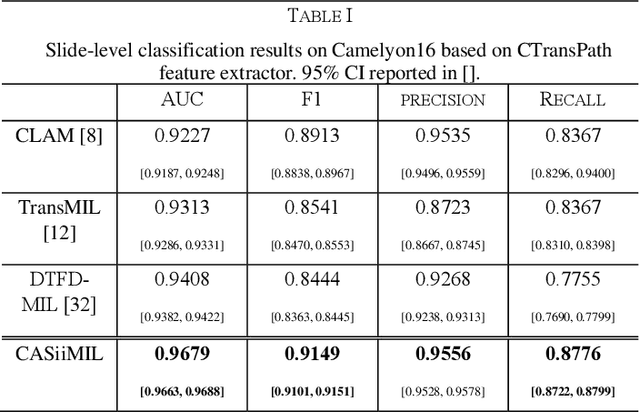
Although multiple instance learning (MIL) methods are widely used for automatic tumor detection on whole slide images (WSI), they suffer from the extreme class imbalance within the small tumor WSIs. This occurs when the tumor comprises only a few isolated cells. For early detection, it is of utmost importance that MIL algorithms can identify small tumors, even when they are less than 1% of the size of the WSI. Existing studies have attempted to address this issue using attention-based architectures and instance selection-based methodologies, but have not yielded significant improvements. This paper proposes cross-attention-based salient instance inference MIL (CASiiMIL), which involves a novel saliency-informed attention mechanism, to identify breast cancer lymph node micro-metastasis on WSIs without the need for any annotations. Apart from this new attention mechanism, we introduce a negative representation learning algorithm to facilitate the learning of saliency-informed attention weights for improved sensitivity on tumor WSIs. The proposed model outperforms the state-of-the-art MIL methods on two popular tumor metastasis detection datasets, and demonstrates great cross-center generalizability. In addition, it exhibits excellent accuracy in classifying WSIs with small tumor lesions. Moreover, we show that the proposed model has excellent interpretability attributed to the saliency-informed attention weights. We strongly believe that the proposed method will pave the way for training algorithms for early tumor detection on large datasets where acquiring fine-grained annotations is practically impossible.
Attention2Minority: A salient instance inference-based multiple instance learning for classifying small lesions in whole slide images
Jan 18, 2023Multiple instance learning (MIL) models have achieved remarkable success in analyzing whole slide images (WSIs) for disease classification problems. However, with regard to gigapixel WSI classification problems, current MIL models are often incapable of differentiating a WSI with extremely small tumor lesions. This minute tumor-to-normal area ratio in a MIL bag inhibits the attention mechanism from properly weighting the areas corresponding to minor tumor lesions. To overcome this challenge, we propose salient instance inference MIL (SiiMIL), a weakly-supervised MIL model for WSI classification. Our method initially learns representations of normal WSIs, and it then compares the normal WSIs representations with all the input patches to infer the salient instances of the input WSI. Finally, it employs attention-based MIL to perform the slide-level classification based on the selected patches of the WSI. Our experiments imply that SiiMIL can accurately identify tumor instances, which could only take up less than 1% of a WSI, so that the ratio of tumor to normal instances within a bag can increase by two to four times. It is worth mentioning that it performs equally well for large tumor lesions. As a result, SiiMIL achieves a significant improvement in performance over the state-of-the-art MIL methods.