 Add to Chrome
 Add to Firefox
 Add to Edge
Geometry-Aware Superpixel Graph Transformer with Metadata for Skin Lesion Classification
Jun 18, 2026
Automated skin cancer classification from dermoscopic images remains challenging due to heterogeneous lesion structure, strong intra-class variability, and subtle visual differences between benign and malignant cases. Existing CNN/ViT pipelines typically rely on global or patch-level features and often combine patient metadata via late fusion, which limits spatially grounded multimodal reasoning. We present a novel region-based graph learning framework that explicitly models lesions as graphs of spatially coherent superpixel regions represented as frozen CNN features. To capture fine-grained lesion arrangements, we encode inter-regional geometry as edge attributes and introduce a dedicated metadata context node connected to all regions, providing structured integration of demographic/clinical variables within the same relational space. Node representations are updated using our edge-aware graph transformer followed by attention-driven propagation, and a final graph-level embedding for benign-malignant classification. Experiments on four public benchmarks demonstrate that explicit region-level relational modeling and graph-native multimodal fusion yield consistent gains over the state-of-the-art. Consequently, we establish a new graph-centric perspective in which CNN features are modeled as relational nodes and improved through contextual integration, yielding more expressive and robust classifications.

Neural Networks for Infectious Diseases Detection: Prospects and Challenges
Dec 07, 2021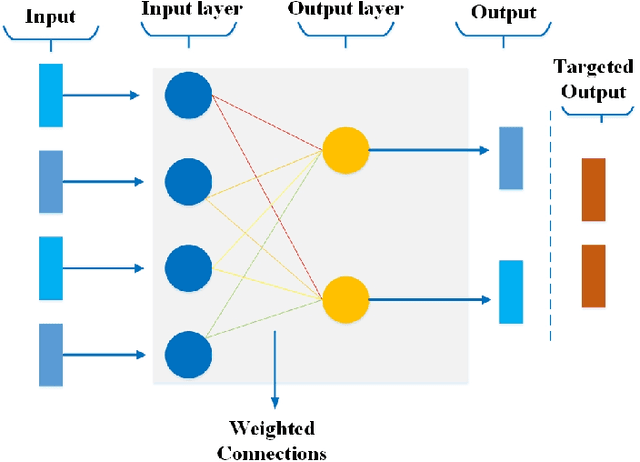
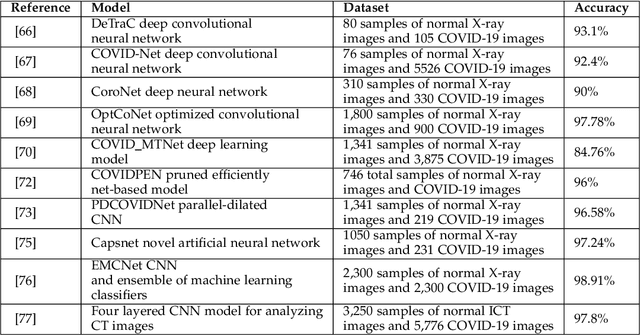
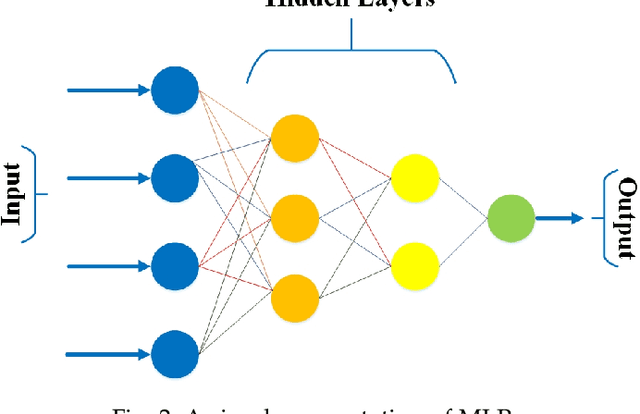
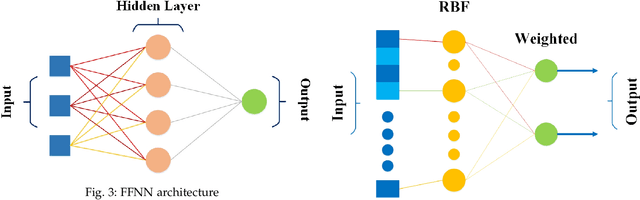
Artificial neural network (ANN) ability to learn, correct errors, and transform a large amount of raw data into useful medical decisions for treatment and care have increased its popularity for enhanced patient safety and quality of care. Therefore, this paper reviews the critical role of ANNs in providing valuable insights for patients' healthcare decisions and efficient disease diagnosis. We thoroughly review different types of ANNs presented in the existing literature that advanced ANNs adaptation for complex applications. Moreover, we also investigate ANN's advances for various disease diagnoses and treatments such as viral, skin, cancer, and COVID-19. Furthermore, we propose a novel deep Convolutional Neural Network (CNN) model called ConXNet for improving the detection accuracy of COVID-19 disease. ConXNet is trained and tested using different datasets, and it achieves more than 97% detection accuracy and precision, which is significantly better than existing models. Finally, we highlight future research directions and challenges such as complexity of the algorithms, insufficient available data, privacy and security, and integration of biosensing with ANNs. These research directions require considerable attention for improving the scope of ANNs for medical diagnostic and treatment applications.