 Add to Chrome
 Add to Firefox
 Add to Edge
Interpretable and Explainable Surrogate Modeling for Simulations: A State-of-the-Art Survey and Perspectives on Explainable AI for Decision-Making
Apr 15, 2026
The simulation of complex systems increasingly relies on sophisticated but fundamentally opaque computational black-box simulators. Surrogate models play a central role in reducing the computational cost of complex systems simulations across a wide range of scientific and engineering domains. Notwithstanding, they inevitably inherit and often exacerbate this black-box nature, obscuring how input variables drive physical responses. Conversely, Explainable Artificial Intelligence (XAI) offers powerful tools to unpack these models. Yet, XAI methods struggle with engineering-specific constraints, such as highly correlated inputs, dynamical systems, and rigorous reliability requirements. Consequently, surrogate modeling and XAI have largely evolved as distinct fields of research, despite their strong complementarity. To reconnect these approaches, this state-of-the-art survey provides a structured perspective that maps existing XAI techniques onto the various stages of surrogate modeling workflows for design and exploration. To ground this synthesis, we draw upon illustrative applications across both equation-based simulations and agent-based modeling. We survey a broad spectrum of techniques, highlighting their strengths for revealing interactions and supporting human comprehension. Finally, we identify pressing open challenges, including the explainability of dynamical systems and the handling of mixed-variable systems, and propose a research agenda to make explainability a core, embedded element of simulation-driven workflows from model construction through decision-making. By transforming opaque emulators into explainable tools, this agenda empowers practitioners to move beyond accelerating simulations to extracting actionable insights from complex system behaviors.

IPatch: A Multi-Resolution Transformer Architecture for Robust Time-Series Forecasting
Mar 25, 2026Accurate forecasting of multivariate time series remains challenging due to the need to capture both short-term fluctuations and long-range temporal dependencies. Transformer-based models have emerged as a powerful approach, but their performance depends critically on the representation of temporal data. Traditional point-wise representations preserve individual time-step information, enabling fine-grained modeling, yet they tend to be computationally expensive and less effective at modeling broader contextual dependencies, limiting their scalability to long sequences. Patch-wise representations aggregate consecutive steps into compact tokens to improve efficiency and model local temporal dynamics, but they often discard fine-grained temporal details that are critical for accurate predictions in volatile or complex time series. We propose IPatch, a multi-resolution Transformer architecture that integrates both point-wise and patch-wise tokens, modeling temporal information at multiple resolutions. Experiments on 7 benchmark datasets demonstrate that IPatch consistently improves forecasting accuracy, robustness to noise, and generalization across various prediction horizons compared to single-representation baselines.
Fusion-CAM: Integrating Gradient and Region-Based Class Activation Maps for Robust Visual Explanations
Mar 05, 2026Interpreting the decision-making process of deep convolutional neural networks remains a central challenge in achieving trustworthy and transparent artificial intelligence. Explainable AI (XAI) techniques, particularly Class Activation Map (CAM) methods, are widely adopted to visualize the input regions influencing model predictions. Gradient-based approaches (e.g. Grad-CAM) provide highly discriminative, fine-grained details by computing gradients of class activations but often yield noisy and incomplete maps that emphasize only the most salient regions rather than the complete objects. Region-based approaches (e.g. Score-CAM) aggregate information over larger areas, capturing broader object coverage at the cost of over-smoothing and reduced sensitivity to subtle features. We introduce Fusion-CAM, a novel framework that bridges this explanatory gap by unifying both paradigms through a dedicated fusion mechanism to produce robust and highly discriminative visual explanations. Our method first denoises gradient-based maps, yielding cleaner and more focused activations. It then combines the refined gradient map with region-based maps using contribution weights to enhance class coverage. Finally, we propose an adaptive similarity-based pixel-level fusion that evaluates the agreement between both paradigms and dynamically adjusts the fusion strength. This adaptive mechanism reinforces consistent activations while softly blending conflicting regions, resulting in richer, context-aware, and input-adaptive visual explanations. Extensive experiments on standard benchmarks show that Fusion-CAM consistently outperforms existing CAM variants in both qualitative visualization and quantitative evaluation, providing a robust and flexible tool for interpreting deep neural networks.
Improving Neural Retrieval with Attribution-Guided Query Rewriting
Feb 12, 2026Neural retrievers are effective but brittle: underspecified or ambiguous queries can misdirect ranking even when relevant documents exist. Existing approaches address this brittleness only partially: LLMs rewrite queries without retriever feedback, and explainability methods identify misleading tokens but are used for post-hoc analysis. We close this loop and propose an attribution-guided query rewriting method that uses token-level explanations to guide query rewriting. For each query, we compute gradient-based token attributions from the retriever and then use these scores as soft guidance in a structured prompt to an LLM that clarifies weak or misleading query components while preserving intent. Evaluated on BEIR collections, the resulting rewrites consistently improve retrieval effectiveness over strong baselines, with larger gains for implicit or ambiguous information needs.
AmharicIR+Instr: A Two-Dataset Resource for Neural Retrieval and Instruction Tuning
Feb 10, 2026Neural retrieval and GPT-style generative models rely on large, high-quality supervised data, which is still scarce for low-resource languages such as Amharic. We release an Amharic data resource consisting of two datasets that supports research on (i) neural retrieval-ranking and (ii) instruction-following text generation. The retrieval-ranking dataset contains 1,091 manually verified query-positive-negative document triplets drawn from diverse Amharic sources and constructed to support contrastive training and benchmarking of neural retrievers (e.g., DPR, ColBERT-style late interaction and SPLADE-style sparse neural retrieval). Triplets are created through a combination of expert-curated queries, web-derived queries, and LLM-assisted generation, with positive/negative documents selected from the web or synthesized by LLMs and then validated by native speakers. The instruction prompt-response dataset comprises 6,285 Amharic prompt-response pairs spanning multiple domains and instruction types, generated with several LLMs and refined through manual review and correction for grammaticality, relevance, fluency, and factual plausibility. We release both datasets with standardized splits and formats (CSV,JSON,JSONL) to enable reproducible work on Amharic retrieval, ranking, and generative modelling. These datasets also come with a methodology that can be generalized to other low-resource languages.
Analyzing Shapley Additive Explanations to Understand Anomaly Detection Algorithm Behaviors and Their Complementarity
Jan 30, 2026Unsupervised anomaly detection is a challenging problem due to the diversity of data distributions and the lack of labels. Ensemble methods are often adopted to mitigate these challenges by combining multiple detectors, which can reduce individual biases and increase robustness. Yet building an ensemble that is genuinely complementary remains challenging, since many detectors rely on similar decision cues and end up producing redundant anomaly scores. As a result, the potential of ensemble learning is often limited by the difficulty of identifying models that truly capture different types of irregularities. To address this, we propose a methodology for characterizing anomaly detectors through their decision mechanisms. Using SHapley Additive exPlanations, we quantify how each model attributes importance to input features, and we use these attribution profiles to measure similarity between detectors. We show that detectors with similar explanations tend to produce correlated anomaly scores and identify largely overlapping anomalies. Conversely, explanation divergence reliably indicates complementary detection behavior. Our results demonstrate that explanation-driven metrics offer a different criterion than raw outputs for selecting models in an ensemble. However, we also demonstrate that diversity alone is insufficient; high individual model performance remains a prerequisite for effective ensembles. By explicitly targeting explanation diversity while maintaining model quality, we are able to construct ensembles that are more diverse, more complementary, and ultimately more effective for unsupervised anomaly detection.
From Black-Box Tuning to Guided Optimization via Hyperparameters Interaction Analysis
Dec 22, 2025Hyperparameters tuning is a fundamental, yet computationally expensive, step in optimizing machine learning models. Beyond optimization, understanding the relative importance and interaction of hyperparameters is critical to efficient model development. In this paper, we introduce MetaSHAP, a scalable semi-automated eXplainable AI (XAI) method, that uses meta-learning and Shapley values analysis to provide actionable and dataset-aware tuning insights. MetaSHAP operates over a vast benchmark of over 09 millions evaluated machine learning pipelines, allowing it to produce interpretable importance scores and actionable tuning insights that reveal how much each hyperparameter matters, how it interacts with others and in which value ranges its influence is concentrated. For a given algorithm and dataset, MetaSHAP learns a surrogate performance model from historical configurations, computes hyperparameters interactions using SHAP-based analysis, and derives interpretable tuning ranges from the most influential hyperparameters. This allows practitioners not only to prioritize which hyperparameters to tune, but also to understand their directionality and interactions. We empirically validate MetaSHAP on a diverse benchmark of 164 classification datasets and 14 classifiers, demonstrating that it produces reliable importance rankings and competitive performance when used to guide Bayesian optimization.
XStacking: Explanation-Guided Stacked Ensemble Learning
Jul 23, 2025Ensemble Machine Learning (EML) techniques, especially stacking, have been shown to improve predictive performance by combining multiple base models. However, they are often criticized for their lack of interpretability. In this paper, we introduce XStacking, an effective and inherently explainable framework that addresses this limitation by integrating dynamic feature transformation with model-agnostic Shapley additive explanations. This enables stacked models to retain their predictive accuracy while becoming inherently explainable. We demonstrate the effectiveness of the framework on 29 datasets, achieving improvements in both the predictive effectiveness of the learning space and the interpretability of the resulting models. XStacking offers a practical and scalable solution for responsible ML.
An experimental survey and Perspective View on Meta-Learning for Automated Algorithms Selection and Parametrization
Apr 08, 2025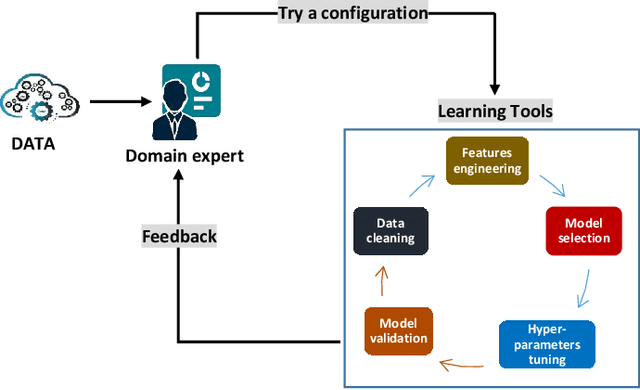
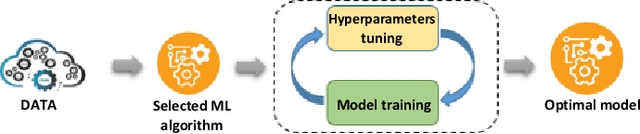
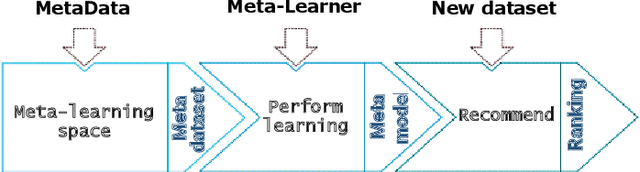
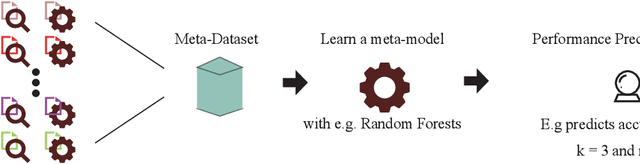
Considerable progress has been made in the recent literature studies to tackle the Algorithms Selection and Parametrization (ASP) problem, which is diversified in multiple meta-learning setups. Yet there is a lack of surveys and comparative evaluations that critically analyze, summarize and assess the performance of existing methods. In this paper, we provide an overview of the state of the art in this continuously evolving field. The survey sheds light on the motivational reasons for pursuing classifiers selection through meta-learning. In this regard, Automated Machine Learning (AutoML) is usually treated as an ASP problem under the umbrella of the democratization of machine learning. Accordingly, AutoML makes machine learning techniques accessible to domain scientists who are interested in applying advanced analytics but lack the required expertise. It can ease the task of manually selecting ML algorithms and tuning related hyperparameters. We comprehensively discuss the different phases of classifiers selection based on a generic framework that is formed as an outcome of reviewing prior works. Subsequently, we propose a benchmark knowledge base of 4 millions previously learned models and present extensive comparative evaluations of the prominent methods for classifiers selection based on 08 classification algorithms and 400 benchmark datasets. The comparative study quantitatively assesses the performance of algorithms selection methods along while emphasizing the strengths and limitations of existing studies.
Uncovering the Limitations of Query Performance Prediction: Failures, Insights, and Implications for Selective Query Processing
Apr 01, 2025Query Performance Prediction (QPP) estimates retrieval systems effectiveness for a given query, offering valuable insights for search effectiveness and query processing. Despite extensive research, QPPs face critical challenges in generalizing across diverse retrieval paradigms and collections. This paper provides a comprehensive evaluation of state-of-the-art QPPs (e.g. NQC, UQC), LETOR-based features, and newly explored dense-based predictors. Using diverse sparse rankers (BM25, DFree without and with query expansion) and hybrid or dense (SPLADE and ColBert) rankers and diverse test collections ROBUST, GOV2, WT10G, and MS MARCO; we investigate the relationships between predicted and actual performance, with a focus on generalization and robustness. Results show significant variability in predictors accuracy, with collections as the main factor and rankers next. Some sparse predictors perform somehow on some collections (TREC ROBUST and GOV2) but do not generalise to other collections (WT10G and MS-MARCO). While some predictors show promise in specific scenarios, their overall limitations constrain their utility for applications. We show that QPP-driven selective query processing offers only marginal gains, emphasizing the need for improved predictors that generalize across collections, align with dense retrieval architectures and are useful for downstream applications.