 Add to Chrome
 Add to Firefox
 Add to Edge
From Black-Box Tuning to Guided Optimization via Hyperparameters Interaction Analysis
Dec 22, 2025
Hyperparameters tuning is a fundamental, yet computationally expensive, step in optimizing machine learning models. Beyond optimization, understanding the relative importance and interaction of hyperparameters is critical to efficient model development. In this paper, we introduce MetaSHAP, a scalable semi-automated eXplainable AI (XAI) method, that uses meta-learning and Shapley values analysis to provide actionable and dataset-aware tuning insights. MetaSHAP operates over a vast benchmark of over 09 millions evaluated machine learning pipelines, allowing it to produce interpretable importance scores and actionable tuning insights that reveal how much each hyperparameter matters, how it interacts with others and in which value ranges its influence is concentrated. For a given algorithm and dataset, MetaSHAP learns a surrogate performance model from historical configurations, computes hyperparameters interactions using SHAP-based analysis, and derives interpretable tuning ranges from the most influential hyperparameters. This allows practitioners not only to prioritize which hyperparameters to tune, but also to understand their directionality and interactions. We empirically validate MetaSHAP on a diverse benchmark of 164 classification datasets and 14 classifiers, demonstrating that it produces reliable importance rankings and competitive performance when used to guide Bayesian optimization.

XStacking: Explanation-Guided Stacked Ensemble Learning
Jul 23, 2025Ensemble Machine Learning (EML) techniques, especially stacking, have been shown to improve predictive performance by combining multiple base models. However, they are often criticized for their lack of interpretability. In this paper, we introduce XStacking, an effective and inherently explainable framework that addresses this limitation by integrating dynamic feature transformation with model-agnostic Shapley additive explanations. This enables stacked models to retain their predictive accuracy while becoming inherently explainable. We demonstrate the effectiveness of the framework on 29 datasets, achieving improvements in both the predictive effectiveness of the learning space and the interpretability of the resulting models. XStacking offers a practical and scalable solution for responsible ML.
Investigating the Duality of Interpretability and Explainability in Machine Learning
Mar 27, 2025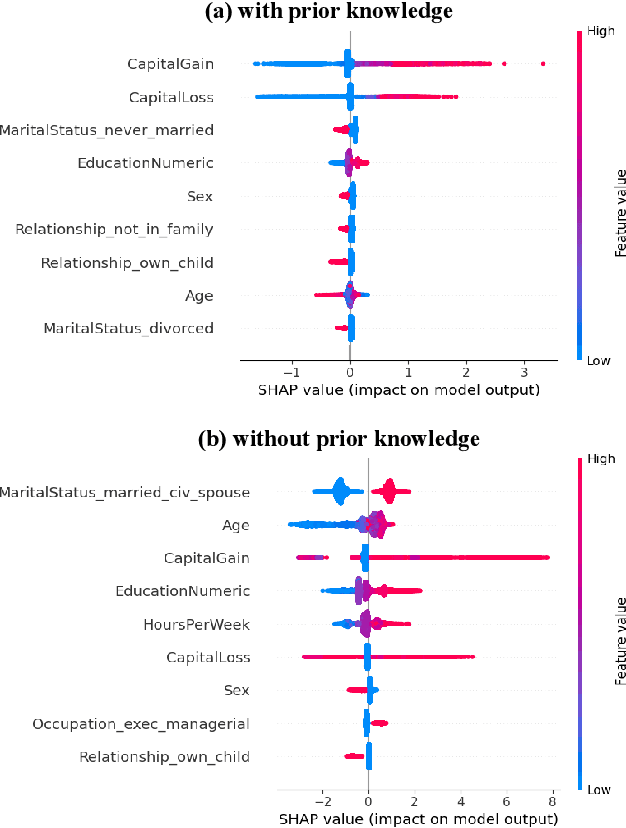

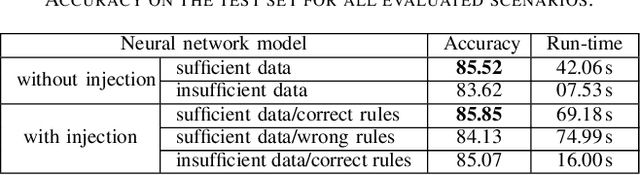
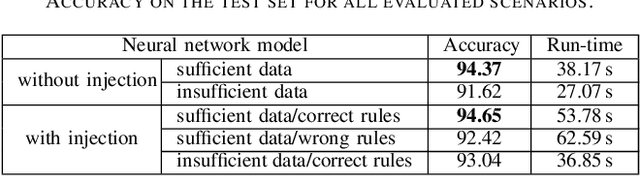
The rapid evolution of machine learning (ML) has led to the widespread adoption of complex "black box" models, such as deep neural networks and ensemble methods. These models exhibit exceptional predictive performance, making them invaluable for critical decision-making across diverse domains within society. However, their inherently opaque nature raises concerns about transparency and interpretability, making them untrustworthy decision support systems. To alleviate such a barrier to high-stakes adoption, research community focus has been on developing methods to explain black box models as a means to address the challenges they pose. Efforts are focused on explaining these models instead of developing ones that are inherently interpretable. Designing inherently interpretable models from the outset, however, can pave the path towards responsible and beneficial applications in the field of ML. In this position paper, we clarify the chasm between explaining black boxes and adopting inherently interpretable models. We emphasize the imperative need for model interpretability and, following the purpose of attaining better (i.e., more effective or efficient w.r.t. predictive performance) and trustworthy predictors, provide an experimental evaluation of latest hybrid learning methods that integrates symbolic knowledge into neural network predictors. We demonstrate how interpretable hybrid models could potentially supplant black box ones in different domains.