 Add to Chrome
 Add to Firefox
 Add to Edge
Interpretable and Explainable Surrogate Modeling for Simulations: A State-of-the-Art Survey and Perspectives on Explainable AI for Decision-Making
Apr 15, 2026
The simulation of complex systems increasingly relies on sophisticated but fundamentally opaque computational black-box simulators. Surrogate models play a central role in reducing the computational cost of complex systems simulations across a wide range of scientific and engineering domains. Notwithstanding, they inevitably inherit and often exacerbate this black-box nature, obscuring how input variables drive physical responses. Conversely, Explainable Artificial Intelligence (XAI) offers powerful tools to unpack these models. Yet, XAI methods struggle with engineering-specific constraints, such as highly correlated inputs, dynamical systems, and rigorous reliability requirements. Consequently, surrogate modeling and XAI have largely evolved as distinct fields of research, despite their strong complementarity. To reconnect these approaches, this state-of-the-art survey provides a structured perspective that maps existing XAI techniques onto the various stages of surrogate modeling workflows for design and exploration. To ground this synthesis, we draw upon illustrative applications across both equation-based simulations and agent-based modeling. We survey a broad spectrum of techniques, highlighting their strengths for revealing interactions and supporting human comprehension. Finally, we identify pressing open challenges, including the explainability of dynamical systems and the handling of mixed-variable systems, and propose a research agenda to make explainability a core, embedded element of simulation-driven workflows from model construction through decision-making. By transforming opaque emulators into explainable tools, this agenda empowers practitioners to move beyond accelerating simulations to extracting actionable insights from complex system behaviors.

From Model-Based Screening to Data-Driven Surrogates: A Multi-Stage Workflow for Exploring Stochastic Agent-Based Models
Apr 03, 2026Systematic exploration of Agent-Based Models (ABMs) is challenged by the curse of dimensionality and their inherent stochasticity. We present a multi-stage pipeline integrating the systematic design of experiments with machine learning surrogates. Using a predator-prey case study, our methodology proceeds in two steps. First, an automated model-based screening identifies dominant variables, assesses outcome variability, and segments the parameter space. Second, we train Machine Learning models to map the remaining nonlinear interaction effects. This approach automates the discovery of unstable regions where system outcomes are highly dependent on nonlinear interactions between many variables. Thus, this work provides modelers with a rigorous, hands-off framework for sensitivity analysis and policy testing, even when dealing with high-dimensional stochastic simulators.
* Published in MABS 2026 - The 27th International Workshop on Multi-Agent-Based Simulation
Analyzing Shapley Additive Explanations to Understand Anomaly Detection Algorithm Behaviors and Their Complementarity
Jan 30, 2026Unsupervised anomaly detection is a challenging problem due to the diversity of data distributions and the lack of labels. Ensemble methods are often adopted to mitigate these challenges by combining multiple detectors, which can reduce individual biases and increase robustness. Yet building an ensemble that is genuinely complementary remains challenging, since many detectors rely on similar decision cues and end up producing redundant anomaly scores. As a result, the potential of ensemble learning is often limited by the difficulty of identifying models that truly capture different types of irregularities. To address this, we propose a methodology for characterizing anomaly detectors through their decision mechanisms. Using SHapley Additive exPlanations, we quantify how each model attributes importance to input features, and we use these attribution profiles to measure similarity between detectors. We show that detectors with similar explanations tend to produce correlated anomaly scores and identify largely overlapping anomalies. Conversely, explanation divergence reliably indicates complementary detection behavior. Our results demonstrate that explanation-driven metrics offer a different criterion than raw outputs for selecting models in an ensemble. However, we also demonstrate that diversity alone is insufficient; high individual model performance remains a prerequisite for effective ensembles. By explicitly targeting explanation diversity while maintaining model quality, we are able to construct ensembles that are more diverse, more complementary, and ultimately more effective for unsupervised anomaly detection.
Adaptive Agents in Spatial Double-Auction Markets: Modeling the Emergence of Industrial Symbiosis
Dec 19, 2025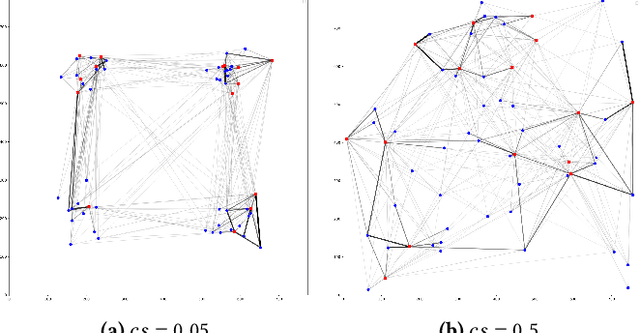
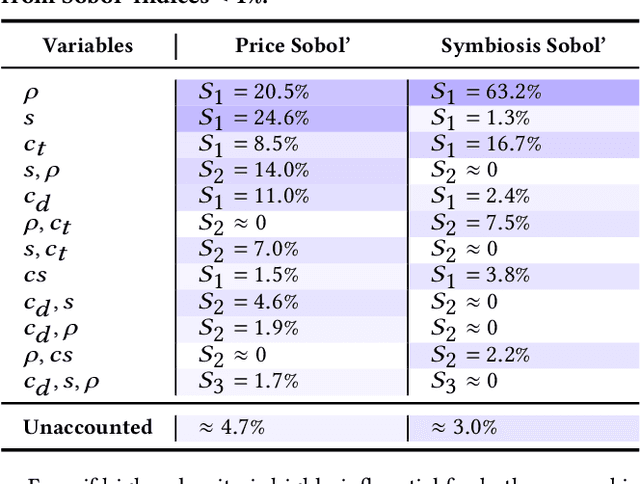
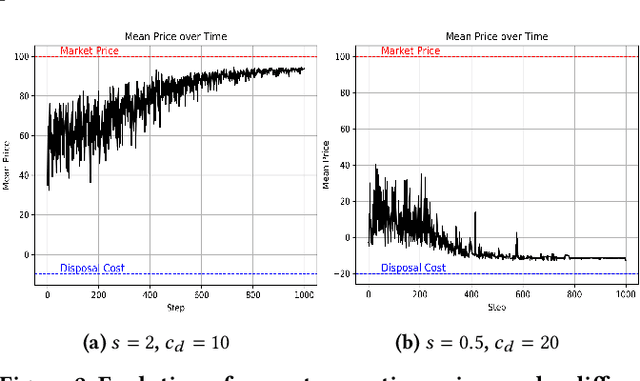
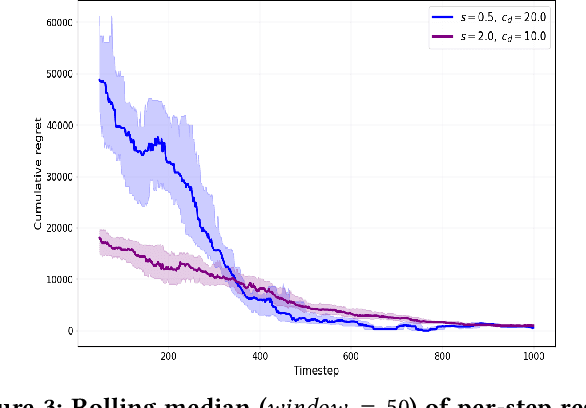
Industrial symbiosis fosters circularity by enabling firms to repurpose residual resources, yet its emergence is constrained by socio-spatial frictions that shape costs, matching opportunities, and market efficiency. Existing models often overlook the interaction between spatial structure, market design, and adaptive firm behavior, limiting our understanding of where and how symbiosis arises. We develop an agent-based model where heterogeneous firms trade byproducts through a spatially embedded double-auction market, with prices and quantities emerging endogenously from local interactions. Leveraging reinforcement learning, firms adapt their bidding strategies to maximize profit while accounting for transport costs, disposal penalties, and resource scarcity. Simulation experiments reveal the economic and spatial conditions under which decentralized exchanges converge toward stable and efficient outcomes. Counterfactual regret analysis shows that sellers' strategies approach a near Nash equilibrium, while sensitivity analysis highlights how spatial structures and market parameters jointly govern circularity. Our model provides a basis for exploring policy interventions that seek to align firm incentives with sustainability goals, and more broadly demonstrates how decentralized coordination can emerge from adaptive agents in spatially constrained markets.
* AAMAS CC-BY 4.0 licence. Adaptive Agents in Spatial Double-Auction Markets: Modeling the Emergence of Industrial Symbiosis. Full paper. In Proc. of the 25th International Conference on Autonomous Agents and Multiagent Systems (AAMAS 2026), Paphos, Cyprus, May 25 - 29, 2026, IFAAMAS, 10 pages