 Add to Chrome
 Add to Firefox
 Add to Edge
MorphStrata: Layer-Specific Perturbations for Generating Morphence Students in Time-Series Moving Target Defense
Jun 16, 2026
Time-series forecasting models remain vulnerable to gradient-based adversarial attacks while existing defense mechanisms typically incur a trade-off in robustness for bounded response and compute cost. The problem is pronounced in Moving Target Defense where maintaining multiple randomized model instances substantially exacerbates the training overhead. In this work, we introduce MorphStrata, a student generation strategy with selective, layer-specific stochastic noise injection that extends the traditional Morphence defense. MorphStrata uses a Transformer backbone as the teacher and perturbs randomly selected architectural blocks to create structured heterogeneity across student models in response to varied data distributions and threat models. We evaluate against vanilla Transformer and Morphence backbones on a suite of benchmarks including the Jena Climate, Electricity Load Diagrams, and Appliances Energy Prediction using FGSM, BIM and PGD attacks across multiple attack strengths. Across datasets and attack regimes, the proposed ensemble maintains comparable adversarial RMSE. Specifically, for high entropy, periodic datasets as in the case of the AEP data, MorphStrata achieves the lowest RMSE across all attacks and perturbation budgets, improving over the static baseline by up to 24.11% and 97.97% under FGSM and BIM respectively at an epsilon value of 0.5 over 30 randomized trials. Targeting the layers to generate MorphStrata students accounts for less than 1% increase in train-times over the Morphence MTD baseline for most of the experiments, while accounting for double digit gains in adversarial RMSE reduction. We also observe a positive correlation between higher pairwise L2 distance (among generated students) and overall defense effectiveness. In summary, MorphStrata maintains adversarial robustness as an MTD defense at marginal cost deltas when compared to existing baselines.

The State of Lithium-Ion Battery Health Prognostics in the CPS Era
Mar 28, 2024Lithium-ion batteries (Li-ion) have revolutionized energy storage technology, becoming integral to our daily lives by powering a diverse range of devices and applications. Their high energy density, fast power response, recyclability, and mobility advantages have made them the preferred choice for numerous sectors. This paper explores the seamless integration of Prognostics and Health Management within batteries, presenting a multidisciplinary approach that enhances the reliability, safety, and performance of these powerhouses. Remaining useful life (RUL), a critical concept in prognostics, is examined in depth, emphasizing its role in predicting component failure before it occurs. The paper reviews various RUL prediction methods, from traditional models to cutting-edge data-driven techniques. Furthermore, it highlights the paradigm shift toward deep learning architectures within the field of Li-ion battery health prognostics, elucidating the pivotal role of deep learning in addressing battery system complexities. Practical applications of PHM across industries are also explored, offering readers insights into real-world implementations.This paper serves as a comprehensive guide, catering to both researchers and practitioners in the field of Li-ion battery PHM.
Software Supply Chain Vulnerabilities Detection in Source Code: Performance Comparison between Traditional and Quantum Machine Learning Algorithms
May 31, 2023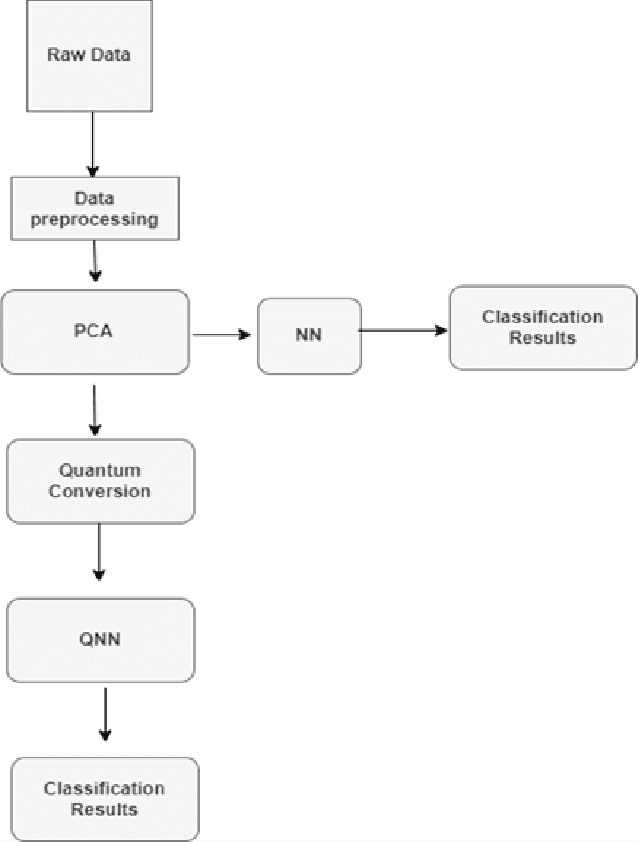

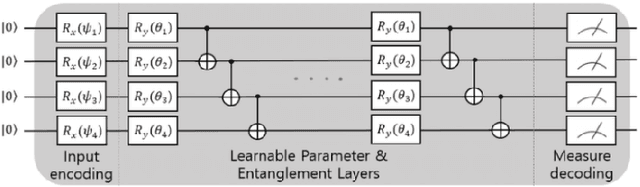

The software supply chain (SSC) attack has become one of the crucial issues that are being increased rapidly with the advancement of the software development domain. In general, SSC attacks execute during the software development processes lead to vulnerabilities in software products targeting downstream customers and even involved stakeholders. Machine Learning approaches are proven in detecting and preventing software security vulnerabilities. Besides, emerging quantum machine learning can be promising in addressing SSC attacks. Considering the distinction between traditional and quantum machine learning, performance could be varies based on the proportions of the experimenting dataset. In this paper, we conduct a comparative analysis between quantum neural networks (QNN) and conventional neural networks (NN) with a software supply chain attack dataset known as ClaMP. Our goal is to distinguish the performance between QNN and NN and to conduct the experiment, we develop two different models for QNN and NN by utilizing Pennylane for quantum and TensorFlow and Keras for traditional respectively. We evaluated the performance of both models with different proportions of the ClaMP dataset to identify the f1 score, recall, precision, and accuracy. We also measure the execution time to check the efficiency of both models. The demonstration result indicates that execution time for QNN is slower than NN with a higher percentage of datasets. Due to recent advancements in QNN, a large level of experiments shall be carried out to understand both models accurately in our future research.
A Novel IoT-based Framework for Non-Invasive Human Hygiene Monitoring using Machine Learning Techniques
Jul 07, 2022
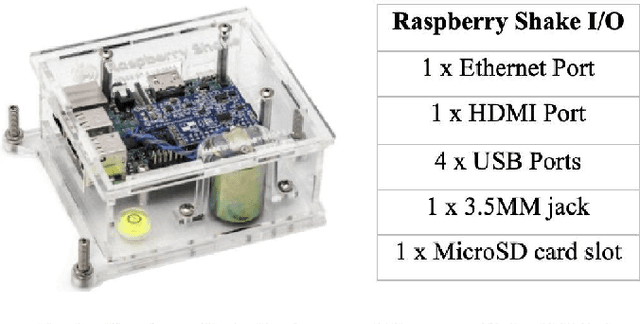
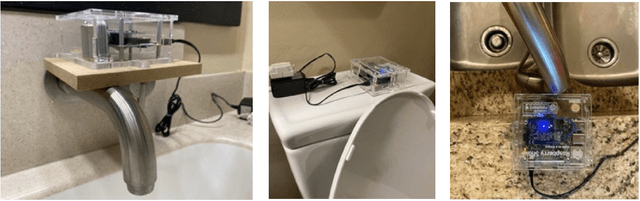
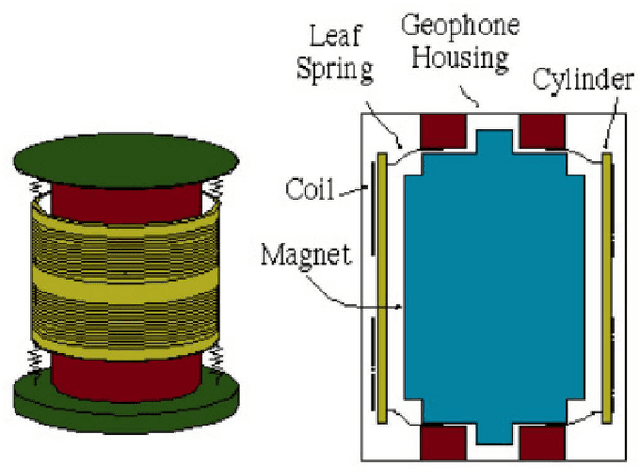
People's personal hygiene habits speak volumes about the condition of taking care of their bodies and health in daily lifestyle. Maintaining good hygiene practices not only reduces the chances of contracting a disease but could also reduce the risk of spreading illness within the community. Given the current pandemic, daily habits such as washing hands or taking regular showers have taken primary importance among people, especially for the elderly population living alone at home or in an assisted living facility. This paper presents a novel and non-invasive framework for monitoring human hygiene using vibration sensors where we adopt Machine Learning techniques. The approach is based on a combination of a geophone sensor, a digitizer, and a cost-efficient computer board in a practical enclosure. Monitoring daily hygiene routines may help healthcare professionals be proactive rather than reactive in identifying and controlling the spread of potential outbreaks within the community. The experimental result indicates that applying a Support Vector Machine (SVM) for binary classification exhibits a promising accuracy of ~95% in the classification of different hygiene habits. Furthermore, both tree-based classifier (Random Forrest and Decision Tree) outperforms other models by achieving the highest accuracy (100%), which means that classifying hygiene events using vibration and non-invasive sensors is possible for monitoring hygiene activity.