 Add to Chrome
 Add to Firefox
 Add to Edge
Gemini Embedding 2: A Native Multimodal Embedding Model from Gemini
May 26, 2026
We introduce Gemini Embedding 2, a native multimodal embedding model that allows embedding video, audio, image, and text modalities in a unified representation space. We leverage the multimodal capabilities of Gemini to produce embeddings for arbitrary combinations of interleaved inputs across all these modalities that generalize well across a wide variety of tasks. Applying large-scale contrastive learning in a multi-task multi-stage training setup, we achieve state-of-the-art performance on key embedding benchmarks including unimodal, cross-modal, and multimodal retrieval spanning a diverse set of tasks. We show that our embedding model demonstrates strong performance (with a score of 62.9 R@1 on MSCOCO, 68.8 NDCG@10 on Vatex, 69.9 on MTEB multilingual and 84.0 on MTEB Code) across a variety of tasks surpassing the performance of specialized models. These unified capabilities make Gemini Embedding 2 a promising candidate for downstream use cases such as RAG, recommendation and search. Furthermore, its robust zero-shot performance across distinct fields - from astronomy and bioscience to fine arts and the culinary arts - establishes it as a highly reliable, out-of-the-box representation even for specialized domains.

Gemini Embedding: Generalizable Embeddings from Gemini
Mar 10, 2025In this report, we introduce Gemini Embedding, a state-of-the-art embedding model leveraging the power of Gemini, Google's most capable large language model. Capitalizing on Gemini's inherent multilingual and code understanding capabilities, Gemini Embedding produces highly generalizable embeddings for text spanning numerous languages and textual modalities. The representations generated by Gemini Embedding can be precomputed and applied to a variety of downstream tasks including classification, similarity, clustering, ranking, and retrieval. Evaluated on the Massive Multilingual Text Embedding Benchmark (MMTEB), which includes over one hundred tasks across 250+ languages, Gemini Embedding substantially outperforms prior state-of-the-art models, demonstrating considerable improvements in embedding quality. Achieving state-of-the-art performance across MMTEB's multilingual, English, and code benchmarks, our unified model demonstrates strong capabilities across a broad selection of tasks and surpasses specialized domain-specific models.
Cost-Effective Methodology for Complex Tuning Searches in HPC: Navigating Interdependencies and Dimensionality
Mar 12, 2024
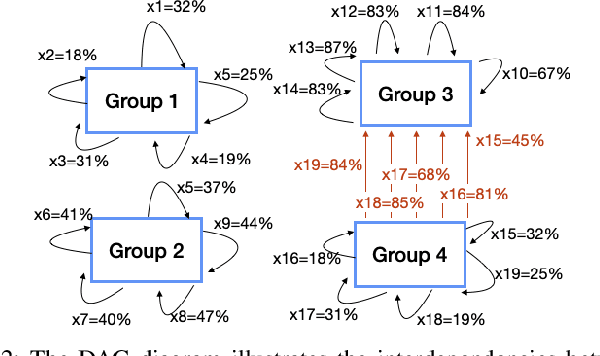
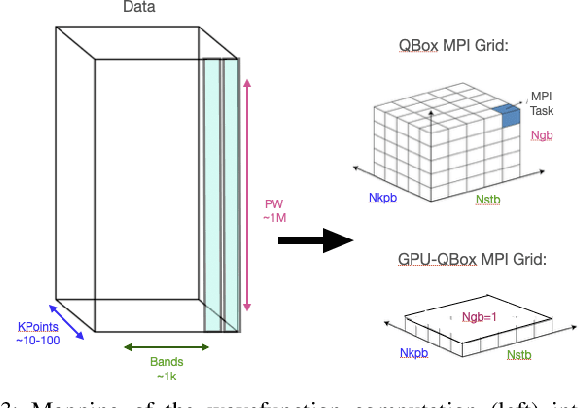
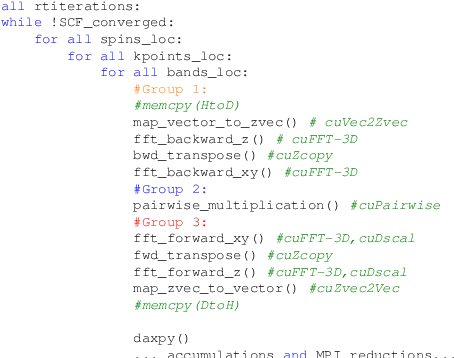
Tuning searches are pivotal in High-Performance Computing (HPC), addressing complex optimization challenges in computational applications. The complexity arises not only from finely tuning parameters within routines but also potential interdependencies among them, rendering traditional optimization methods inefficient. Instead of scrutinizing interdependencies among parameters and routines, practitioners often face the dilemma of conducting independent tuning searches for each routine, thereby overlooking interdependence, or pursuing a more resource-intensive joint search for all routines. This decision is driven by the consideration that some interdependence analysis and high-dimensional decomposition techniques in literature may be prohibitively expensive in HPC tuning searches. Our methodology adapts and refines these methods to ensure computational feasibility while maximizing performance gains in real-world scenarios. Our methodology leverages a cost-effective interdependence analysis to decide whether to merge several tuning searches into a joint search or conduct orthogonal searches. Tested on synthetic functions with varying levels of parameter interdependence, our methodology efficiently explores the search space. In comparison to Bayesian-optimization-based full independent or fully joint searches, our methodology suggested an optimized breakdown of independent and merged searches that led to final configurations up to 8% more accurate, reducing the search time by up to 95%. When applied to GPU-offloaded Real-Time Time-Dependent Density Functional Theory (RT-TDDFT), an application in computational materials science that challenges modern HPC autotuners, our methodology achieved an effective tuning search. Its adaptability and efficiency extend beyond RT-TDDFT, making it valuable for related applications in HPC.