 Add to Chrome
 Add to Firefox
 Add to Edge
Hypernetworks That Evolve Themselves
Dec 18, 2025
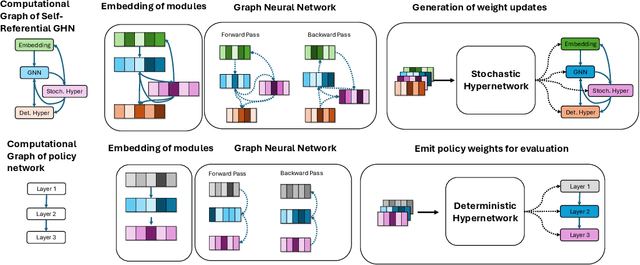
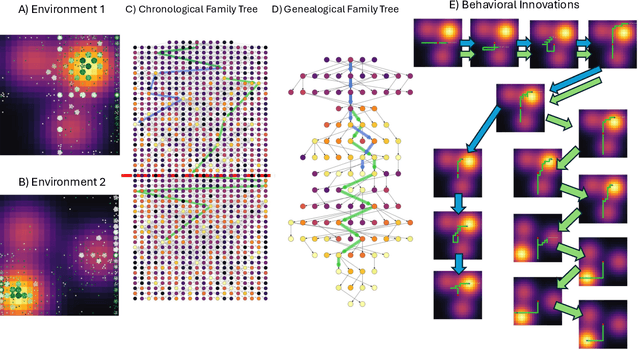
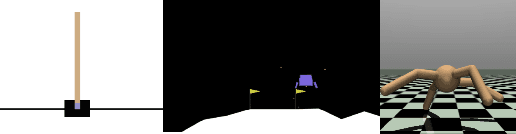
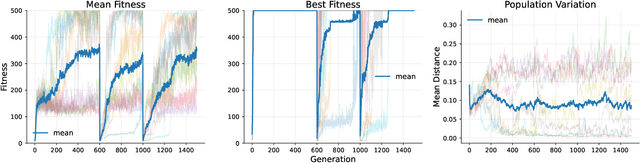
How can neural networks evolve themselves without relying on external optimizers? We propose Self-Referential Graph HyperNetworks, systems where the very machinery of variation and inheritance is embedded within the network. By uniting hypernetworks, stochastic parameter generation, and graph-based representations, Self-Referential GHNs mutate and evaluate themselves while adapting mutation rates as selectable traits. Through new reinforcement learning benchmarks with environmental shifts (CartPoleSwitch, LunarLander-Switch), Self-Referential GHNs show swift, reliable adaptation and emergent population dynamics. In the locomotion benchmark Ant-v5, they evolve coherent gaits, showing promising fine-tuning capabilities by autonomously decreasing variation in the population to concentrate around promising solutions. Our findings support the idea that evolvability itself can emerge from neural self-reference. Self-Referential GHNs reflect a step toward synthetic systems that more closely mirror biological evolution, offering tools for autonomous, open-ended learning agents.

Growing Artificial Neural Networks for Control: the Role of Neuronal Diversity
May 14, 2024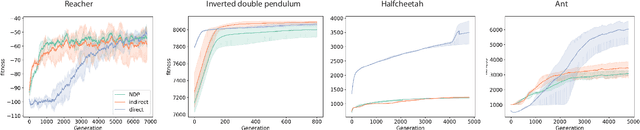
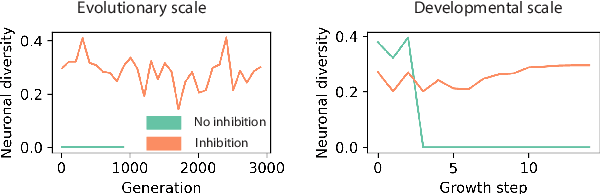
In biological evolution complex neural structures grow from a handful of cellular ingredients. As genomes in nature are bounded in size, this complexity is achieved by a growth process where cells communicate locally to decide whether to differentiate, proliferate and connect with other cells. This self-organisation is hypothesized to play an important part in the generalisation, and robustness of biological neural networks. Artificial neural networks (ANNs), on the other hand, are traditionally optimized in the space of weights. Thus, the benefits and challenges of growing artificial neural networks remain understudied. Building on the previously introduced Neural Developmental Programs (NDP), in this work we present an algorithm for growing ANNs that solve reinforcement learning tasks. We identify a key challenge: ensuring phenotypic complexity requires maintaining neuronal diversity, but this diversity comes at the cost of optimization stability. To address this, we introduce two mechanisms: (a) equipping neurons with an intrinsic state inherited upon neurogenesis; (b) lateral inhibition, a mechanism inspired by biological growth, which controlls the pace of growth, helping diversity persist. We show that both mechanisms contribute to neuronal diversity and that, equipped with them, NDPs achieve comparable results to existing direct and developmental encodings in complex locomotion tasks