 Add to Chrome
 Add to Firefox
 Add to Edge
AutoCause: A Python framework that automates expert decisions in environmental time-series causal discovery
Jul 31, 2026
Environmental time-series causal discovery requires expert decisions about method choice, conditional-independence tests, lag horizons, sample-size adequacy, multiple-testing control, and evidence interpretation. Applied inconsistently across datasets, these choices yield graphs that cannot be compared, reproduced, or audited. We present AutoCause, an open-source Python workflow that records each decision, derives defaults from an extended causal-audit module, and admits domain-informed overrides. The workflow wraps four established causal-discovery methods from three families, adds non-causal reference models, and grades links by method-count support. On 145 datasets from DGP-Atlas, TimeGraph, and a topology-derived CausalRivers reference, the methods recover complementary parts of the reference graphs. Majority-supported links are more precise than single-method links on the synthetic benchmarks but not against river topology. AutoCause converts inconsistent expert practice into an auditable, repeatable analysis; causal interpretation remains with the analyst. Available at https://github.com/marcoruizrueda/autocause.

Characterising AI Models for Cataloguing
Jul 13, 2026The creation of digital collections involves not only the digitisation of content, but also the creation of catalogue records for it. This often-overlooked task requires slow and costly expert manual work. In this project, we have evaluated the application of AI models to this task, comparing different implementations and models. This work includes a qualitative and quantitative evaluation of the experiments carried out, as well as recommendations on the use of AI models that go beyond the specific use case.
Automatic Thematic Indexing of Large Literary Corpora: A Machine Learning Approach to Voltaire's Complete Works
Jul 10, 2026Thematic indexing -- the practice of assigning structured conceptual labels to sections of text -- is essential to scholarly access in large-scale literary and historical editions, yet it remains a largely manual, labour-intensive process. This paper explores the application of machine learning to automatic thematic indexing, using two substantial sub-corpora of the Complete Works of Voltaire as a test case: the Essai sur les mœurs et l'esprit des nations and the Questions sur l'Encyclopédie. The task is framed as a multi-label classification problem, in which a model must assign the set of index entries that a professional indexer would apply to a given page of text. We compare a range of approaches -- from encoder-based models with classification heads to generative large language models (LLMs) fine-tuned via Low-Rank Adaptation (LoRA) -- spanning model sizes from approximately 3 to 120 billion parameters. Our best-performing model, from the Mistral family in a 4-bit quantised configuration, achieves F1 scores of up to 0.67; we argue that these figures represent lower bounds, given the inherent subjectivity of professional indexing and the frequency with which model predictions prove semantically valid despite diverging from the print index. We further evaluate cross-corpus generalisation and conduct a detailed qualitative analysis of model behaviour on literary and rhetorical features of the source texts that prove particularly resistant to automated treatment. Our findings have implications for the broader challenge of providing structured thematic access to large-scale literary and historical corpora.
Letting the Data Speak: Extracting Keywords from Crowdsourced Collections with AI
Jul 10, 2026Identifying and assigning keywords at scale is a technical, practical, and ethical challenge for crowdsourced collections. This article reports the findings of the "Extracting Keywords from Crowdsourced Collections" project, which used the Their Finest Hour Online Archive, a crowdsourced Second World War digital collection hosted by the University of Oxford, as a case study. The project evaluated three Natural Language Processing approaches to automate keyword extraction: Named Entity Recognition, Keyword Extraction, and Topic Modelling. It tested these approaches across a range of artificial intelligence techniques, from traditional statistical methods to modern GenAI neural networks. Our quantitative and qualitative findings indicate that Natural Language Processing approaches offer real potential for keyword extraction at scale in crowdsourced collections, but that no single method offers a complete solution and that model choice significantly shapes results. We argue that in crowdsourced collections, where metadata is the direct product of engagement with living contributors, automated keyword extraction raises distinct stewardship responsibilities that must be addressed alongside technical performance. Open-weight, extractive models emerge from our evaluation as best placed to support responsible deployment, while generative AI, despite its abstractive potential, introduces accountability risks that anyone managing crowdsourced collections should weigh carefully.
Causal-Audit: A Framework for Risk Assessment of Assumption Violations in Time-Series Causal Discovery
Apr 02, 2026Time-series causal discovery methods rely on assumptions such as stationarity, regular sampling, and bounded temporal dependence. When these assumptions are violated, structure learning can produce confident but misleading causal graphs without warning. We introduce Causal-Audit, a framework that formalizes assumption validation as calibrated risk assessment. The framework computes effect-size diagnostics across five assumption families (stationarity, irregularity, persistence, nonlinearity, and confounding proxies), aggregates them into four calibrated risk scores with uncertainty intervals, and applies an abstention-aware decision policy that recommends methods (e.g., PCMCI+, VAR-based Granger causality) only when evidence supports reliable inference. The semi-automatic diagnostic stage can also be used independently for structured assumption auditing in individual studies. Evaluation on a synthetic atlas of 500 data-generating processes (DGPs) spanning 10 violation families demonstrates well-calibrated risk scores (AUROC > 0.95), a 62% false positive reduction among recommended datasets, and 78% abstention on severe-violation cases. On 21 external evaluations from TimeGraph (18 categories) and CausalTime (3 domains), recommend-or-abstain decisions are consistent with benchmark specifications in all cases. An open-source implementation of our framework is available.
AI-assisted Advanced Propellant Development for Electric Propulsion
Sep 30, 2025Artificial Intelligence algorithms are introduced in this work as a tool to predict the performance of new chemical compounds as alternative propellants for electric propulsion, focusing on predicting their ionisation characteristics and fragmentation patterns. The chemical properties and structure of the compounds are encoded using a chemical fingerprint, and the training datasets are extracted from the NIST WebBook. The AI-predicted ionisation energy and minimum appearance energy have a mean relative error of 6.87% and 7.99%, respectively, and a predicted ion mass with a 23.89% relative error. In the cases of full mass spectra due to electron ionisation, the predictions have a cosine similarity of 0.6395 and align with the top 10 most similar mass spectra in 78% of instances within a 30 Da range.
Convolutional Neural Networks for Accurate Measurement of Train Speed
Aug 23, 2025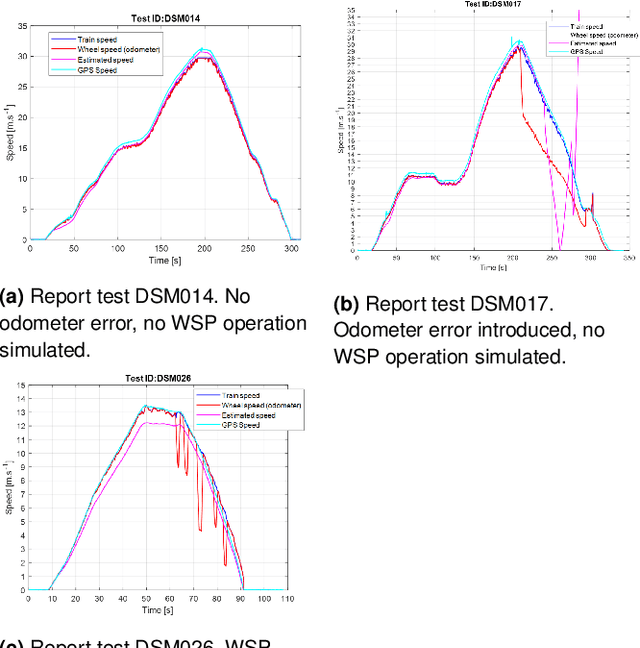
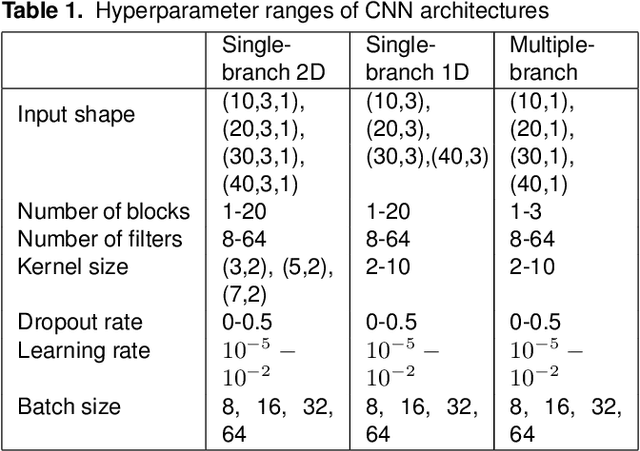

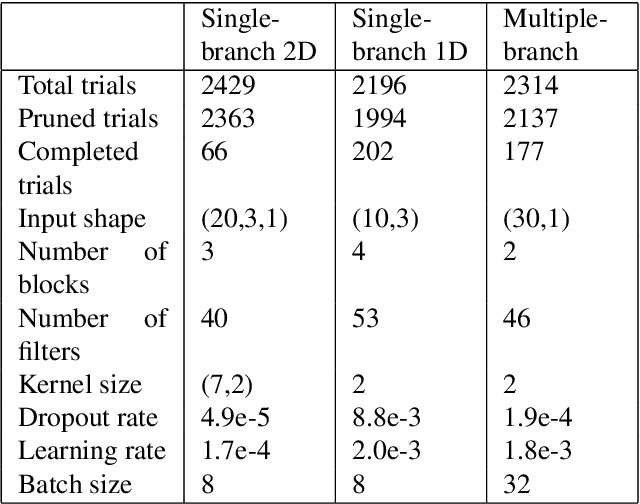
In this study, we explore the use of Convolutional Neural Networks for improving train speed estimation accuracy, addressing the complex challenges of modern railway systems. We investigate three CNN architectures - single-branch 2D, single-branch 1D, and multiple-branch models - and compare them with the Adaptive Kalman Filter. We analyse their performance using simulated train operation datasets with and without Wheel Slide Protection activation. Our results reveal that CNN-based approaches, especially the multiple-branch model, demonstrate superior accuracy and robustness compared to traditional methods, particularly under challenging operational conditions. These findings highlight the potential of deep learning techniques to enhance railway safety and operational efficiency by more effectively capturing intricate patterns in complex transportation datasets.
Parameter Estimation using Reinforcement Learning Causal Curiosity: Limits and Challenges
May 13, 2025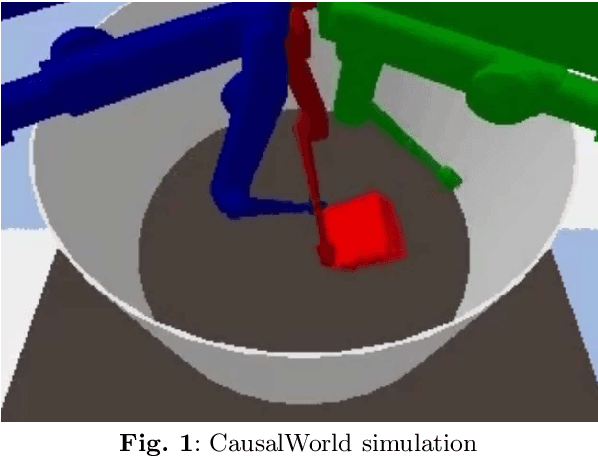
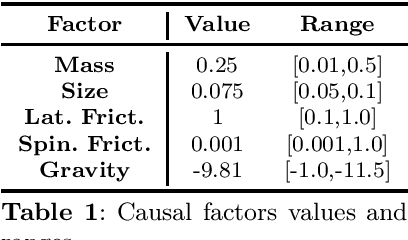
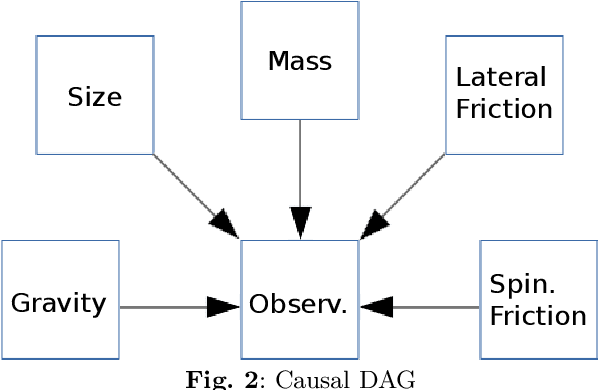
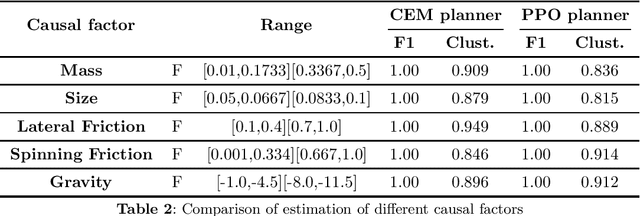
Causal understanding is important in many disciplines of science and engineering, where we seek to understand how different factors in the system causally affect an experiment or situation and pave a pathway towards creating effective or optimising existing models. Examples of use cases are autonomous exploration and modelling of unknown environments or assessing key variables in optimising large complex systems. In this paper, we analyse a Reinforcement Learning approach called Causal Curiosity, which aims to estimate as accurately and efficiently as possible, without directly measuring them, the value of factors that causally determine the dynamics of a system. Whilst the idea presents a pathway forward, measurement accuracy is the foundation of methodology effectiveness. Focusing on the current causal curiosity's robotic manipulator, we present for the first time a measurement accuracy analysis of the future potentials and current limitations of this technique and an analysis of its sensitivity and confounding factor disentanglement capability - crucial for causal analysis. As a result of our work, we promote proposals for an improved and efficient design of Causal Curiosity methods to be applied to real-world complex scenarios.
Machine Learning Information Retrieval and Summarisation to Support Systematic Review on Outcomes Based Contracting
Dec 11, 2024As academic literature proliferates, traditional review methods are increasingly challenged by the sheer volume and diversity of available research. This article presents a study that aims to address these challenges by enhancing the efficiency and scope of systematic reviews in the social sciences through advanced machine learning (ML) and natural language processing (NLP) tools. In particular, we focus on automating stages within the systematic reviewing process that are time-intensive and repetitive for human annotators and which lend themselves to immediate scalability through tools such as information retrieval and summarisation guided by expert advice. The article concludes with a summary of lessons learnt regarding the integrated approach towards systematic reviews and future directions for improvement, including explainability.
Deep Autoencoders for Unsupervised Anomaly Detection in Wildfire Prediction
Nov 14, 2024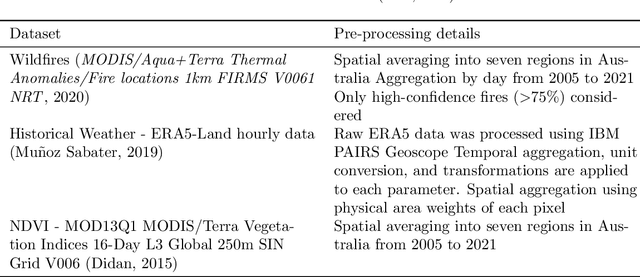
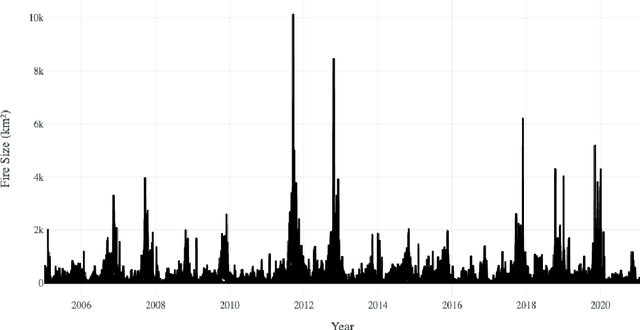
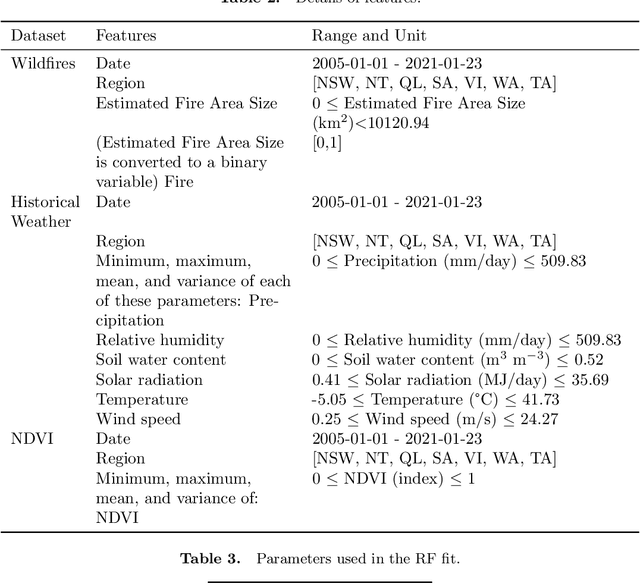
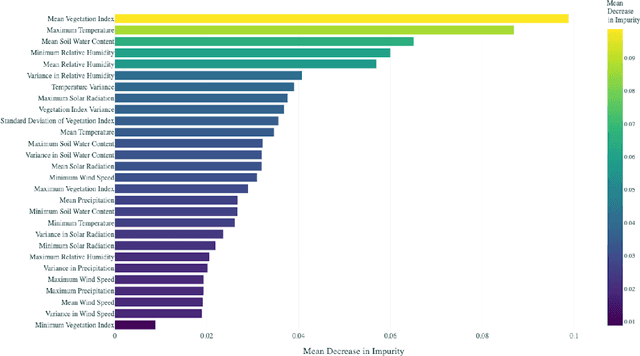
Wildfires pose a significantly increasing hazard to global ecosystems due to the climate crisis. Due to its complex nature, there is an urgent need for innovative approaches to wildfire prediction, such as machine learning. This research took a unique approach, differentiating from classical supervised learning, and addressed the gap in unsupervised wildfire prediction using autoencoders and clustering techniques for anomaly detection. Historical weather and normalised difference vegetation index datasets of Australia for 2005 - 2021 were utilised. Two main unsupervised approaches were analysed. The first used a deep autoencoder to obtain latent features, which were then fed into clustering models, isolation forest, local outlier factor and one-class SVM for anomaly detection. The second approach used a deep autoencoder to reconstruct the input data and use reconstruction errors to identify anomalies. Long Short-Term Memory (LSTM) autoencoders and fully connected (FC) autoencoders were employed in this part, both in an unsupervised way learning only from nominal data. The FC autoencoder outperformed its counterparts, achieving an accuracy of 0.71, an F1-score of 0.74, and an MCC of 0.42. These findings highlight the practicality of this method, as it effectively predicts wildfires in the absence of ground truth, utilising an unsupervised learning technique.