 Add to Chrome
 Add to Firefox
 Add to Edge
TriCLE: Tri-Modal Vision-Language Reasoning for Edge-Deployed Fine-Grained Clustering
Aug 04, 2026
Edge platforms used for aerial observation must interpret aircraft imagery under limited memory, limited compute, and intermittent connectivity. This setting is difficult for standard RGB-only recognition models and general-purpose vision-language models, especially when calibrated thermal and LiDAR aircraft data are unavailable. We present TriCLE, an application-oriented tri-modal vision-language system for aircraft taxonomic grouping under edge constraints. From a single RGB aircraft image, TriCLE generates a structure-preserving FLIR-style thermal view and a pseudo-LiDAR depth projection, then fuses the aligned views with task instructions in a compact Qwen3-VL backbone. The model is aligned to an expert aircraft taxonomy based on propulsion, airframe family, size, design era, and configuration, so its outputs reflect engineering-relevant similarity rather than only surface appearance. We evaluate supervised fine-tuning, rotation-preserving SFT, and three policy-alignment strategies: GRPO, GSPO, and DAPO. Sequence-level GSPO gives the strongest validation performance, reaching 88.33\% validation accuracy and 0.91 weighted F1 on valid aircraft outputs. On a held-out aircraft test partition, GSPO achieves 78.00\% accuracy and 0.793 weighted F1 while preserving 94.00\% parseable output formatting. After 4-bit quantization and attention-memory optimization, the aligned 4B model fits an 8GB deployment target and processes each tri-modal triplet in 1.48 seconds. These results support TriCLE as a practical prototype for interpretable, edge-feasible aircraft grouping, while emphasizing the need for further validation on real aligned thermal and LiDAR sensor streams.

Guiding Language Models to Be More Empathetic: Culturally Sensitive Mental Health Advice Generation Through Human-LLM Collaboration
Jul 26, 2026Despite recent advances in large language models (LLMs), their ability to generate empathetic mental health counseling responses in low-resource languages remains largely unexplored. To address this gap, we curate 625 authentic mental health cases from three complementary sources: (1) publicly available Facebook posts discussing mental health concerns, (2) transcripts from the Bangladeshi television program "Ami Akhon Ki Korbo", and (3) anonymized student questionnaire responses covering diverse emotional and psychological challenges. Based on these cases, we build an evaluation corpus comprising advice written by licensed clinical psychologists and responses generated by three modern proprietary LLMs: GPT-4o Mini, Claude 4.5 Haiku, and Gemini 2.5 Pro. We further propose the Role-Playing Reflective Chain-of-Thought Advisory Framework (RP-RCAF), a task-specific prompting strategy that combines expert-authored few-shot examples with structured self-reflection to produce supportive, culturally aware, and ethically aligned counseling through a compassionate advisor persona. We also introduce the Grok 4-Based Response Evaluation and Scoring Framework (G-REFS), which integrates automated assessment with expert psychologist validation across emotional sensitivity, cultural appropriateness, linguistic clarity, and ethical soundness. Experimental results show that RP-RCAF consistently outperforms conventional prompting across all evaluated models and produces responses that more closely align with professional psychological counseling.
BanglaMemeEvidence: A Multimodal Benchmark Dataset for Explanatory Evidence Detection in Bengali Memes
Jul 04, 2026Memes have become influential communication tools on social media, combining viral visuals with concise messaging to convey impactful ideas. While substantial research has examined the affective dimensions of memes, key challenges such as detecting harmful content, identifying cyberbullying, and performing accurate sentiment analysis remain critical, largely due to the need for deeper contextual understanding. In this paper, we introduce MemeEvidenceDetect, a hybrid task aimed at analyzing a meme and its contextual information to identify specific sentences that explain or elucidate its meaning and humor. To support this task, we present BanglaMemeEvidence, a curated dataset of 2,917 Bengali memes, emphasizing its significance as a resource for the Bangla language. Each meme is annotated with natural language explanations, including Meme OCR, Meme Context, and Evidence Sentences, alongside relevance scores that reflect the relationship between a meme and its corresponding annotations. To address the gap in dynamically inferring a meme's context, we propose BengaliMemeEvidenceNet, a hybrid multimodal framework that integrates textual and visual features for comprehensive meme representation. Our experiments demonstrate the effectiveness of BengaliMemeEvidenceNet, achieving an F1 score of 0.74. To the best of our knowledge, this is the first study to focus on evidence detection in Bengali memes, marking a notable step forward in the analysis of memes in low-resource languages.
Physics-Based Benchmarking Metrics for Multimodal Synthetic Images
Nov 19, 2025
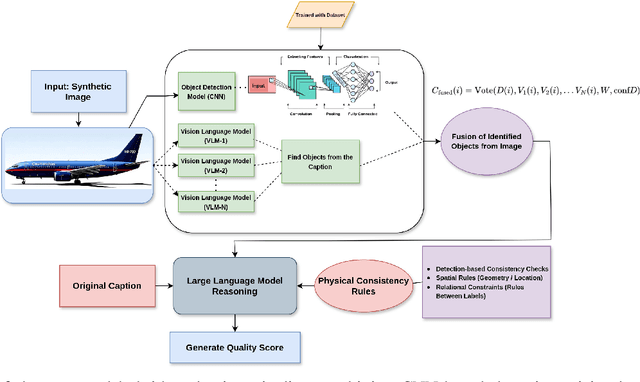

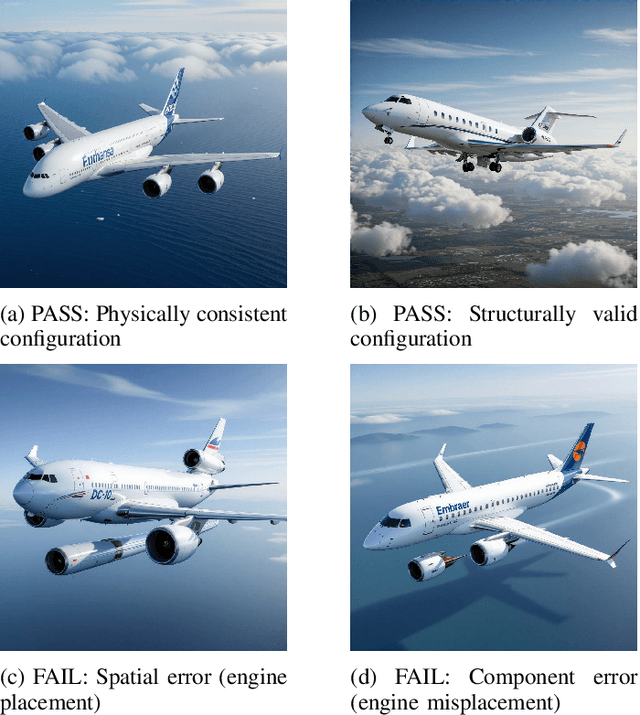
Current state of the art measures like BLEU, CIDEr, VQA score, SigLIP-2 and CLIPScore are often unable to capture semantic or structural accuracy, especially for domain-specific or context-dependent scenarios. For this, this paper proposes a Physics-Constrained Multimodal Data Evaluation (PCMDE) metric combining large language models with reasoning, knowledge based mapping and vision-language models to overcome these limitations. The architecture is comprised of three main stages: (1) feature extraction of spatial and semantic information with multimodal features through object detection and VLMs; (2) Confidence-Weighted Component Fusion for adaptive component-level validation; and (3) physics-guided reasoning using large language models for structural and relational constraints (e.g., alignment, position, consistency) enforcement.
Uddessho: An Extensive Benchmark Dataset for Multimodal Author Intent Classification in Low-Resource Bangla Language
Sep 14, 2024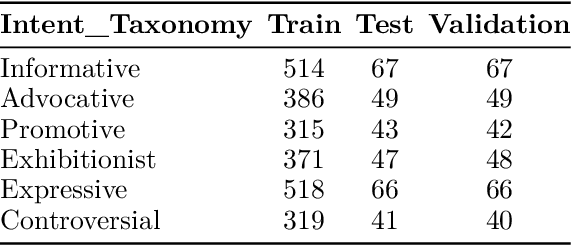
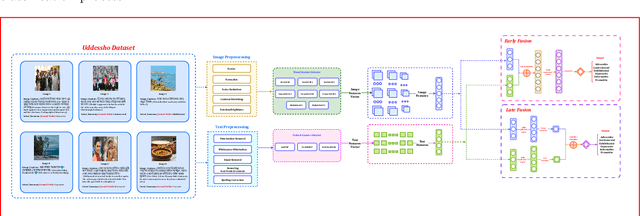
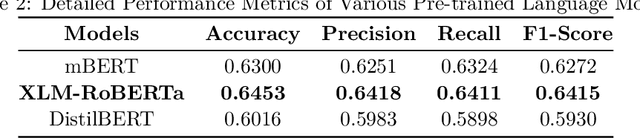
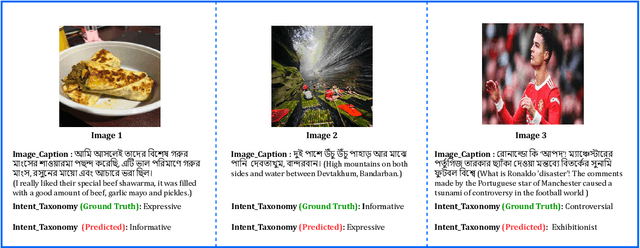
With the increasing popularity of daily information sharing and acquisition on the Internet, this paper introduces an innovative approach for intent classification in Bangla language, focusing on social media posts where individuals share their thoughts and opinions. The proposed method leverages multimodal data with particular emphasis on authorship identification, aiming to understand the underlying purpose behind textual content, especially in the context of varied user-generated posts on social media. Current methods often face challenges in low-resource languages like Bangla, particularly when author traits intricately link with intent, as observed in social media posts. To address this, we present the Multimodal-based Author Bangla Intent Classification (MABIC) framework, utilizing text and images to gain deeper insights into the conveyed intentions. We have created a dataset named "Uddessho," comprising 3,048 instances sourced from social media. Our methodology comprises two approaches for classifying textual intent and multimodal author intent, incorporating early fusion and late fusion techniques. In our experiments, the unimodal approach achieved an accuracy of 64.53% in interpreting Bangla textual intent. In contrast, our multimodal approach significantly outperformed traditional unimodal methods, achieving an accuracy of 76.19%. This represents an improvement of 11.66%. To our best knowledge, this is the first research work on multimodal-based author intent classification for low-resource Bangla language social media posts.
UAV (Unmanned Aerial Vehicles): Diverse Applications of UAV Datasets in Segmentation, Classification, Detection, and Tracking
Sep 05, 2024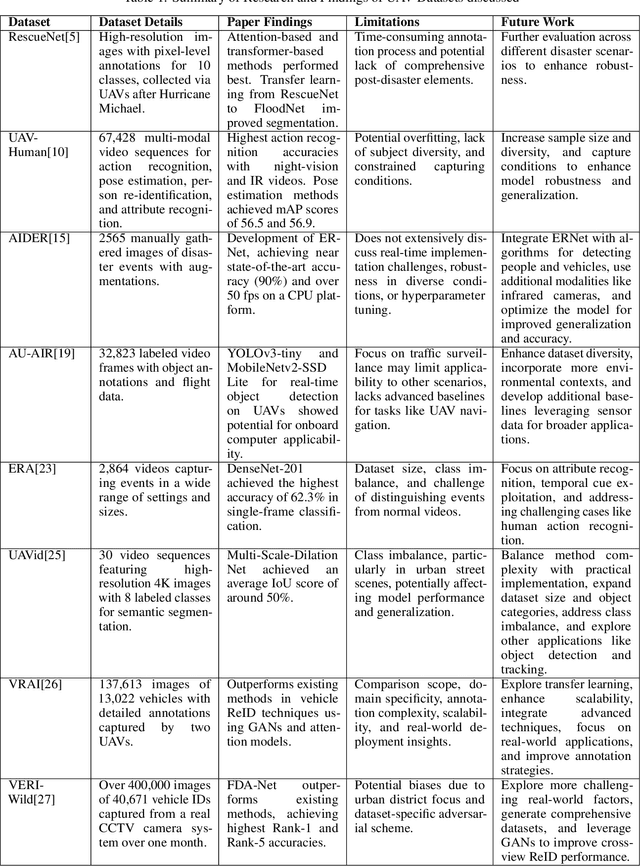
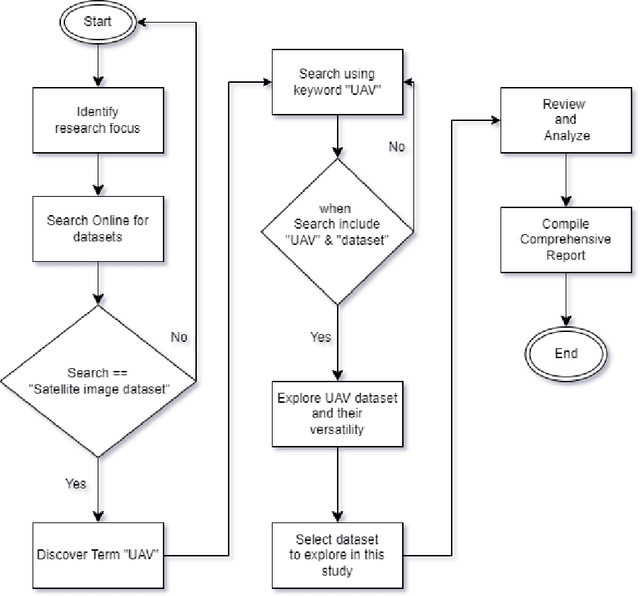
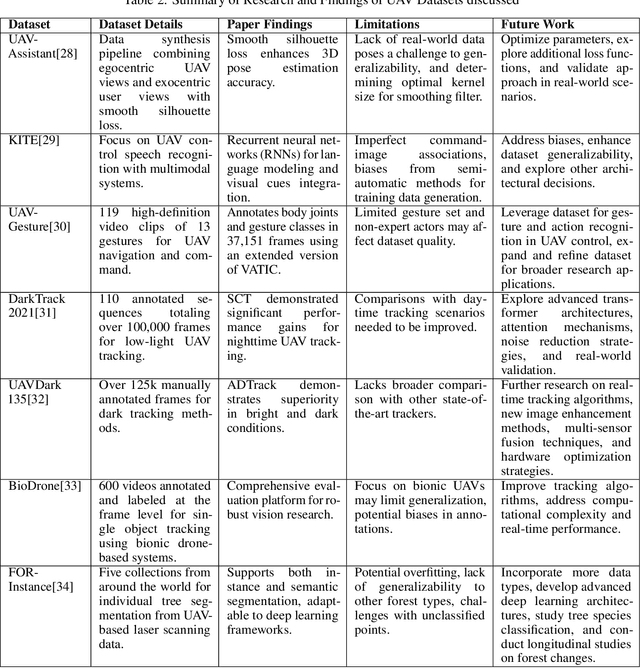
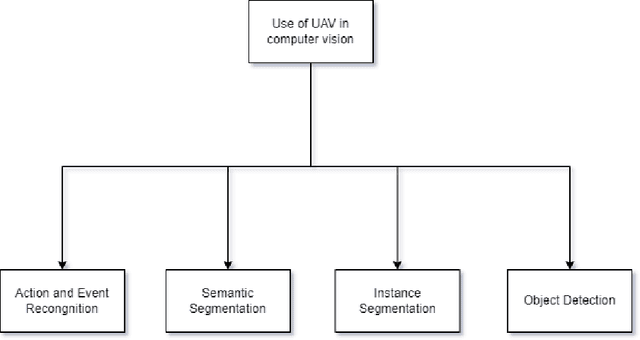
Unmanned Aerial Vehicles (UAVs), have greatly revolutionized the process of gathering and analyzing data in diverse research domains, providing unmatched adaptability and effectiveness. This paper presents a thorough examination of Unmanned Aerial Vehicle (UAV) datasets, emphasizing their wide range of applications and progress. UAV datasets consist of various types of data, such as satellite imagery, images captured by drones, and videos. These datasets can be categorized as either unimodal or multimodal, offering a wide range of detailed and comprehensive information. These datasets play a crucial role in disaster damage assessment, aerial surveillance, object recognition, and tracking. They facilitate the development of sophisticated models for tasks like semantic segmentation, pose estimation, vehicle re-identification, and gesture recognition. By leveraging UAV datasets, researchers can significantly enhance the capabilities of computer vision models, thereby advancing technology and improving our understanding of complex, dynamic environments from an aerial perspective. This review aims to encapsulate the multifaceted utility of UAV datasets, emphasizing their pivotal role in driving innovation and practical applications in multiple domains.
Optimizing Container Loading and Unloading through Dual-Cycling and Dockyard Rehandle Reduction Using a Hybrid Genetic Algorithm
Jun 12, 2024


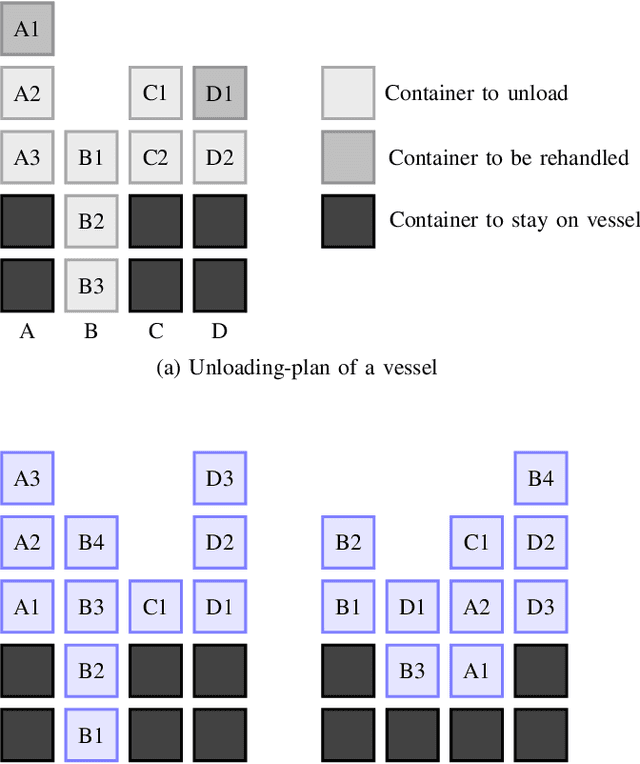
This paper addresses the optimization of container unloading and loading operations at ports, integrating quay-crane dual-cycling with dockyard rehandle minimization. We present a unified model encompassing both operations: ship container unloading and loading by quay crane, and the other is reducing dockyard rehandles while loading the ship. We recognize that optimizing one aspect in isolation can lead to suboptimal outcomes due to interdependencies. Specifically, optimizing unloading sequences for minimal operation time may inadvertently increase dockyard rehandles during loading and vice versa. To address this NP-hard problem, we propose a hybrid genetic algorithm (GA) QCDC-DR-GA comprising one-dimensional and two-dimensional GA components. Our model, QCDC-DR-GA, consistently outperforms four state-of-the-art methods in maximizing dual cycles and minimizing dockyard rehandles. Compared to those methods, it reduced 15-20% of total operation time for large vessels. Statistical validation through a two-tailed paired t-test confirms the superiority of QCDC-DR-GA at a 5% significance level. The approach effectively combines QCDC optimization with dockyard rehandle minimization, optimizing the total unloading-loading time. Results underscore the inefficiency of separately optimizing QCDC and dockyard rehandles. Fragmented approaches, such as QCDC Scheduling Optimized by bi-level GA and GA-ILSRS (Scenario 2), show limited improvement compared to QCDC-DR-GA. As in GA-ILSRS (Scenario 1), neglecting dual-cycle optimization leads to inferior performance than QCDC-DR-GA. This emphasizes the necessity of simultaneously considering both aspects for optimal resource utilization and overall operational efficiency.
Looking deeper into interpretable deep learning in neuroimaging: a comprehensive survey
Jul 14, 2023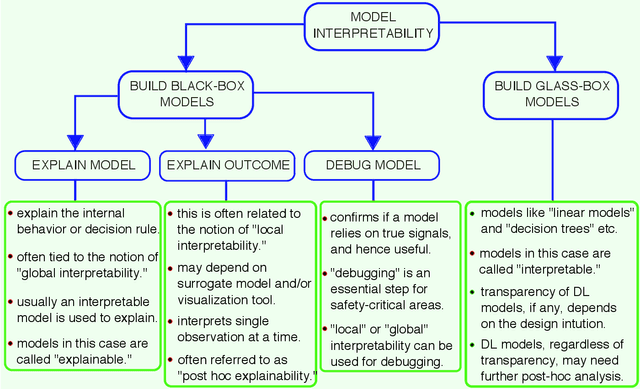
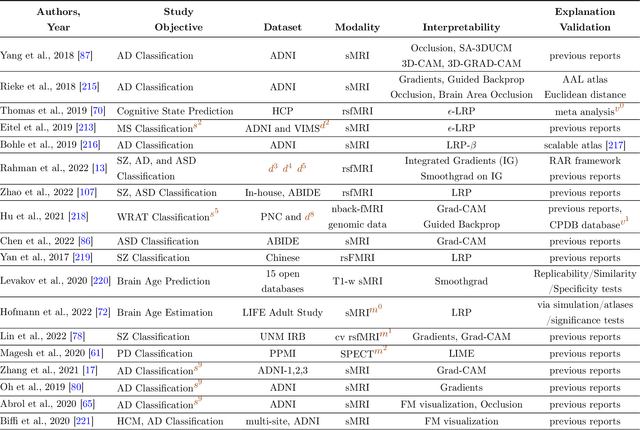
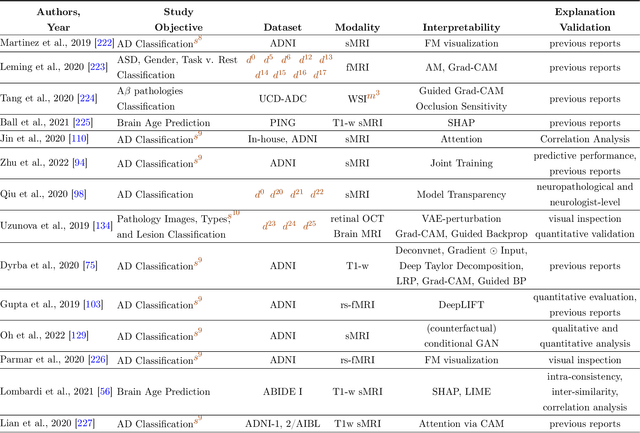
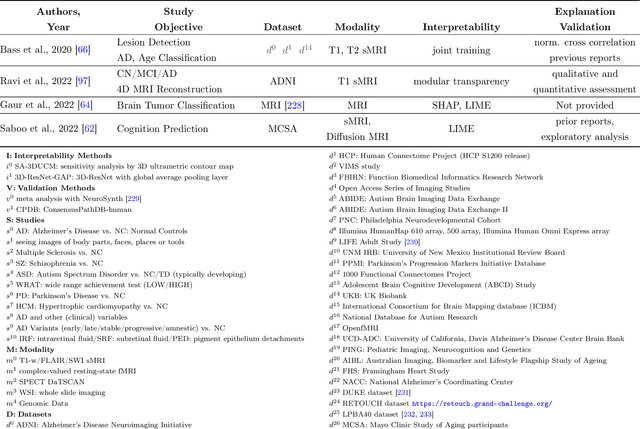
Deep learning (DL) models have been popular due to their ability to learn directly from the raw data in an end-to-end paradigm, alleviating the concern of a separate error-prone feature extraction phase. Recent DL-based neuroimaging studies have also witnessed a noticeable performance advancement over traditional machine learning algorithms. But the challenges of deep learning models still exist because of the lack of transparency in these models for their successful deployment in real-world applications. In recent years, Explainable AI (XAI) has undergone a surge of developments mainly to get intuitions of how the models reached the decisions, which is essential for safety-critical domains such as healthcare, finance, and law enforcement agencies. While the interpretability domain is advancing noticeably, researchers are still unclear about what aspect of model learning a post hoc method reveals and how to validate its reliability. This paper comprehensively reviews interpretable deep learning models in the neuroimaging domain. Firstly, we summarize the current status of interpretability resources in general, focusing on the progression of methods, associated challenges, and opinions. Secondly, we discuss how multiple recent neuroimaging studies leveraged model interpretability to capture anatomical and functional brain alterations most relevant to model predictions. Finally, we discuss the limitations of the current practices and offer some valuable insights and guidance on how we can steer our future research directions to make deep learning models substantially interpretable and thus advance scientific understanding of brain disorders.