 Add to Chrome
 Add to Firefox
 Add to Edge
Real-Time Detection of Charge Jumps in Superconducting Qubits with a Convolutional Neural Network
Jul 15, 2026
Ionizing radiation from cosmic rays and gammas can induce discontinuous jumps in the environmental charge of superconducting qubits (charge jumps), causing correlated errors that challenge fault-tolerant quantum computing while simultaneously providing a detection signature for quantum sensing applications. Current detection methods operate offline, introducing latency incompatible with in-the-loop qubit control. In this paper, an online detector of charge jumps for superconducting qubits, based on a dilated causal convolutional neural network (DCCNN) designed for in-the-loop deployment on the Quantum Instrumentation Control Kit (QICK) platform, is presented. The network is trained on synthetic Ramsey tomography scans generated from qubit templates measured at the Northwestern Experimental Underground Site (NEXUS) at Fermilab, and translated to FPGA firmware via hls4ml with ap_fixed$\langle 16,6 \rangle$ quantization, reaching a per-inference latency of $6.19 μ$s on the Zynq UltraScale+ RFSoC ZCU216. At this operating point the DCCNN matches the detection efficiency of the established offline $χ^2$ algorithm ($0.843 \pm 0.022$ vs. $0.866 \pm 0.020$ on $|Δq| \in [0.1, 0.5] e$ at matched false-positive rate), while requiring no per-qubit hyperparameter tuning. This shifts charge-jump detection from a post-hoc diagnostic to a control-loop primitive, enabling adaptive protocols that respond to radiation-induced events in situ, with applications to quantum-computing error mitigation and to the use of superconducting qubits as particle detectors.

Machine Learning on Heterogeneous, Edge, and Quantum Hardware for Particle Physics (ML-HEQUPP)
Feb 24, 2026The next generation of particle physics experiments will face a new era of challenges in data acquisition, due to unprecedented data rates and volumes along with extreme environments and operational constraints. Harnessing this data for scientific discovery demands real-time inference and decision-making, intelligent data reduction, and efficient processing architectures beyond current capabilities. Crucial to the success of this experimental paradigm are several emerging technologies, such as artificial intelligence and machine learning (AI/ML) and silicon microelectronics, and the advent of quantum algorithms and processing. Their intersection includes areas of research such as low-power and low-latency devices for edge computing, heterogeneous accelerator systems, reconfigurable hardware, novel codesign and synthesis strategies, readout for cryogenic or high-radiation environments, and analog computing. This white paper presents a community-driven vision to identify and prioritize research and development opportunities in hardware-based ML systems and corresponding physics applications, contributing towards a successful transition to the new data frontier of fundamental science.
Building Machine Learning Challenges for Anomaly Detection in Science
Mar 03, 2025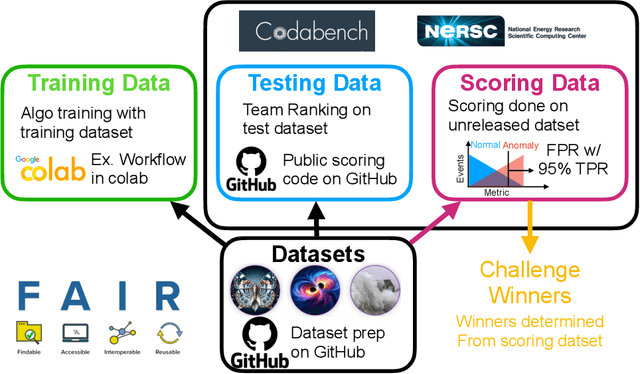
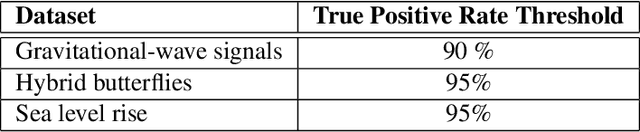
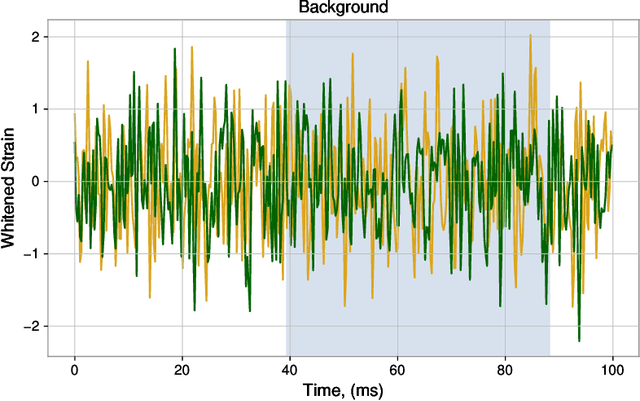
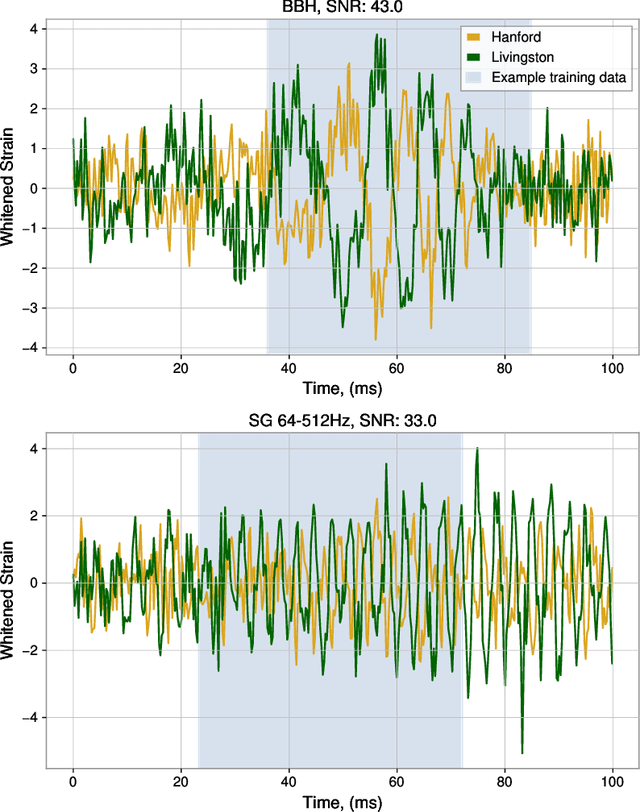
Scientific discoveries are often made by finding a pattern or object that was not predicted by the known rules of science. Oftentimes, these anomalous events or objects that do not conform to the norms are an indication that the rules of science governing the data are incomplete, and something new needs to be present to explain these unexpected outliers. The challenge of finding anomalies can be confounding since it requires codifying a complete knowledge of the known scientific behaviors and then projecting these known behaviors on the data to look for deviations. When utilizing machine learning, this presents a particular challenge since we require that the model not only understands scientific data perfectly but also recognizes when the data is inconsistent and out of the scope of its trained behavior. In this paper, we present three datasets aimed at developing machine learning-based anomaly detection for disparate scientific domains covering astrophysics, genomics, and polar science. We present the different datasets along with a scheme to make machine learning challenges around the three datasets findable, accessible, interoperable, and reusable (FAIR). Furthermore, we present an approach that generalizes to future machine learning challenges, enabling the possibility of large, more compute-intensive challenges that can ultimately lead to scientific discovery.