 Add to Chrome
 Add to Firefox
 Add to Edge
Data-Efficient Hierarchical Goal-Conditioned Reinforcement Learning via Normalizing Flows
Feb 11, 2026
Hierarchical goal-conditioned reinforcement learning (H-GCRL) provides a powerful framework for tackling complex, long-horizon tasks by decomposing them into structured subgoals. However, its practical adoption is hindered by poor data efficiency and limited policy expressivity, especially in offline or data-scarce regimes. In this work, Normalizing flow-based hierarchical implicit Q-learning (NF-HIQL), a novel framework that replaces unimodal gaussian policies with expressive normalizing flow policies at both the high- and low-levels of the hierarchy is introduced. This design enables tractable log-likelihood computation, efficient sampling, and the ability to model rich multimodal behaviors. New theoretical guarantees are derived, including explicit KL-divergence bounds for Real-valued non-volume preserving (RealNVP) policies and PAC-style sample efficiency results, showing that NF-HIQL preserves stability while improving generalization. Empirically, NF-HIQL is evaluted across diverse long-horizon tasks in locomotion, ball-dribbling, and multi-step manipulation from OGBench. NF-HIQL consistently outperforms prior goal-conditioned and hierarchical baselines, demonstrating superior robustness under limited data and highlighting the potential of flow-based architectures for scalable, data-efficient hierarchical reinforcement learning.

A Comparison of Classical and Deep Reinforcement Learning Methods for HVAC Control
Aug 10, 2023
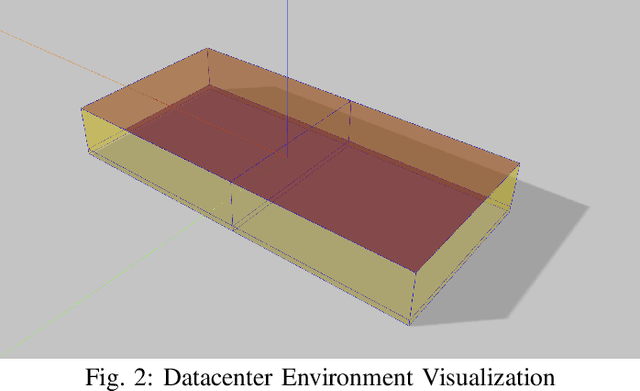


Reinforcement learning (RL) is a promising approach for optimizing HVAC control. RL offers a framework for improving system performance, reducing energy consumption, and enhancing cost efficiency. We benchmark two popular classical and deep RL methods (Q-Learning and Deep-Q-Networks) across multiple HVAC environments and explore the practical consideration of model hyper-parameter selection and reward tuning. The findings provide insight for configuring RL agents in HVAC systems, promoting energy-efficient and cost-effective operation.