 Add to Chrome
 Add to Firefox
 Add to Edge
Regularized joint reconstruction and slab combination for accelerated three-dimensional multi-slab diffusion-weighted imaging using multi-scale energy models
Jun 01, 2026
This work presents Energy-based Profile Encoding, EPEN, a joint reconstruction framework for high-resolution diffusion-weighted MRI from undersampled 3D multi-slab k-space acquisitions, designed to suppress slab-boundary artifacts while preserving fine anatomical detail. EPEN formulates the multi-slab acquisition process using a bilinear forward model in which both the diffusion-weighted image volume and slab excitation profiles are treated as unknown variables. Reconstruction is posed as a maximum a posteriori optimization problem with three components: a Gaussian data-fidelity term enforcing consistency with the acquired k-space measurements, a CNN-based deep energy prior that represents the negative log distribution of clean diffusion-weighted images, and a quadratic regularization term that constrains the estimated slab profiles toward an initial profile estimate. The gradient of the learned energy prior guides accelerated reconstruction toward an artifact-free image distribution. The resulting nonconvex objective is solved using alternating minimization, with image-volume updates performed through a majorize-minimize scheme using conjugate-gradient optimization and slab-profile updates estimated by regularized least squares. Across multiple acceleration factors and slab configurations, EPEN substantially reduced slab-boundary artifacts compared with conventional slab-boundary correction methods, while improving structural consistency and preserving diffusion-weighted contrast. These results demonstrate that EPEN enables robust joint 3D multi-slab diffusion MRI reconstruction and slab-profile correction within a unified optimization framework supported by deep energy-based image priors.

Annealed Langevin Posterior Sampling (ALPS): A Rapid Algorithm for Image Restoration with Multiscale Energy Models
Jan 05, 2026Solving inverse problems in imaging requires models that support efficient inference, uncertainty quantification, and principled probabilistic reasoning. Energy-Based Models (EBMs), with their interpretable energy landscapes and compositional structure, are well-suited for this task but have historically suffered from high computational costs and training instability. To overcome the historical shortcomings of EBMs, we introduce a fast distillation strategy to transfer the strengths of pre-trained diffusion models into multi-scale EBMs. These distilled EBMs enable efficient sampling and preserve the interpretability and compositionality inherent to potential-based frameworks. Leveraging EBM compositionality, we propose Annealed Langevin Posterior Sampling (ALPS) algorithm for Maximum-A-Posteriori (MAP), Minimum Mean Square Error (MMSE), and uncertainty estimates for inverse problems in imaging. Unlike diffusion models that use complex guidance strategies for latent variables, we perform annealing on static posterior distributions that are well-defined and composable. Experiments on image inpainting and MRI reconstruction demonstrate that our method matches or surpasses diffusion-based baselines in both accuracy and efficiency, while also supporting MAP recovery. Overall, our framework offers a scalable and principled solution for inverse problems in imaging, with potential for practical deployment in scientific and clinical settings. ALPS code is available at the GitHub repository \href{https://github.com/JyoChand/ALPS}{ALPS}.
Motion-compensated cardiac MRI using low-rank diffeomorphic flow (DMoCo)
May 07, 2025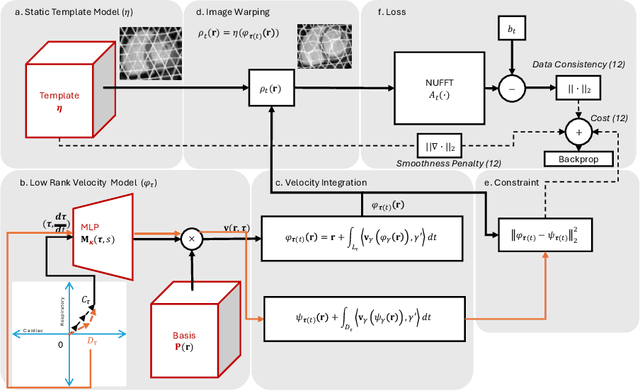
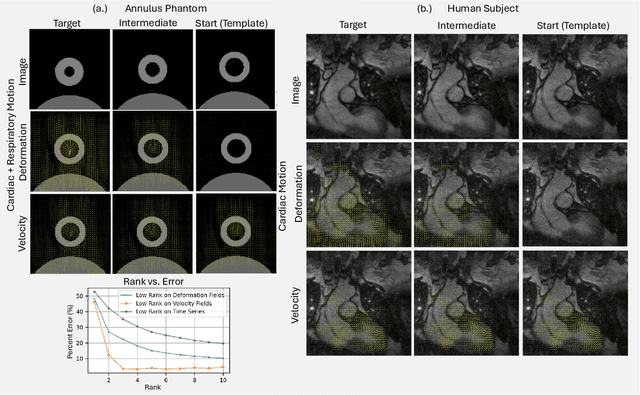
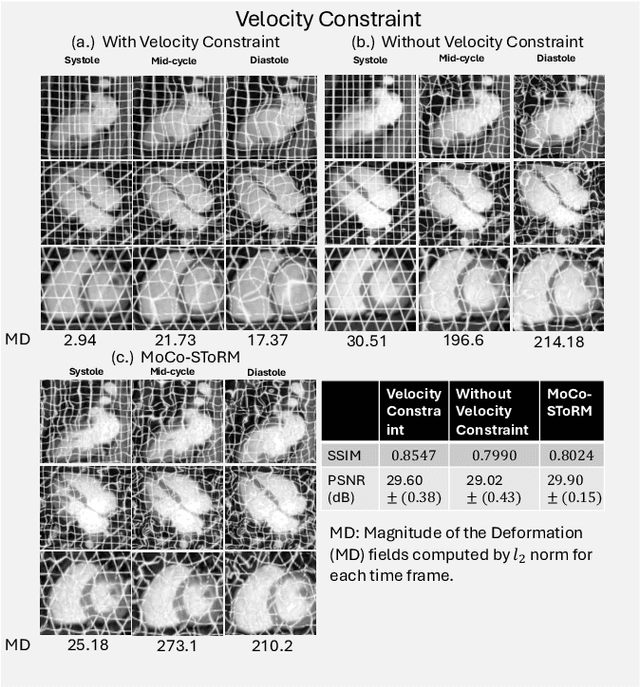
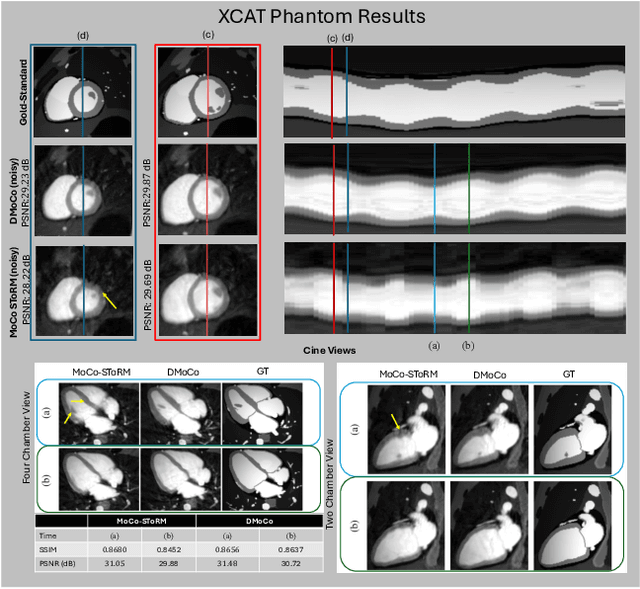
We introduce an unsupervised motion-compensated image reconstruction algorithm for free-breathing and ungated 3D cardiac magnetic resonance imaging (MRI). We express the image volume corresponding to each specific motion phase as the deformation of a single static image template. The main contribution of the work is the low-rank model for the compact joint representation of the family of diffeomorphisms, parameterized by the motion phases. The diffeomorphism at a specific motion phase is obtained by integrating a parametric velocity field along a path connecting the reference template phase to the motion phase. The velocity field at different phases is represented using a low-rank model. The static template and the low-rank motion model parameters are learned directly from the k-space data in an unsupervised fashion. The more constrained motion model is observed to offer improved recovery compared to current motion-resolved and motion-compensated algorithms for free-breathing 3D cine MRI.
Deep End-to-End Posterior ENergy (DEEPEN) for image recovery
Mar 21, 2025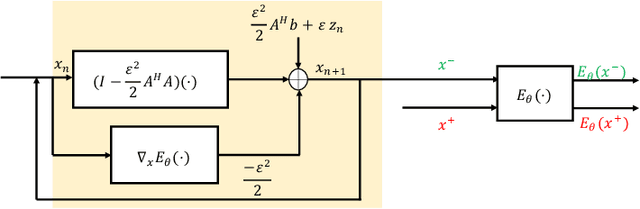
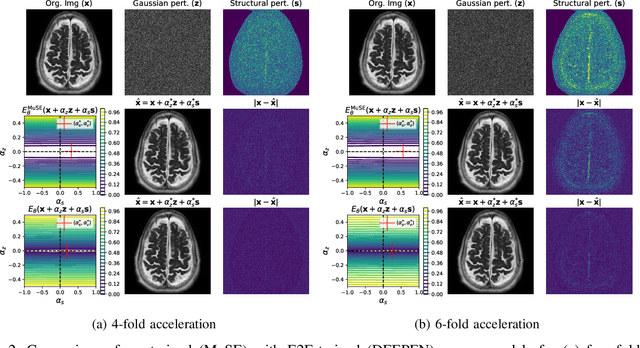
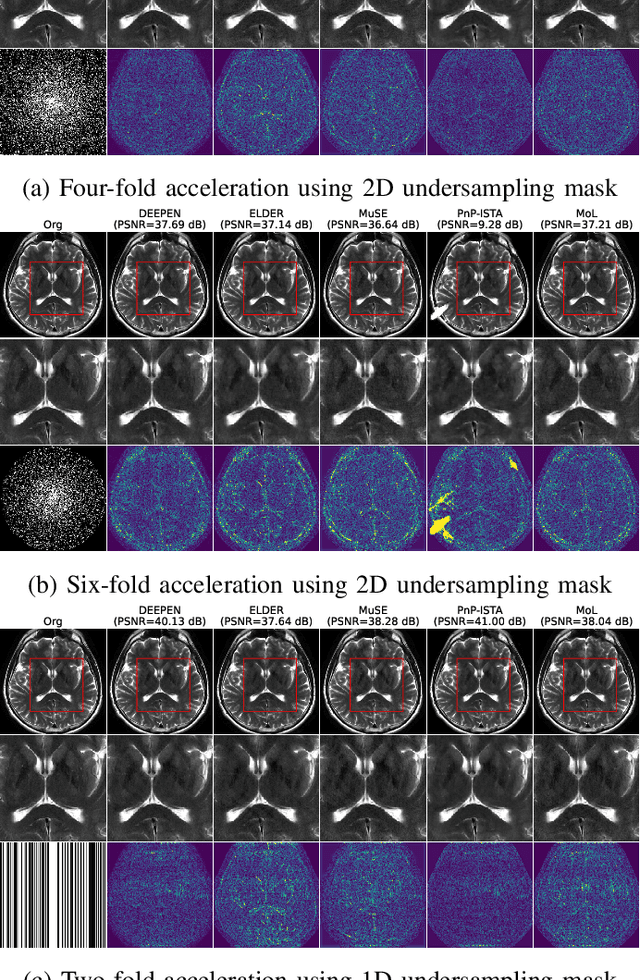
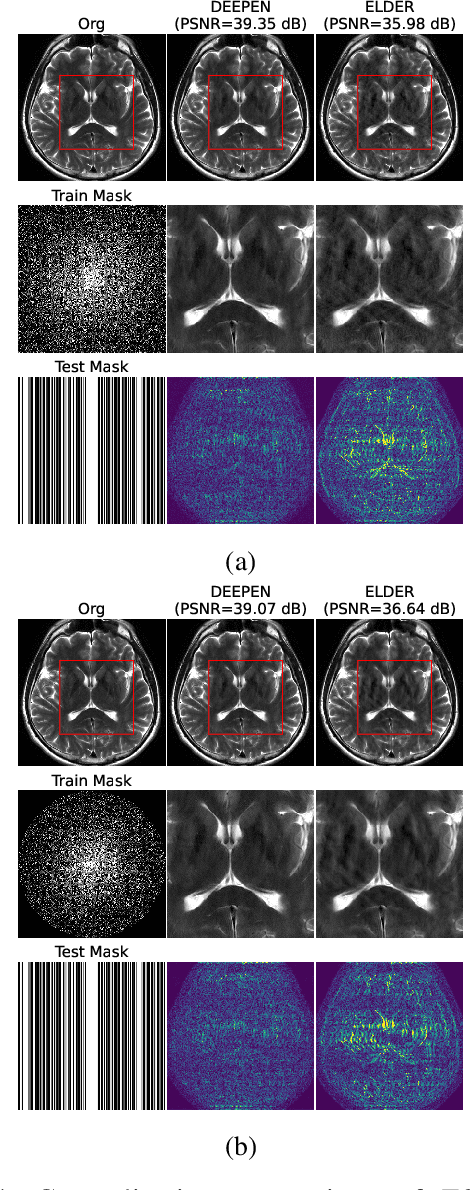
Current end-to-end (E2E) and plug-and-play (PnP) image reconstruction algorithms approximate the maximum a posteriori (MAP) estimate but cannot offer sampling from the posterior distribution, like diffusion models. By contrast, it is challenging for diffusion models to be trained in an E2E fashion. This paper introduces a Deep End-to-End Posterior ENergy (DEEPEN) framework, which enables MAP estimation as well as sampling. We learn the parameters of the posterior, which is the sum of the data consistency error and the negative log-prior distribution, using maximum likelihood optimization in an E2E fashion. The proposed approach does not require algorithm unrolling, and hence has a smaller computational and memory footprint than current E2E methods, while it does not require contraction constraints typically needed by current PnP methods. Our results demonstrate that DEEPEN offers improved performance than current E2E and PnP models in the MAP setting, while it also offers faster sampling compared to diffusion models. In addition, the learned energy-based model is observed to be more robust to changes in image acquisition settings.
MAP Image Recovery with Guarantees using Locally Convex Multi-Scale Energy (LC-MUSE) Model
Feb 05, 2025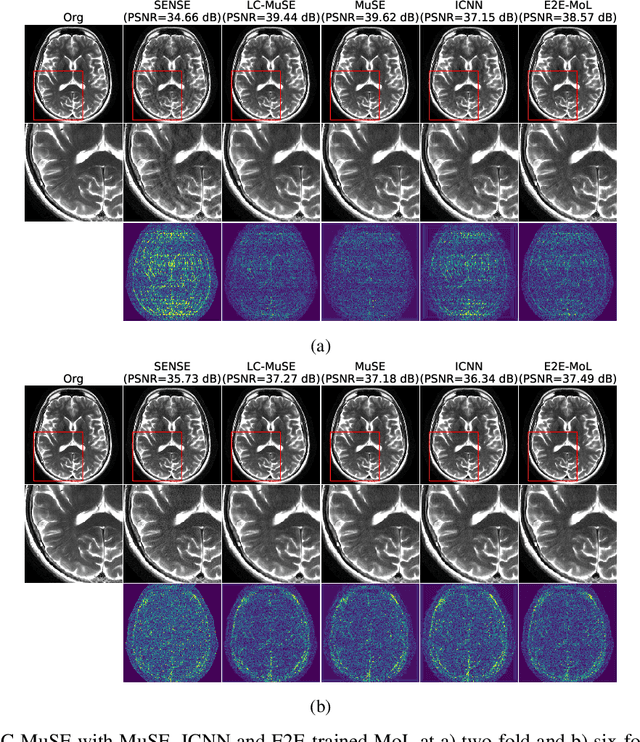
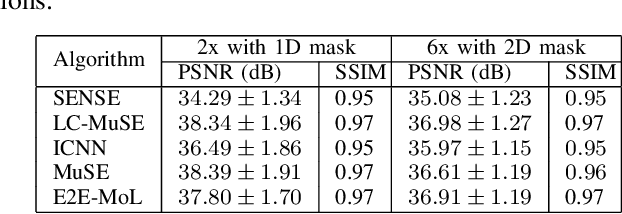
We propose a multi-scale deep energy model that is strongly convex in the local neighbourhood around the data manifold to represent its probability density, with application in inverse problems. In particular, we represent the negative log-prior as a multi-scale energy model parameterized by a Convolutional Neural Network (CNN). We restrict the gradient of the CNN to be locally monotone, which constrains the model as a Locally Convex Multi-Scale Energy (LC-MuSE). We use the learned energy model in image-based inverse problems, where the formulation offers several desirable properties: i) uniqueness of the solution, ii) convergence guarantees to a minimum of the inverse problem, and iii) robustness to input perturbations. In the context of parallel Magnetic Resonance (MR) image reconstruction, we show that the proposed method performs better than the state-of-the-art convex regularizers, while the performance is comparable to plug-and-play regularizers and end-to-end trained methods.
Three-Dimensional Diffusion-Weighted Multi-Slab MRI With Slice Profile Compensation Using Deep Energy Model
Jan 28, 2025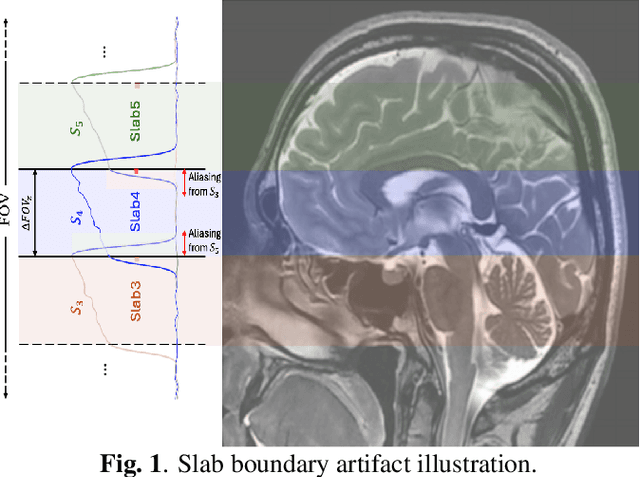
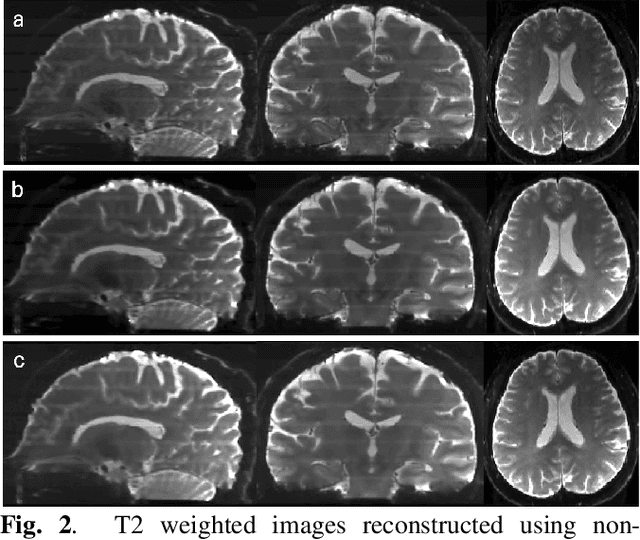
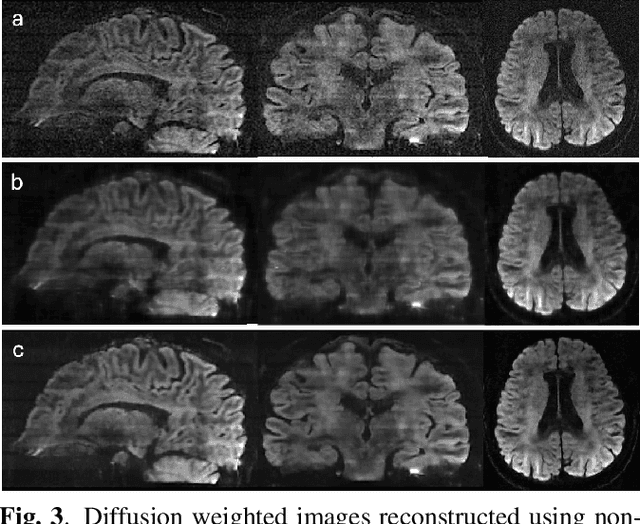
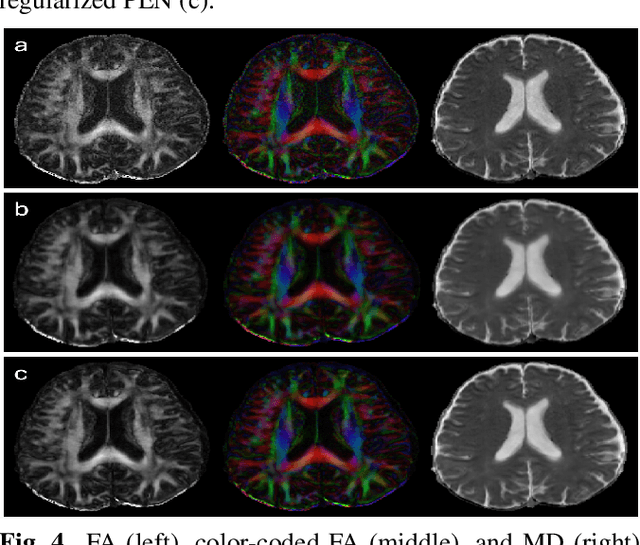
Three-dimensional (3D) multi-slab acquisition is a technique frequently employed in high-resolution diffusion-weighted MRI in order to achieve the best signal-to-noise ratio (SNR) efficiency. However, this technique is limited by slab boundary artifacts that cause intensity fluctuations and aliasing between slabs which reduces the accuracy of anatomical imaging. Addressing this issue is crucial for advancing diffusion MRI quality and making high-resolution imaging more feasible for clinical and research applications. In this work, we propose a regularized slab profile encoding (PEN) method within a Plug-and-Play ADMM framework, incorporating multi-scale energy (MuSE) regularization to effectively improve the slab combined reconstruction. Experimental results demonstrate that the proposed method significantly improves image quality compared to non-regularized and TV-regularized PEN approaches. The regularized PEN framework provides a more robust and efficient solution for high-resolution 3D diffusion MRI, potentially enabling clearer, more reliable anatomical imaging across various applications.
Fast multi-contrast MRI using joint multiscale energy model
Jan 11, 2025The acquisition of 3D multicontrast MRI data with good isotropic spatial resolution is challenged by lengthy scan times. In this work, we introduce a CNN-based multiscale energy model to learn the joint probability distribution of the multi-contrast images. The joint recovery of the contrasts from undersampled data is posed as a maximum a posteriori estimation scheme, where the learned energy serves as the prior. We use a majorize-minimize algorithm to solve the optimization scheme. The proposed model leverages the redundancies across different contrasts to improve image fidelity. The proposed scheme is observed to preserve fine details and contrast, offering sharper reconstructions compared to reconstruction methods that independently recover the contrasts. While we focus on 3D MPNRAGE acquisitions in this work, the proposed approach is generalizable to arbitrary multi-contrast settings.
Denoising Diffusions in Latent Space for Medical Image Segmentation
Jul 17, 2024Diffusion models (DPMs) have demonstrated remarkable performance in image generation, often times outperforming other generative models. Since their introduction, the powerful noise-to-image denoising pipeline has been extended to various discriminative tasks, including image segmentation. In case of medical imaging, often times the images are large 3D scans, where segmenting one image using DPMs become extremely inefficient due to large memory consumption and time consuming iterative sampling process. In this work, we propose a novel conditional generative modeling framework (LDSeg) that performs diffusion in latent space for medical image segmentation. Our proposed framework leverages the learned inherent low-dimensional latent distribution of the target object shapes and source image embeddings. The conditional diffusion in latent space not only ensures accurate n-D image segmentation for multi-label objects, but also mitigates the major underlying problems of the traditional DPM based segmentation: (1) large memory consumption, (2) time consuming sampling process and (3) unnatural noise injection in forward/reverse process. LDSeg achieved state-of-the-art segmentation accuracy on three medical image datasets with different imaging modalities. Furthermore, we show that our proposed model is significantly more robust to noises, compared to the traditional deterministic segmentation models, which can be potential in solving the domain shift problems in the medical imaging domain. Codes are available at: https://github.com/LDSeg/LDSeg.
Deep Learning for Accelerated and Robust MRI Reconstruction: a Review
Apr 24, 2024
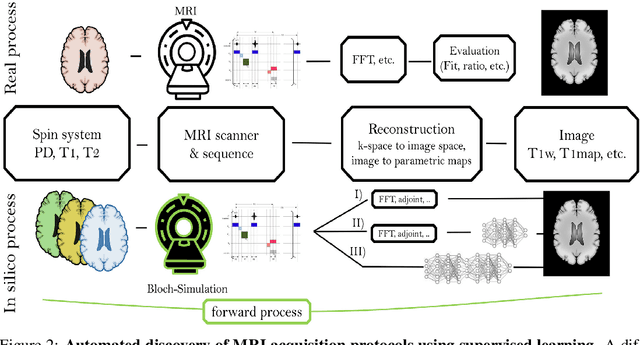
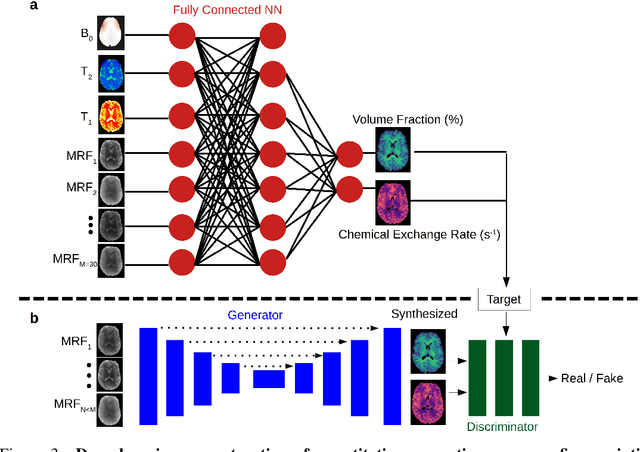

Deep learning (DL) has recently emerged as a pivotal technology for enhancing magnetic resonance imaging (MRI), a critical tool in diagnostic radiology. This review paper provides a comprehensive overview of recent advances in DL for MRI reconstruction. It focuses on DL approaches and architectures designed to improve image quality, accelerate scans, and address data-related challenges. These include end-to-end neural networks, pre-trained networks, generative models, and self-supervised methods. The paper also discusses the role of DL in optimizing acquisition protocols, enhancing robustness against distribution shifts, and tackling subtle bias. Drawing on the extensive literature and practical insights, it outlines current successes, limitations, and future directions for leveraging DL in MRI reconstruction, while emphasizing the potential of DL to significantly impact clinical imaging practices.
Memory-efficient deep end-to-end posterior network for inverse problems
Feb 08, 2024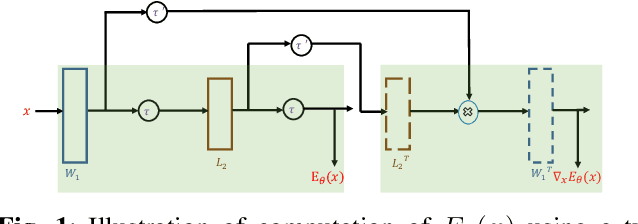
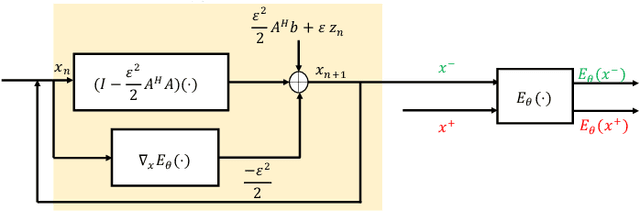
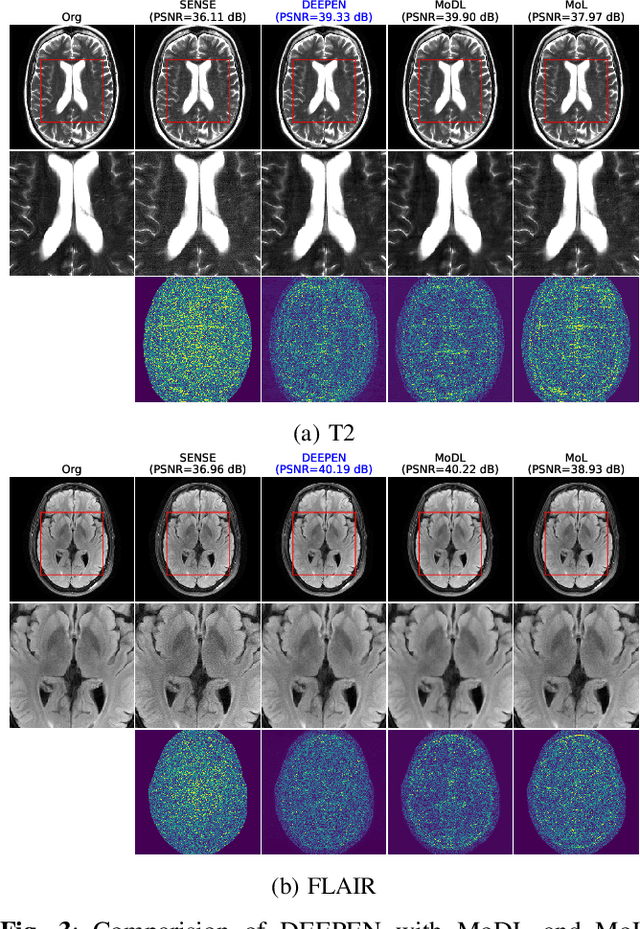
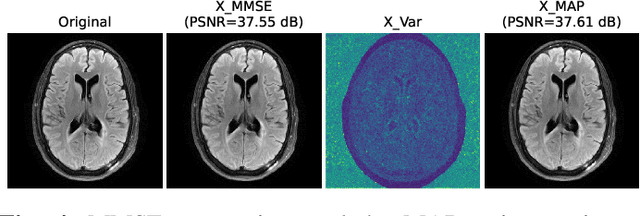
End-to-End (E2E) unrolled optimization frameworks show promise for Magnetic Resonance (MR) image recovery, but suffer from high memory usage during training. In addition, these deterministic approaches do not offer opportunities for sampling from the posterior distribution. In this paper, we introduce a memory-efficient approach for E2E learning of the posterior distribution. We represent this distribution as the combination of a data-consistency-induced likelihood term and an energy model for the prior, parameterized by a Convolutional Neural Network (CNN). The CNN weights are learned from training data in an E2E fashion using maximum likelihood optimization. The learned model enables the recovery of images from undersampled measurements using the Maximum A Posteriori (MAP) optimization. In addition, the posterior model can be sampled to derive uncertainty maps about the reconstruction. Experiments on parallel MR image reconstruction show that our approach performs comparable to the memory-intensive E2E unrolled algorithm, performs better than its memory-efficient counterpart, and can provide uncertainty maps. Our framework paves the way towards MR image reconstruction in 3D and higher dimensions