 Add to Chrome
 Add to Firefox
 Add to Edge
CDGP: Contrastive Dual Gaussian Processes for Weakly Supervised Anomaly Segmentation
Aug 19, 2026
Industrial visual inspection must both decide whether a product is defective and localize the defect, yet pixel-level masks are costly to collect at scale. Most anomaly-segmentation methods learn only from defect-free images and score deviations from normality. A true defect and an unusual-but-normal region, however, can both deviate substantially and receive similarly high scores. We propose Contrastive Dual Gaussian Processes (CDGP), a weakly supervised framework that models normal and anomaly inducing-variable predictive distributions over dense tokens. Its posterior-dominance statistic standardizes their predictive-mean difference by the joint predictive uncertainty, providing both spatial evidence and image-level confidence. This evidence complements hierarchical normal-reconstruction residuals for fine localization. All calibration uses training data only, without human pixel annotations or test-time fitting. Across MVTec AD~2, KSDD2, and VisA, CDGP ranks first among the evaluated methods on all MVTec AD~2 localization metrics and is first-place or competitive on KSDD2 and VisA. Factorized and matched linear-head controls delimit the contribution and scope of the linear-kernel Gaussian process (GP) formulation.

SPARC: Subspace Position-Aware Robust Few-Shot Calibration for Distribution-Shifted Industrial Anomaly Detection
Aug 19, 2026Vision-based industrial anomaly detectors are calibrated on one distribution but may be deployed on another that differs in illumination, fixture placement, or sensor characteristics, sharply degrading an otherwise accurate detector. Adapting to the incoming lot is a natural response, but labeled anomalies are scarce. We therefore consider calibration using only a handful of verified-normal images available before scoring the rest of the lot. Existing fixes require backpropagation, detector-specific tuning, or choices about feature directions that few calibration samples cannot justify. We present SPARC, a few-shot calibration method that intercepts patch features between encoder and detector and removes a closed-form, spatially indexed estimate of deployment-time nuisance through per-cell subspace projection. It needs only $k \le 8$ verified-normal images and uses the algebraic saturation rank $r{=}k{-}1$ on the encoder's native patch grid. The correction requires no gradient or weight updates and works with memory-bank, density, prototype, and mutual detectors. On the shift-prone benchmarks, SPARC improves pooled Image AUROC and AU-PRO$_{0.3}$ for all seven detectors whose image scores depend on corrected patch features by $+13.8$ and $+3.5$ percentage points (pp), respectively; on benchmarks without engineered shift, the changes are small and mixed. Controls that give competing corrections the same calibration images attribute these gains to the per-cell subspace structure rather than the images alone. Further ablations support the saturation-rank choice and characterize sensitivity to backbone and calibration conditions.
RADAR: Relative Angular Divergence Across Representations
May 21, 2026Machine learning methods rely on data. However, gathering suitable data can be challenging due to availability constraints, cost, or the need for domain expertise. Expanding datasets with additional sources is a common response to limited data, yet this practice does not always improve downstream performance and can sometimes lead to a loss of performance, known as negative transfer. We propose RADAR, a simple, geometrically grounded metric for estimating cross-domain transferability in foundation models. RADAR analyzes the layer-wise evolution of representations by measuring angular alignments and relative changes in distance along layer-to-layer displacement trajectories, and by comparing empirical distributions of within-domain and cross-domain dynamics. We hypothesize that domain transferability is related to the divergence between these trajectory distributions. We evaluate the metric across multiple modalities, including cross-lingual sentiment classification with text embedding models and cross-domain image classification with foundation vision models. Across several settings, RADAR provides competitive predictive performance relative to existing transferability metrics on several vision and text benchmarks, with particularly strong results when domain transitions are smooth or cleanly separated. Our ablations further suggest that the effectiveness of transferability estimation depends on the geometry of the model's internal representation space, with different modalities favoring different topological formulations.
ABCD: All Biases Come Disguised
Feb 19, 2026Multiple-choice question (MCQ) benchmarks have been a standard evaluation practice for measuring LLMs' ability to reason and answer knowledge-based questions. Through a synthetic NonsenseQA benchmark, we observe that different LLMs exhibit varying degrees of label-position-few-shot-prompt bias, where the model either uses the answer position, the label in front of the answer, the distributions of correct answers present in the few-shot prompt, or a combination of all to answer each MCQ question. We propose a simple bias-reduced evaluation protocol that replaces the labels of each question with uniform, unordered labels and prompts the LLM to use the whole answer presented. With a simple sentence similarity model, we demonstrate improved robustness and lower standard deviation between different permutations of answers with a minimal drop in LLM's performance, exposing the LLM's capabilities under reduced evaluation artifacts, without any help from the prompt examples or the option labels. Across multiple benchmarks and models, this protocol substantially improves the robustness to answer permutations, reducing mean accuracy variance $3\times$ with only a minimal decrease in the mean model's performance. Through ablation studies on various embedding models and similarity functions, we show that the method is more robust than the standard ones.
VoD-3DGS: View-opacity-Dependent 3D Gaussian Splatting
Jan 31, 2025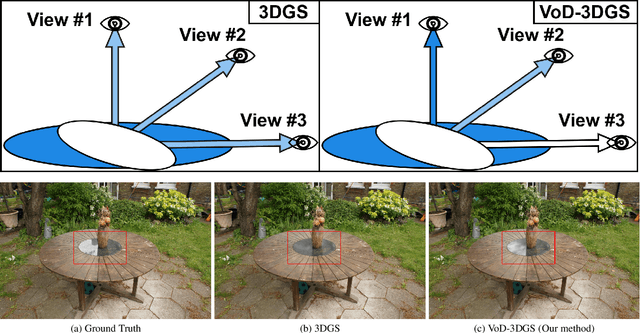

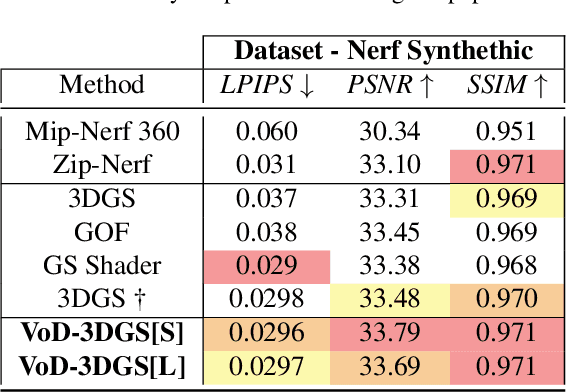
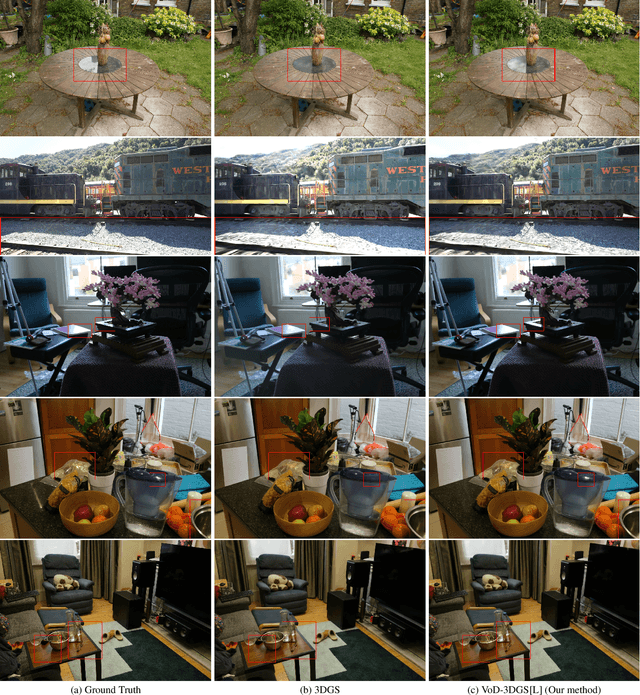
Reconstructing a 3D scene from images is challenging due to the different ways light interacts with surfaces depending on the viewer's position and the surface's material. In classical computer graphics, materials can be classified as diffuse or specular, interacting with light differently. The standard 3D Gaussian Splatting model struggles to represent view-dependent content, since it cannot differentiate an object within the scene from the light interacting with its specular surfaces, which produce highlights or reflections. In this paper, we propose to extend the 3D Gaussian Splatting model by introducing an additional symmetric matrix to enhance the opacity representation of each 3D Gaussian. This improvement allows certain Gaussians to be suppressed based on the viewer's perspective, resulting in a more accurate representation of view-dependent reflections and specular highlights without compromising the scene's integrity. By allowing the opacity to be view dependent, our enhanced model achieves state-of-the-art performance on Mip-Nerf, Tanks&Temples, Deep Blending, and Nerf-Synthetic datasets without a significant loss in rendering speed, achieving >60FPS, and only incurring a minimal increase in memory used.
Trick-GS: A Balanced Bag of Tricks for Efficient Gaussian Splatting
Jan 24, 2025Gaussian splatting (GS) for 3D reconstruction has become quite popular due to their fast training, inference speeds and high quality reconstruction. However, GS-based reconstructions generally consist of millions of Gaussians, which makes them hard to use on computationally constrained devices such as smartphones. In this paper, we first propose a principled analysis of advances in efficient GS methods. Then, we propose Trick-GS, which is a careful combination of several strategies including (1) progressive training with resolution, noise and Gaussian scales, (2) learning to prune and mask primitives and SH bands by their significance, and (3) accelerated GS training framework. Trick-GS takes a large step towards resource-constrained GS, where faster run-time, smaller and faster-convergence of models is of paramount concern. Our results on three datasets show that Trick-GS achieves up to 2x faster training, 40x smaller disk size and 2x faster rendering speed compared to vanilla GS, while having comparable accuracy.
Explore Reinforced: Equilibrium Approximation with Reinforcement Learning
Dec 02, 2024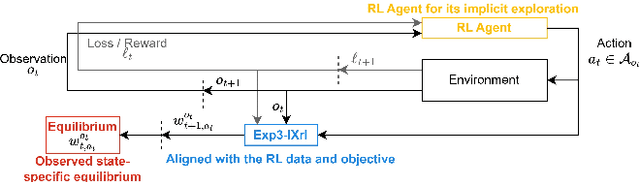


Current approximate Coarse Correlated Equilibria (CCE) algorithms struggle with equilibrium approximation for games in large stochastic environments but are theoretically guaranteed to converge to a strong solution concept. In contrast, modern Reinforcement Learning (RL) algorithms provide faster training yet yield weaker solutions. We introduce Exp3-IXrl - a blend of RL and game-theoretic approach, separating the RL agent's action selection from the equilibrium computation while preserving the integrity of the learning process. We demonstrate that our algorithm expands the application of equilibrium approximation algorithms to new environments. Specifically, we show the improved performance in a complex and adversarial cybersecurity network environment - the Cyber Operations Research Gym - and in the classical multi-armed bandit settings.
POLCOVID: a multicenter multiclass chest X-ray database
Dec 15, 2022The outbreak of the SARS-CoV-2 pandemic has put healthcare systems worldwide to their limits, resulting in increased waiting time for diagnosis and required medical assistance. With chest radiographs (CXR) being one of the most common COVID-19 diagnosis methods, many artificial intelligence tools for image-based COVID-19 detection have been developed, often trained on a small number of images from COVID-19-positive patients. Thus, the need for high-quality and well-annotated CXR image databases increased. This paper introduces POLCOVID dataset, containing chest X-ray (CXR) images of patients with COVID-19 or other-type pneumonia, and healthy individuals gathered from 15 Polish hospitals. The original radiographs are accompanied by the preprocessed images limited to the lung area and the corresponding lung masks obtained with the segmentation model. Moreover, the manually created lung masks are provided for a part of POLCOVID dataset and the other four publicly available CXR image collections. POLCOVID dataset can help in pneumonia or COVID-19 diagnosis, while the set of matched images and lung masks may serve for the development of lung segmentation solutions.
CIRCA: comprehensible online system in support of chest X-rays-based COVID-19 diagnosis
Oct 11, 2022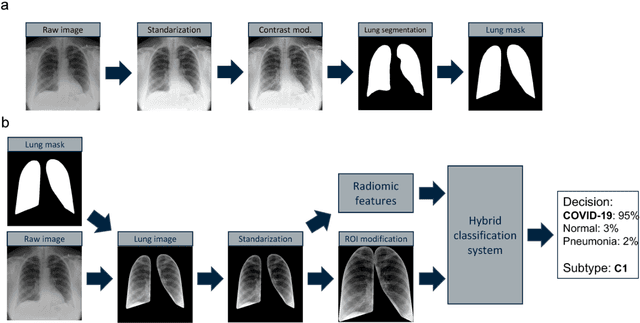
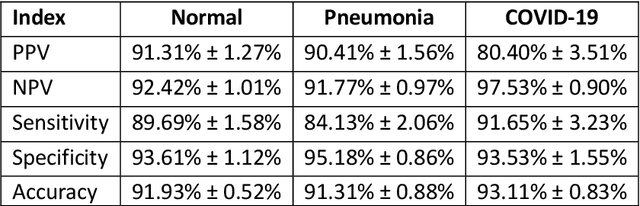
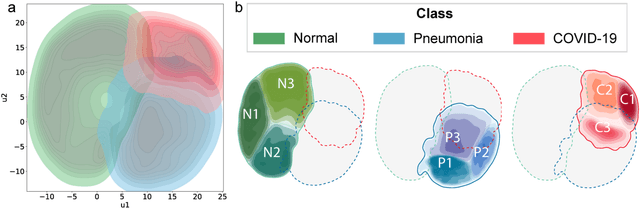
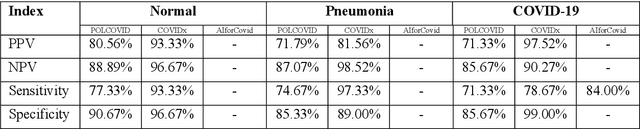
Due to the large accumulation of patients requiring hospitalization, the COVID-19 pandemic disease caused a high overload of health systems, even in developed countries. Deep learning techniques based on medical imaging data can help in the faster detection of COVID-19 cases and monitoring of disease progression. Regardless of the numerous proposed solutions for lung X-rays, none of them is a product that can be used in the clinic. Five different datasets (POLCOVID, AIforCOVID, COVIDx, NIH, and artificially generated data) were used to construct a representative dataset of 23 799 CXRs for model training; 1 050 images were used as a hold-out test set, and 44 247 as independent test set (BIMCV database). A U-Net-based model was developed to identify a clinically relevant region of the CXR. Each image class (normal, pneumonia, and COVID-19) was divided into 3 subtypes using a 2D Gaussian mixture model. A decision tree was used to aggregate predictions from the InceptionV3 network based on processed CXRs and a dense neural network on radiomic features. The lung segmentation model gave the Sorensen-Dice coefficient of 94.86% in the validation dataset, and 93.36% in the testing dataset. In 5-fold cross-validation, the accuracy for all classes ranged from 91% to 93%, keeping slightly higher specificity than sensitivity and NPV than PPV. In the hold-out test set, the balanced accuracy ranged between 68% and 100%. The highest performance was obtained for the subtypes N1, P1, and C1. A similar performance was obtained on the independent dataset for normal and COVID-19 class subtypes. Seventy-six percent of COVID-19 patients wrongly classified as normal cases were annotated by radiologists as with no signs of disease. Finally, we developed the online service (https://circa.aei.polsl.pl) to provide access to fast diagnosis support tools.