 Add to Chrome
 Add to Firefox
 Add to Edge
Fact-Checking with Large Language Models via Probabilistic Certainty and Consistency
Jan 05, 2026
Large language models (LLMs) are increasingly used in applications requiring factual accuracy, yet their outputs often contain hallucinated responses. While fact-checking can mitigate these errors, existing methods typically retrieve external evidence indiscriminately, overlooking the model's internal knowledge and potentially introducing irrelevant noise. Moreover, current systems lack targeted mechanisms to resolve specific uncertainties in the model's reasoning. Inspired by how humans fact-check, we argue that LLMs should adaptively decide whether to rely on internal knowledge or initiate retrieval based on their confidence in a given claim. We introduce Probabilistic Certainty and Consistency (PCC), a framework that estimates factual confidence by jointly modeling an LLM's probabilistic certainty and reasoning consistency. These confidence signals enable an adaptive verification strategy: the model answers directly when confident, triggers targeted retrieval when uncertain or inconsistent, and escalates to deep search when ambiguity is high. Our confidence-guided routing mechanism ensures that retrieval is invoked only when necessary, improving both efficiency and reliability. Extensive experiments across three challenging benchmarks show that PCC achieves better uncertainty quantification than verbalized confidence and consistently outperforms strong LLM-based fact-checking baselines. Furthermore, we demonstrate that PCC generalizes well across various LLMs.

Personalized QoE Prediction: A Demographic-Augmented Machine Learning Framework for 5G Video Streaming Networks
Dec 14, 2025Quality of Experience (QoE) prediction is a critical component of modern multimedia systems, particularly for adaptive video streaming in 5G networks. Accurate QoE estimation enables intelligent resource management and supports user centric service delivery. Existing QoE prediction approaches primarily rely on limited datasets and assume uniform user perception, which restricts their applicability in heterogeneous real world environments. This paper proposes a demographic aware machine learning framework for personalized QoE prediction. We introduce a behaviorally realistic demographic based data augmentation strategy that expands a small QoE dataset six fold by modeling varying user sensitivities to streaming impairments such as rebuffering, bitrate variation, and quality degradation. Using the augmented dataset, we evaluate a comprehensive set of classical machine learning models alongside advanced deep learning architectures, including an attention-based MLP and TabNet. Experimental results demonstrate significant improvements in prediction accuracy across RMSE, MAE, and R metrics compared to baseline models. Among all evaluated approaches, TabNet achieves the strongest performance, benefiting from its inherent feature selection and attention mechanisms. The results confirm that demographic-aware augmentation substantially enhances QoE prediction robustness and provides a scalable direction for personalized QoE-aware intelligence in 5G video streaming networks.
GRAIL: A Benchmark for GRaph ActIve Learning in Dynamic Sensing Environments
Jun 11, 2025Graph-based Active Learning (AL) leverages the structure of graphs to efficiently prioritize label queries, reducing labeling costs and user burden in applications like health monitoring, human behavior analysis, and sensor networks. By identifying strategically positioned nodes, graph AL minimizes data collection demands while maintaining model performance, making it a valuable tool for dynamic environments. Despite its potential, existing graph AL methods are often evaluated on static graph datasets and primarily focus on prediction accuracy, neglecting user-centric considerations such as sampling diversity, query fairness, and adaptability to dynamic settings. To bridge this gap, we introduce GRAIL, a novel benchmarking framework designed to evaluate graph AL strategies in dynamic, real-world environments. GRAIL introduces novel metrics to assess sustained effectiveness, diversity, and user burden, enabling a comprehensive evaluation of AL methods under varying conditions. Extensive experiments on datasets featuring dynamic, real-life human sensor data reveal trade-offs between prediction performance and user burden, highlighting limitations in existing AL strategies. GRAIL demonstrates the importance of balancing node importance, query diversity, and network topology, providing an evaluation mechanism for graph AL solutions in dynamic environments.
Graph-Based Biomarker Discovery and Interpretation for Alzheimer's Disease
Nov 27, 2024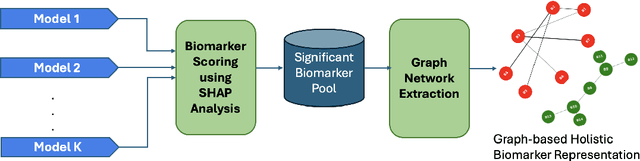
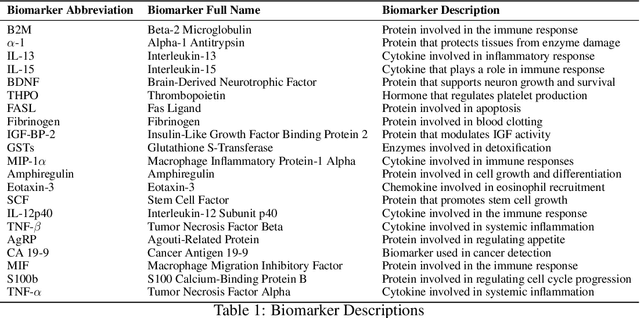
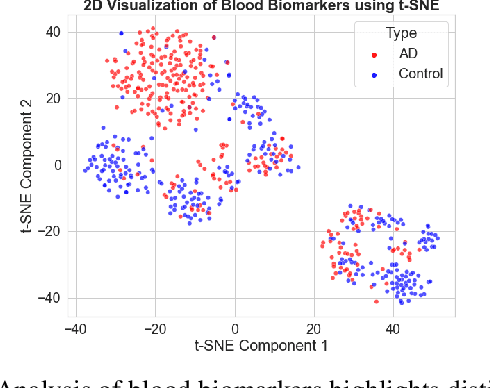
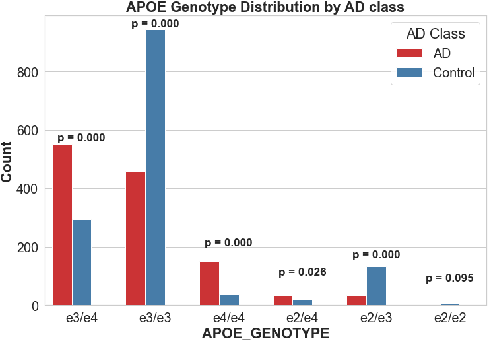
Early diagnosis and discovery of therapeutic drug targets are crucial objectives for the effective management of Alzheimer's Disease (AD). Current approaches for AD diagnosis and treatment planning are based on radiological imaging and largely inaccessible for population-level screening due to prohibitive costs and limited availability. Recently, blood tests have shown promise in diagnosing AD and highlighting possible biomarkers that can be used as drug targets for AD management. Blood tests are significantly more accessible to disadvantaged populations, cost-effective, and minimally invasive. However, biomarker discovery in the context of AD diagnosis is complex as there exist important associations between various biomarkers. Here, we introduce BRAIN (Biomarker Representation, Analysis, and Interpretation Network), a novel machine learning (ML) framework to jointly optimize the diagnostic accuracy and biomarker discovery processes to identify all relevant biomarkers that contribute to AD diagnosis. Using a holistic graph-based representation for biomarkers, we highlight their inter-dependencies and explain why different ML models identify different discriminative biomarkers. We apply BRAIN to a publicly available blood biomarker dataset, revealing three novel biomarker sub-networks whose interactions vary between the control and AD groups, offering a new paradigm for drug discovery and biomarker analysis for AD.
SleepNet: Attention-Enhanced Robust Sleep Prediction using Dynamic Social Networks
Jan 27, 2024Sleep behavior significantly impacts health and acts as an indicator of physical and mental well-being. Monitoring and predicting sleep behavior with ubiquitous sensors may therefore assist in both sleep management and tracking of related health conditions. While sleep behavior depends on, and is reflected in the physiology of a person, it is also impacted by external factors such as digital media usage, social network contagion, and the surrounding weather. In this work, we propose SleepNet, a system that exploits social contagion in sleep behavior through graph networks and integrates it with physiological and phone data extracted from ubiquitous mobile and wearable devices for predicting next-day sleep labels about sleep duration. Our architecture overcomes the limitations of large-scale graphs containing connections irrelevant to sleep behavior by devising an attention mechanism. The extensive experimental evaluation highlights the improvement provided by incorporating social networks in the model. Additionally, we conduct robustness analysis to demonstrate the system's performance in real-life conditions. The outcomes affirm the stability of SleepNet against perturbations in input data. Further analyses emphasize the significance of network topology in prediction performance revealing that users with higher eigenvalue centrality are more vulnerable to data perturbations.
Traffic Prediction in Cellular Networks using Graph Neural Networks
Jan 30, 2023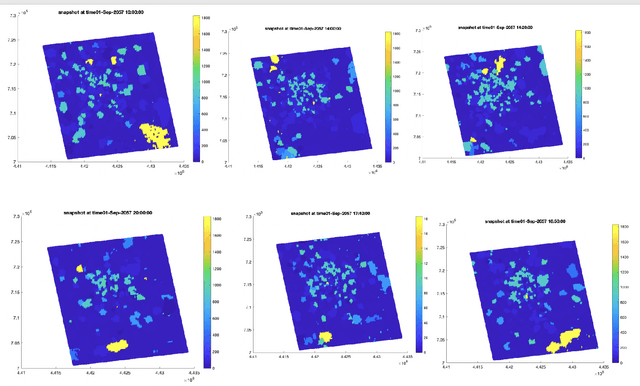
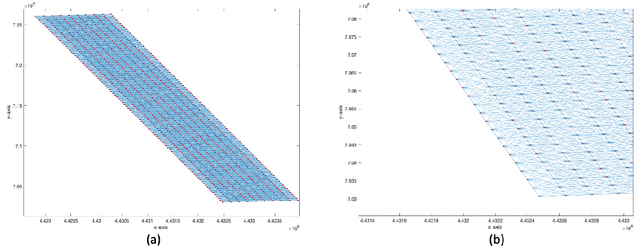
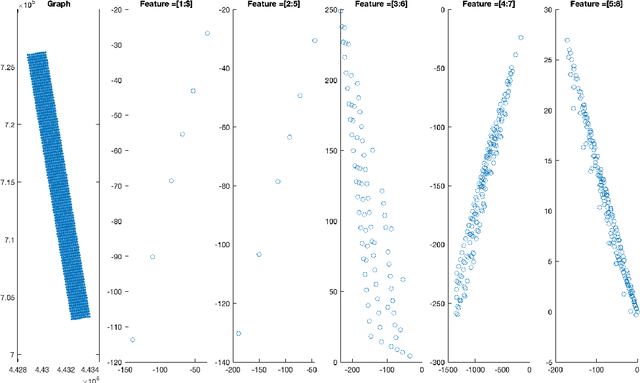
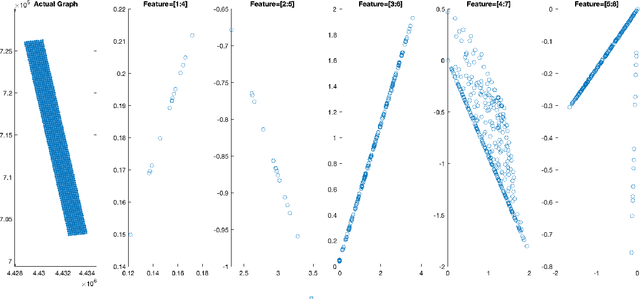
Cellular networks are ubiquitous entities that provide major means of communication all over the world. One major challenge in cellular networks is a dynamic change in the number of users and their usage of telecommunication service which results in overloading at certain base stations. One class of solution to deal with this overloading issue is the deployment of drones that can act as temporary base stations and offload the traffic from the overloaded base station. There are two main challenges in the development of this solution. Firstly, the drone is expected to be present around the base station where an overload would occur in the future thus requiring a prediction of traffic overload. Secondly, drones are highly constrained in their resources and can only fly for a few minutes. If the affected base station is really far, drones can never reach there. This requires the initial placement of drones in sectors where overloading can occur thus again requiring a traffic forecast but at a different spatial scale. It must be noted that the spatial extent of the region that the problem poses and the extremely limited power resources available to the drone pose a great challenge that is hard to overcome without deploying the drones in strategic positions to reduce the time to fly to the required high-demand zone. Moreover, since drone fly at a finite speed, it is important that a predictive solution that can forecast traffic surges is adopted so that drones are available to offload the overload before it actually happens. Both these goals require analysis and forecast of cellular network traffic which is the main goal of this project
Networked Drones for Industrial Emergency Events
Aug 01, 2022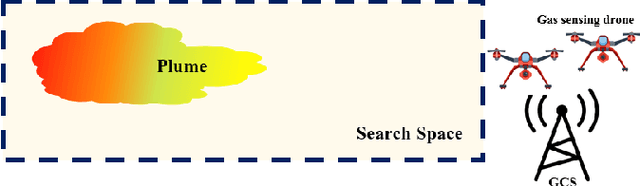
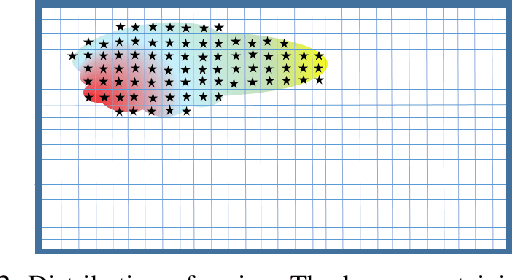
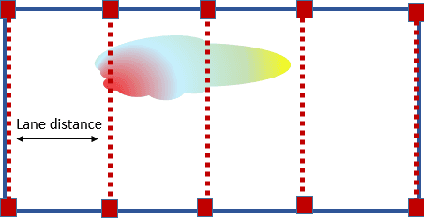
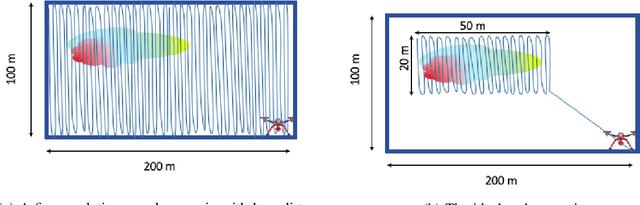
Uncontrolled emissions of gases from industrial accidents and disasters result in huge loss of life and property. Such extreme events require a quick and reliable survey of the site for effective rescue strategy planning. To achieve these goals, a network of unmanned aerial vehicles can be deployed that survey the affected region and identify safe and danger zones. Although single UAV-based systems for gas sensing applications are well-studied in literature, research on the deployment of a UAV network for such applications, which is more robust and fault tolerant, is still in infancy. The objective of this project is to design a system that can be deployed in emergency situations to provide a quick survey and identification of safe and dangerous zones in a given region that contains a toxic plume without making any assumptions about plume location. We focus on an end-to-end solution and formulate a two-phase strategy that can not only guarantee detection/acquisition of plume but also its characterization with high spatial resolution. To guarantee coverage of the region with a certain spatial resolution, we set up a vehicle routing problem. To overcome the limitations imposed by limited range of sensors and drone resources, we estimate the concentration map by using Gaussian kernel extrapolation. Finally, we evaluate the suggested framework in simulations. Our results suggest that this two-phase strategy not only gives better error performance but is also more efficient in terms of mission time. Moreover, the comparison between 2-phase random search and 2-phase uniform coverage suggest that the latter is better for single drone systems whereas for multiple drones the former gives reasonable performance at low computational cost.
Decision-Feedback Detection for Bidirectional Molecular Relaying with Direct Links
Jul 21, 2022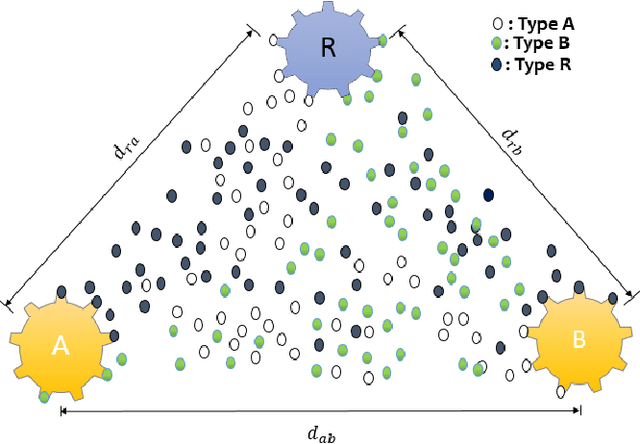
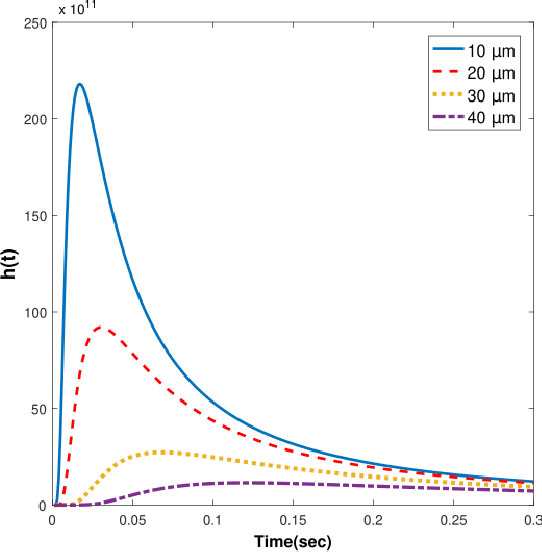
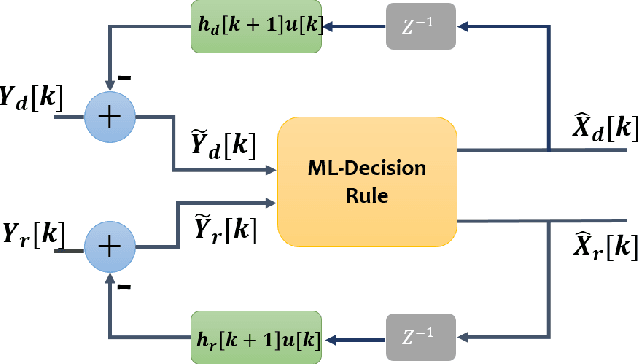
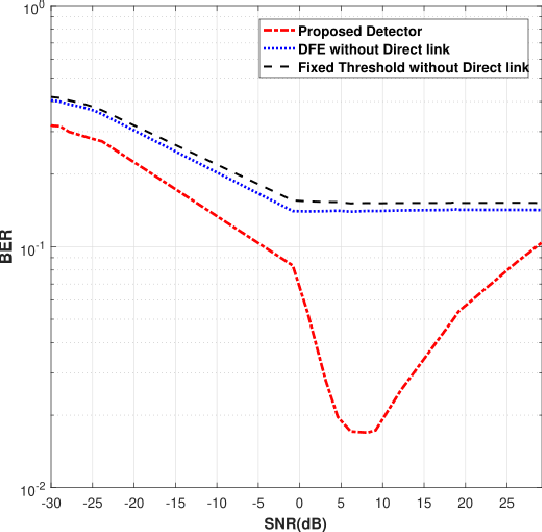
In this paper, we consider bidirectional relaying between two diffusion-based molecular transceivers (bio-nodes). As opposed to existing literature, we incorporate the effect of direct diffusion links between the nodes and leverage it to improve performance. Assuming network coding type operation at the relay, we devise a detection strategy, based on the maximum-likelihood principle, that combines the signal received from the relay and that received from the direct link. At the same time, since a diffusion-based molecular communication channel is characterized by high inter-symbol interference (ISI), we utilize a decision feedback mechanism to mitigate its effect. Simulation results indicate that the proposed setup incorporating the direct link can achieve notable improvement in error performance over conventional detection schemes that do not exploit the direct link and/or do not attempt to mitigate the effect of ISI.
Exploiting Social Graph Networks for Emotion Prediction
Jul 12, 2022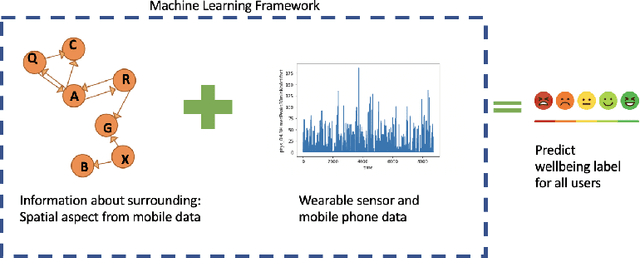
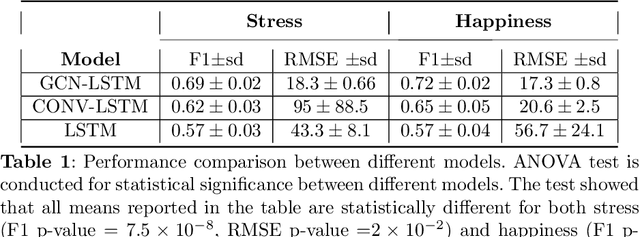
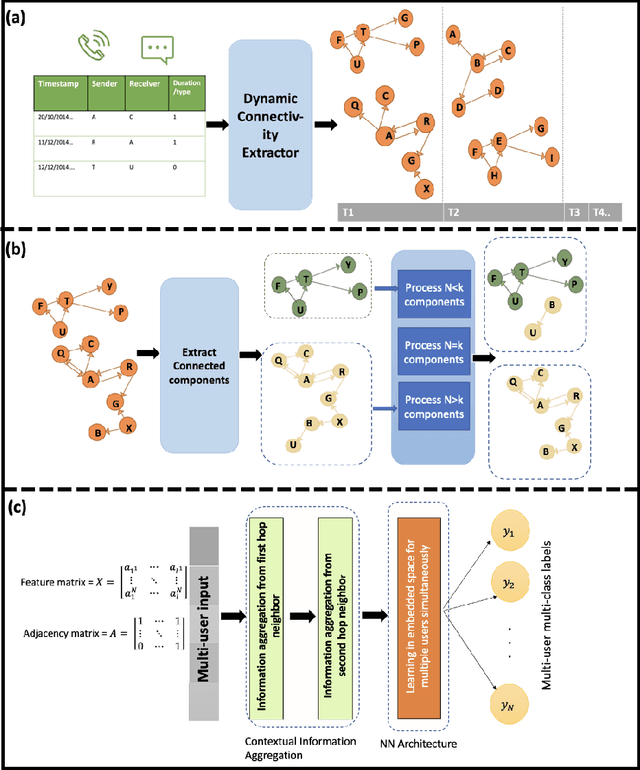
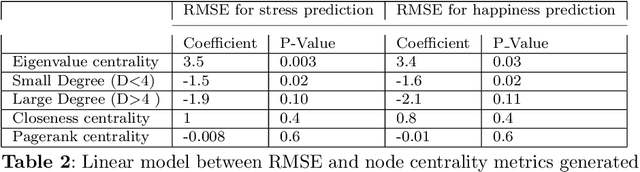
Emotion prediction plays an essential role in mental health and emotion-aware computing. The complex nature of emotion resulting from its dependency on a person's physiological health, mental state, and his surroundings makes its prediction a challenging task. In this work, we utilize mobile sensing data to predict happiness and stress. In addition to a person's physiological features, we also incorporate the environment's impact through weather and social network. To this end, we leverage phone data to construct social networks and develop a machine learning architecture that aggregates information from multiple users of the graph network and integrates it with the temporal dynamics of data to predict emotion for all the users. The construction of social networks does not incur additional cost in terms of EMAs or data collection from users and doesn't raise privacy concerns. We propose an architecture that automates the integration of a user's social network affect prediction, is capable of dealing with the dynamic distribution of real-life social networks, making it scalable to large-scale networks. Our extensive evaluation highlights the improvement provided by the integration of social networks. We further investigate the impact of graph topology on model's performance.
A Brief Survey of Machine Learning Methods for Emotion Prediction using Physiological Data
Jan 17, 2022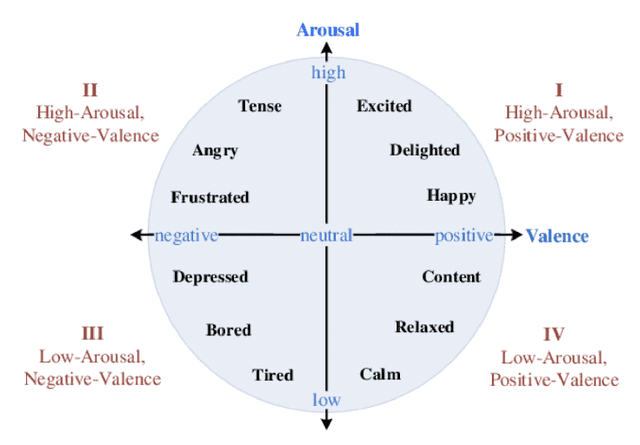
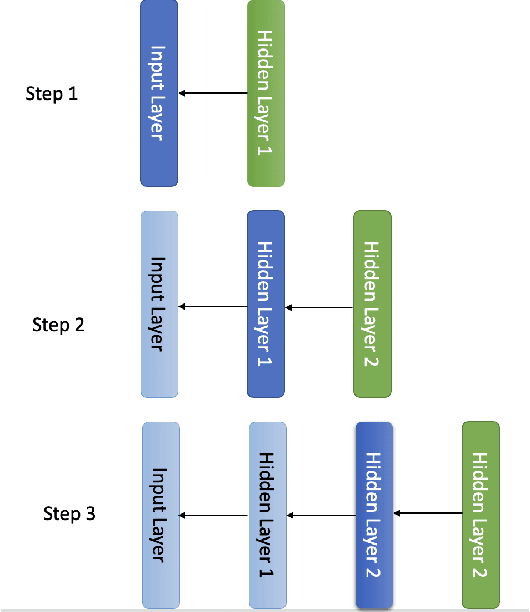
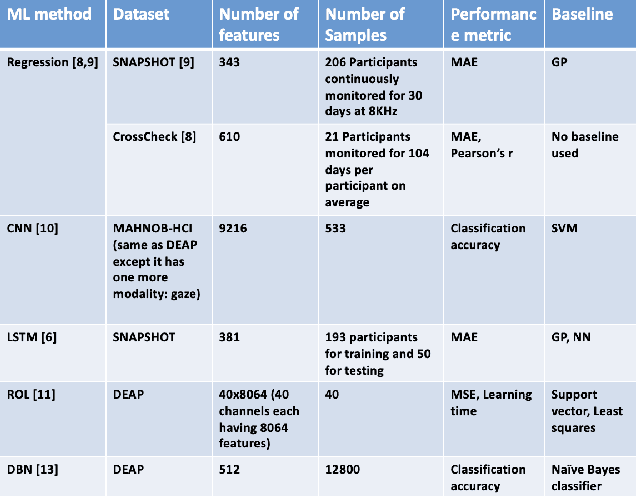
Emotion prediction is a key emerging research area that focuses on identifying and forecasting the emotional state of a human from multiple modalities. Among other data sources, physiological data can serve as an indicator for emotions with an added advantage that it cannot be masked/tampered by the individual and can be easily collected. This paper surveys multiple machine learning methods that deploy smartphone and physiological data to predict emotions in real-time, using self-reported ecological momentary assessments (EMA) scores as ground-truth. Comparing regression, long short-term memory (LSTM) networks, convolutional neural networks (CNN), reinforcement online learning (ROL), and deep belief networks (DBN), we showcase the variability of machine learning methods employed to achieve accurate emotion prediction. We compare the state-of-the-art methods and highlight that experimental performance is still not very good. The performance can be improved in future works by considering the following issues: improving scalability and generalizability, synchronizing multimodal data, optimizing EMA sampling, integrating adaptability with sequence prediction, collecting unbiased data, and leveraging sophisticated feature engineering techniques.