 Add to Chrome
 Add to Firefox
 Add to Edge
Transcription Policy as a Latent Variable: Activating Controllable Verbatim ASR with Word-Level Timing
Jul 21, 2026
Modern ASR models trained on heterogeneously annotated data treat transcription style (verbatim vs. intended) as an uncontrolled latent variable, causing measurable decoding instability, evaluation confounding (up to 60% of reported WER attributable to style mismatch), and unreliable word-level timing. We show that models already encode both styles; the challenge is controlled activation. Using coverage-aware decoder task tokens trained on parallel verbatim/intended transcript pairs, we raise German disfluency F1 from 10% to 79% zero-shot, despite English-only training. Full English-only fine-tuning surpasses all baselines in verbatim accuracy, disfluency detection, and intended-mode quality across both languages. We further introduce supervised cross-attention fine-tuning that improves word-level timestamps on disfluent speech beyond forced-alignment baselines. Finally, we propose verbatimize, a new task enabling scalable creation and enrichment of speech corpora with high-quality canonical verbatim transcriptions.

Content is What Remains: Invariant Speech Tokenization from Parallel Utterances
Jul 21, 2026Discrete speech tokenizers aim to disentangle semantic from acoustic information, yet targets from self-supervised learning (SSL) models like HuBERT retain non-linguistic variation: speaker identity, prosody, and channel conditions leak into the tokens, inflating entropy. Our key insight is that when enough speakers utter the same words under varying conditions, linguistic content is the only shared factor. We propose PINT (Parallel INvariant Tokenization), which fine-tunes an SSL encoder with alignment losses across parallel utterances and augmentations to distill this shared residual. PINT collapses identical words onto consistent token sequences, drastically reducing conditional entropy. Unlike ASR text, PINT tokens preserve frame-level temporal grounding and serve as drop-in semantic targets for audio codecs. Experiments show a 98.7% relative reduction in speaker probe accuracy (93.1% to 1.2%), a 42% lower ABX error rate, and 27-30% lower LM perplexity versus baselines, confirming that the right invariance is key to efficient learning.
CrisperWhisper: Accurate Timestamps on Verbatim Speech Transcriptions
Aug 29, 2024We demonstrate that carefully adjusting the tokenizer of the Whisper speech recognition model significantly improves the precision of word-level timestamps when applying dynamic time warping to the decoder's cross-attention scores. We fine-tune the model to produce more verbatim speech transcriptions and employ several techniques to increase robustness against multiple speakers and background noise. These adjustments achieve state-of-the-art performance on benchmarks for verbatim speech transcription, word segmentation, and the timed detection of filler events, and can further mitigate transcription hallucinations. The code is available open https://github.com/nyrahealth/CrisperWhisper.
Careful Whisper -- leveraging advances in automatic speech recognition for robust and interpretable aphasia subtype classification
Aug 02, 2023This paper presents a fully automated approach for identifying speech anomalies from voice recordings to aid in the assessment of speech impairments. By combining Connectionist Temporal Classification (CTC) and encoder-decoder-based automatic speech recognition models, we generate rich acoustic and clean transcripts. We then apply several natural language processing methods to extract features from these transcripts to produce prototypes of healthy speech. Basic distance measures from these prototypes serve as input features for standard machine learning classifiers, yielding human-level accuracy for the distinction between recordings of people with aphasia and a healthy control group. Furthermore, the most frequently occurring aphasia types can be distinguished with 90% accuracy. The pipeline is directly applicable to other diseases and languages, showing promise for robustly extracting diagnostic speech biomarkers.
Artificial Intelligence Decision Support for Medical Triage
Nov 09, 2020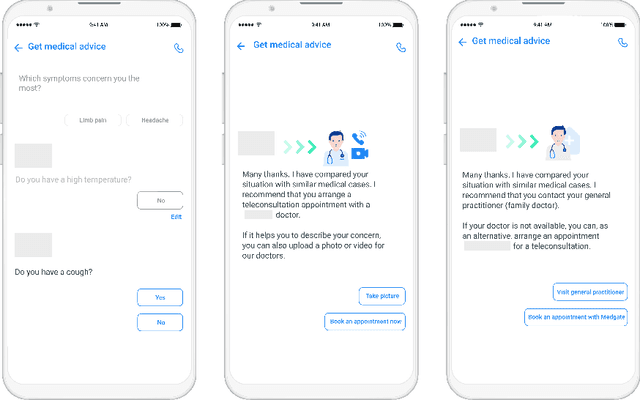
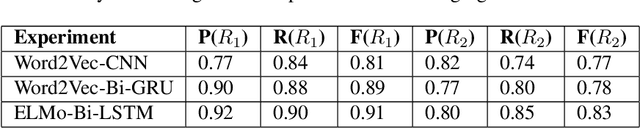
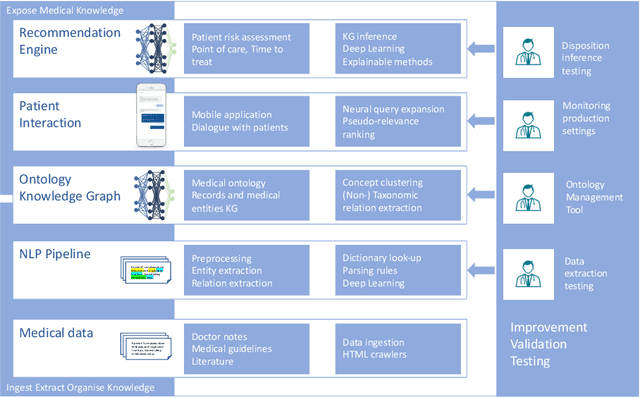
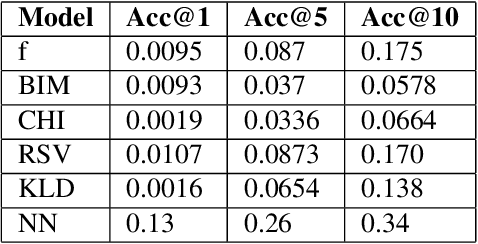
Applying state-of-the-art machine learning and natural language processing on approximately one million of teleconsultation records, we developed a triage system, now certified and in use at the largest European telemedicine provider. The system evaluates care alternatives through interactions with patients via a mobile application. Reasoning on an initial set of provided symptoms, the triage application generates AI-powered, personalized questions to better characterize the problem and recommends the most appropriate point of care and time frame for a consultation. The underlying technology was developed to meet the needs for performance, transparency, user acceptance and ease of use, central aspects to the adoption of AI-based decision support systems. Providing such remote guidance at the beginning of the chain of care has significant potential for improving cost efficiency, patient experience and outcomes. Being remote, always available and highly scalable, this service is fundamental in high demand situations, such as the current COVID-19 outbreak.
SAPSAM - Sparsely Annotated Pathological Sign Activation Maps - A novel approach to train Convolutional Neural Networks on lung CT scans using binary labels only
Feb 06, 2019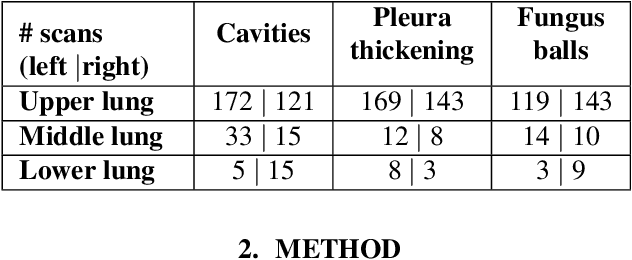
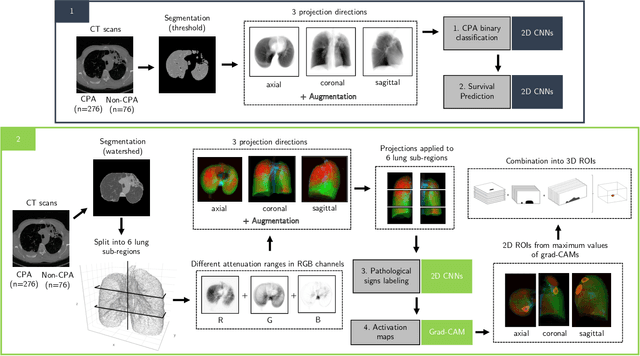
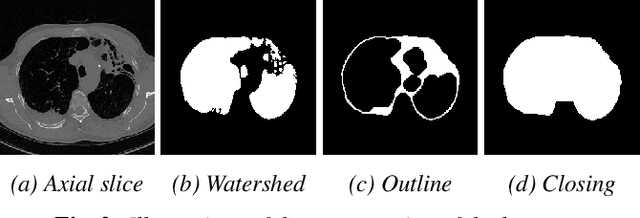
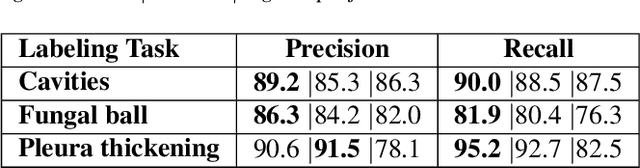
Chronic Pulmonary Aspergillosis (CPA) is a complex lung disease caused by infection with Aspergillus. Computed tomography (CT) images are frequently requested in patients with suspected and established disease, but the radiological signs on CT are difficult to quantify making accurate follow-up challenging. We propose a novel method to train Convolutional Neural Networks using only regional labels on the presence of pathological signs, to not only detect CPA, but also spatially localize pathological signs. We use average intensity projections within different ranges of Hounsfield-unit (HU) values, transforming input 3D CT scans into 2D RGB-like images. CNN architectures are trained for hierarchical tasks, leading to precise activation maps of pathological patterns. Results on a cohort of 352 subjects demonstrate high classification accuracy, localization precision and predictive power of 2 year survival. Such tool opens the way to CPA patient stratification and quantitative follow-up of CPA pathological signs, for patients under drug therapy.
* Accepted paper for ISBI2019