 Add to Chrome
 Add to Firefox
 Add to Edge
Diagnosing Pathological Chain-of-Thought in Reasoning Models
Feb 14, 2026
Chain-of-thought (CoT) reasoning is fundamental to modern LLM architectures and represents a critical intervention point for AI safety. However, CoT reasoning may exhibit failure modes that we note as pathologies, which prevent it from being useful for monitoring. Prior work has identified three distinct pathologies: post-hoc rationalization, where models generate plausible explanations backwards from predetermined answers; encoded reasoning, where intermediate steps conceal information within seemingly interpretable text; and internalized reasoning, where models replace explicit reasoning with meaningless filler tokens while computing internally. To better understand and discriminate between these pathologies, we create a set of concrete metrics that are simple to implement, computationally inexpensive, and task-agnostic. To validate our approach, we develop model organisms deliberately trained to exhibit specific CoT pathologies. Our work provides a practical toolkit for assessing CoT pathologies, with direct implications for training-time monitoring.

DAG-aware Transformer for Causal Effect Estimation
Oct 13, 2024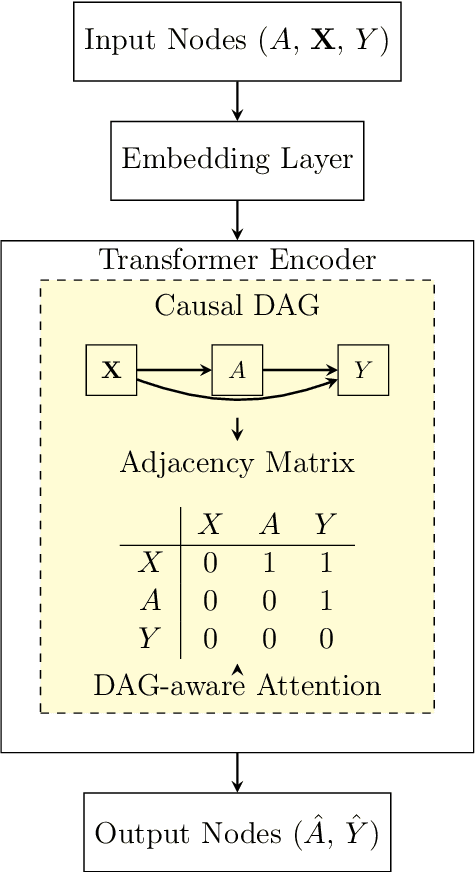
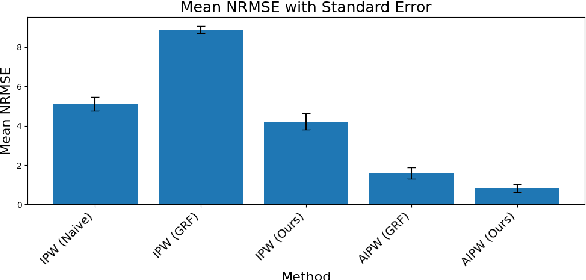
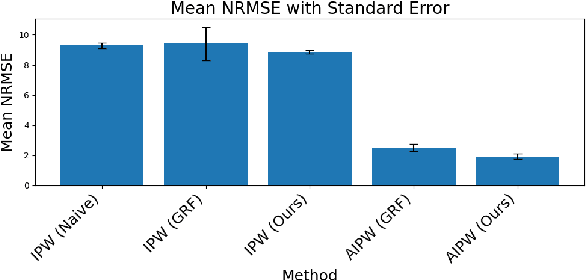
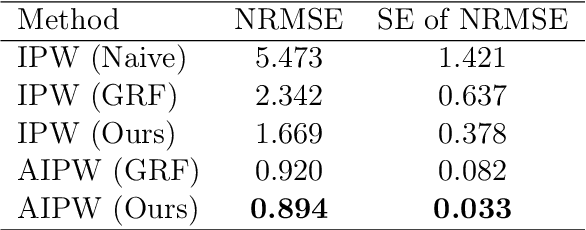
Causal inference is a critical task across fields such as healthcare, economics, and the social sciences. While recent advances in machine learning, especially those based on the deep-learning architectures, have shown potential in estimating causal effects, existing approaches often fall short in handling complex causal structures and lack adaptability across various causal scenarios. In this paper, we present a novel transformer-based method for causal inference that overcomes these challenges. The core innovation of our model lies in its integration of causal Directed Acyclic Graphs (DAGs) directly into the attention mechanism, enabling it to accurately model the underlying causal structure. This allows for flexible estimation of both average treatment effects (ATE) and conditional average treatment effects (CATE). Extensive experiments on both synthetic and real-world datasets demonstrate that our approach surpasses existing methods in estimating causal effects across a wide range of scenarios. The flexibility and robustness of our model make it a valuable tool for researchers and practitioners tackling complex causal inference problems.