 Add to Chrome
 Add to Firefox
 Add to Edge
Beyond AHI: An Interpretable Causal-Discovery-Guided Framework for Sleep Recovery in Connected Health
Jun 16, 2026
Objective sleep assessment relies on polysomnography (PSG), yet clinical impact is often better reflected in patient-reported outcomes (PROs) such as sleepiness and fatigue. Existing summary indices, including the Apnea-Hypopnea Index (AHI), provide limited insight into the multidomain physiology underlying functional recovery. We propose an interpretable, causal-discovery--guided framework for deriving a hierarchical Sleep Recovery Score (SRS) from multimodal PSG. Using two large population cohorts (MESA: n=1540; MrOS: n=825), we apply directed acyclic graph (DAG) learning to identify candidate physiological drivers spanning respiratory burden, hypoxic burden, sleep fragmentation, sleep architecture, and autonomic regulation. Although derived from clinical PSG, these domains map naturally to sensing streams increasingly available in connected health technologies, including wearable ECG, oximetry, and sleep-stage estimation devices. To preserve mechanistic plausibility, we introduce a two-stage screening process that combines physiology-based constraints with constrained LLM-assisted auditing to identify and remove structural confounders and construct-overlapping variables. Across cohorts, these five domains emerge as recurrent physiological domains associated with recovery, and the resulting SRS shows up to 2.5$\times$ stronger alignment with perceived recovery than AHI. By linking multimodal sleep physiology to patient-centered outcomes through an interpretable, bias-aware, and domain structured framework, this work provides a practical foundation for recovery modeling across both clinical sleep studies and emerging smart and connected health settings.

DeepTokenEEG Enhancing Mild Cognitive Impairment and Alzheimers Classification via Tokenized EEG Features
May 14, 2026The detection of Alzheimers disease (AD) is considered crucial, as timely intervention can improve patient outcomes. Electroencephalogram (EEG)-based diagnosis has been recognized as a non-invasive, accessible, and cost-effective approach for AD detection; however, it faces challenges related to data availability, accuracy of modern deep learning methods, and the time-consuming nature of expert-based interpretation. In this study, a novel lightweight and high-performance model, DeepTokenEEG, was designed for the diagnosis of AD and the classification of EEG signals from AD patients, individuals with other neurological conditions, and healthy subjects. Unlike traditional heavy-weight models, DeepTokenEEG ultilizes spatial and temporal tokenizer that effectively captures AD-related biomarkers in both temporal and frequency domain with only 0.29 million paramaters. Trained in a combined dataset of 274 subjects, including 180 AD cases, and 94 healthy controls, the proposed method achieves a maximum recorded accuracy of 100% on specific frequency bands, representing an improvement of 1.41-15.35% over state-of-the-art methods on the same dataset. These results indicate the potential of DeepTokenEEG for early detection and screening of AD, with promising applicability for deployment due to its compact size.
Enhancing Alzheimer's Detection through Late Fusion of Multi-Modal EEG Features
Dec 17, 2025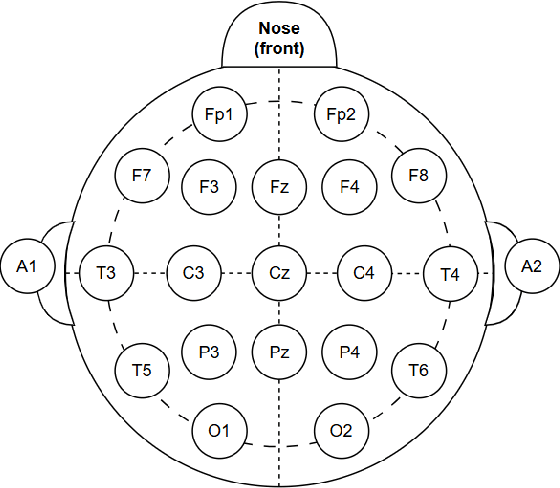
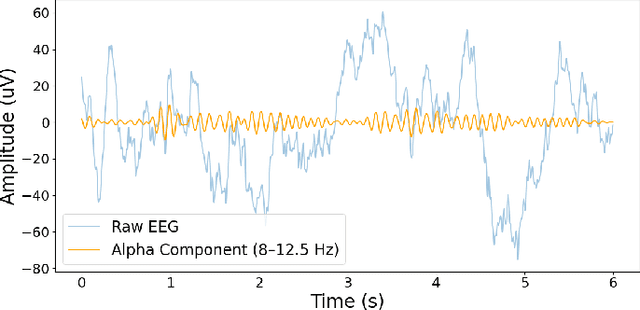
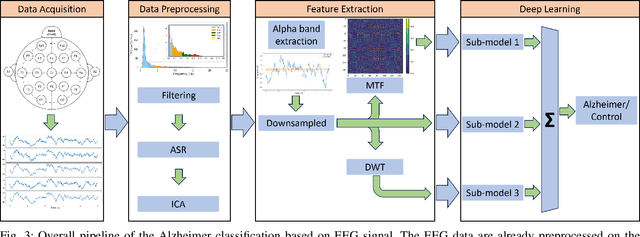
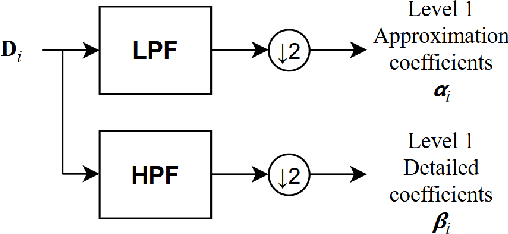
Alzheimer s disease (AD) is a progressive neurodegenerative disorder characterized by cognitive decline, where early detection is essential for timely intervention and improved patient outcomes. Traditional diagnostic methods are time-consuming and require expert interpretation, thus, automated approaches are highly desirable. This study presents a novel deep learning framework for AD diagnosis using Electroencephalograph (EEG) signals, integrating multiple feature extraction techniques including alpha-wave analysis, Discrete Wavelet Transform (DWT), and Markov Transition Fields (MTF). A late-fusion strategy is employed to combine predictions from separate neural networks trained on these diverse representations, capturing both temporal and frequency-domain patterns in the EEG data. The proposed model attains a classification accuracy of 87.23%, with a precision of 87.95%, a recall of 86.91%, and an F1 score of 87.42% when evaluated on a publicly available dataset, demonstrating its potential for reliable, scalable, and early AD screening. Rigorous preprocessing and targeted frequency band selection, particularly in the alpha range due to its cognitive relevance, further enhance performance. This work highlights the promise of deep learning in supporting physicians with efficient and accessible tools for early AD diagnosis.
Reducing Intraspecies and Interspecies Covariate Shift in Traumatic Brain Injury EEG of Humans and Mice Using Transfer Euclidean Alignment
Oct 03, 2023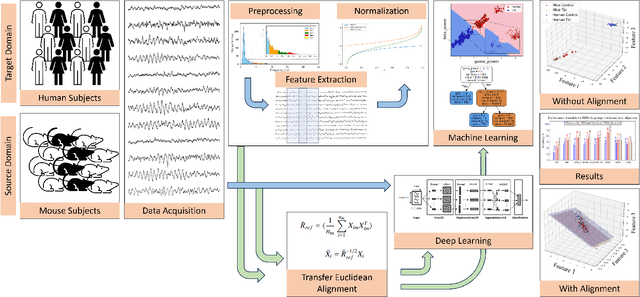
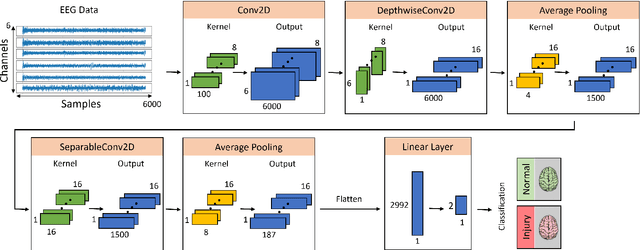
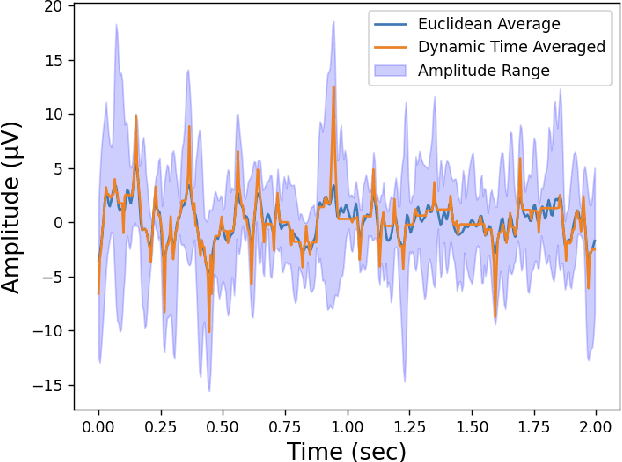
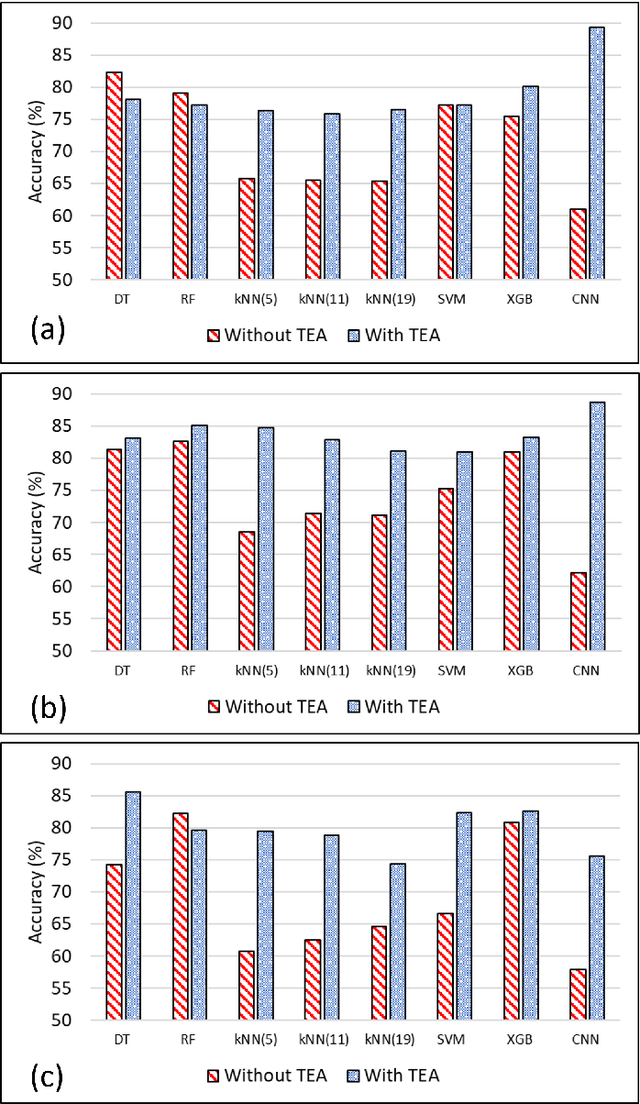
While analytics of sleep electroencephalography (EEG) holds certain advantages over other methods in clinical applications, high variability across subjects poses a significant challenge when it comes to deploying machine learning models for classification tasks in the real world. In such instances, machine learning models that exhibit exceptional performance on a specific dataset may not necessarily demonstrate similar proficiency when applied to a distinct dataset for the same task. The scarcity of high-quality biomedical data further compounds this challenge, making it difficult to evaluate the model's generality comprehensively. In this paper, we introduce Transfer Euclidean Alignment - a transfer learning technique to tackle the problem of the dearth of human biomedical data for training deep learning models. We tested the robustness of this transfer learning technique on various rule-based classical machine learning models as well as the EEGNet-based deep learning model by evaluating on different datasets, including human and mouse data in a binary classification task of detecting individuals with versus without traumatic brain injury (TBI). By demonstrating notable improvements with an average increase of 14.42% for intraspecies datasets and 5.53% for interspecies datasets, our findings underscore the importance of the use of transfer learning to improve the performance of machine learning and deep learning models when using diverse datasets for training.
A Novel ECG Denoising Scheme Using the Ensemble Kalman Filter
Jul 24, 2022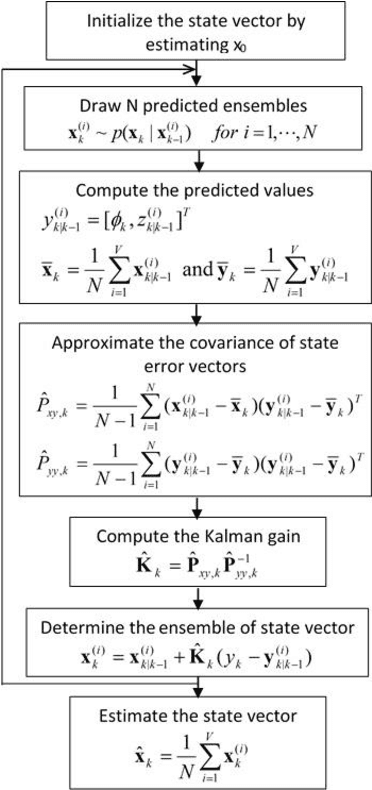
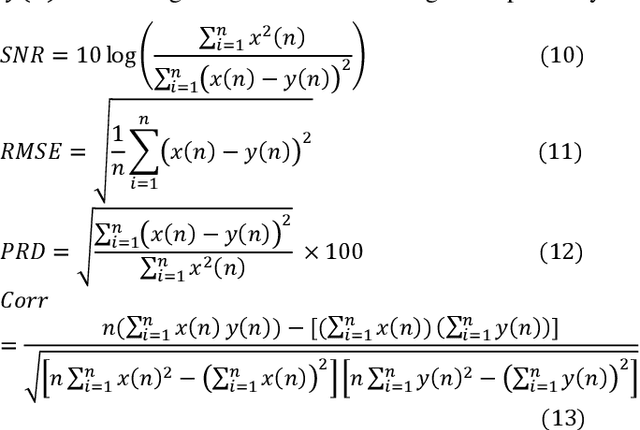
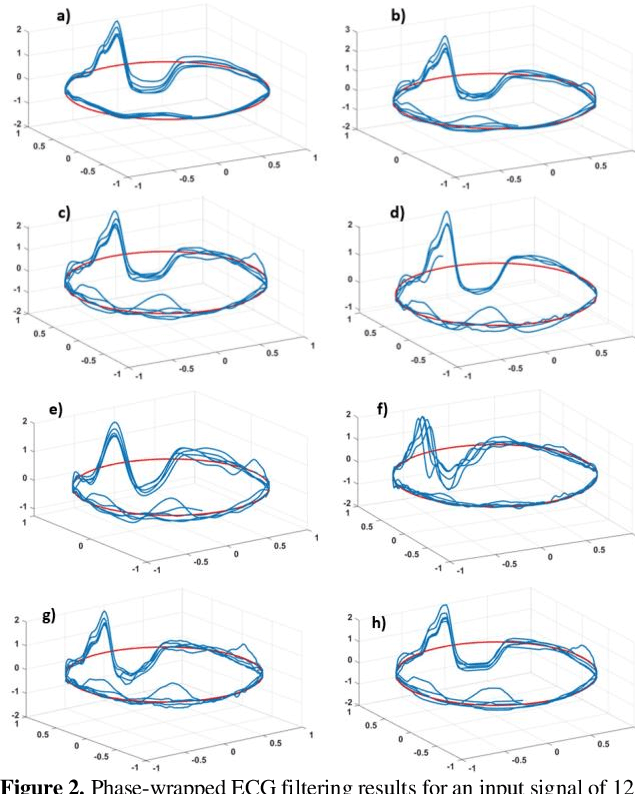
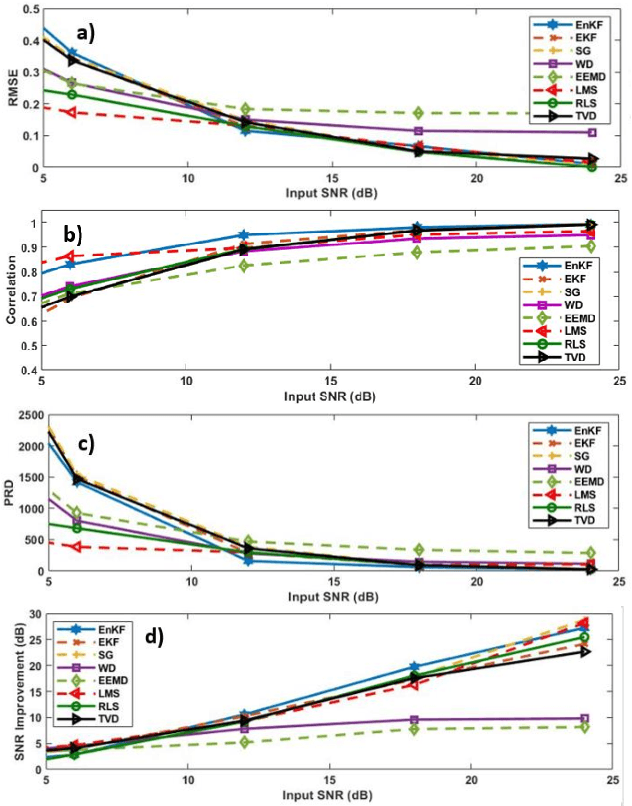
Monitoring of electrocardiogram (ECG) provides vital information as well as any cardiovascular anomalies. Recent advances in the technology of wearable electronics have enabled compact devices to acquire personal physiological signals in the home setting; however, signals are usually contaminated with high level noise. Thus, an efficient ECG filtering scheme is a dire need. In this paper, a novel method using Ensemble Kalman Filter (EnKF) is developed for denoising ECG signals. We also intensively explore various filtering algorithms, including Savitzky-Golay (SG) filter, Ensemble Empirical mode decomposition (EEMD), Normalized Least-Mean-Square (NLMS), Recursive least squares (RLS) filter, Total variation denoising (TVD), Wavelet and extended Kalman filter (EKF) for comparison. Data from the MIT-BIH Noise Stress Test database were used. The proposed methodology shows the average signal to noise ratio (SNR) of 10.96, the Percentage Root Difference of 150.45, and the correlation coefficient of 0.959 from the modified MIT-BIH database with added motion artifacts.
A Raspberry Pi-based Traumatic Brain Injury Detection System for Single-Channel Electroencephalogram
Jan 29, 2021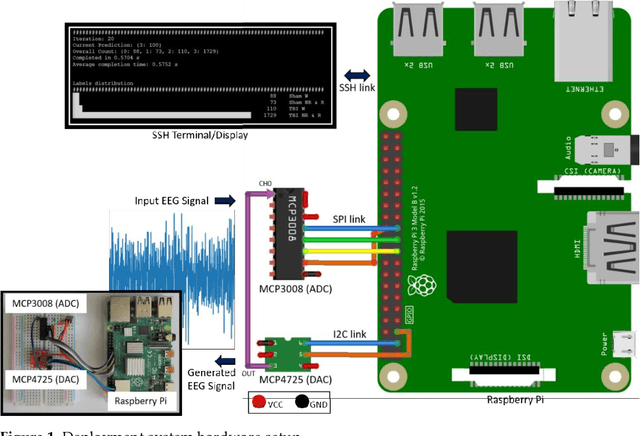
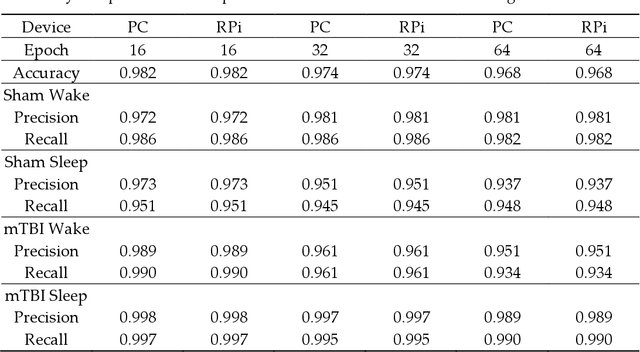
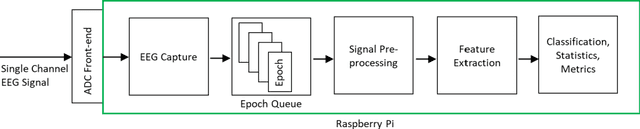
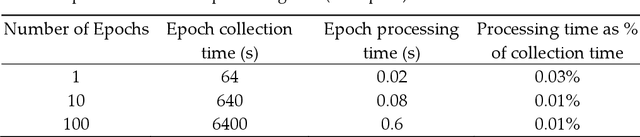
Traumatic Brain Injury (TBI) is a common cause of death and disability. However, existing tools for TBI diagnosis are either subjective or require extensive clinical setup and expertise. The increasing affordability and reduction in size of relatively high-performance computing systems combined with promising results from TBI related machine learning research make it possible to create compact and portable systems for early detection of TBI. This work describes a Raspberry Pi based portable, real-time data acquisition, and automated processing system that uses machine learning to efficiently identify TBI and automatically score sleep stages from a single-channel Electroen-cephalogram (EEG) signal. We discuss the design, implementation, and verification of the system that can digitize EEG signal using an Analog to Digital Converter (ADC) and perform real-time signal classification to detect the presence of mild TBI (mTBI). We utilize Convolutional Neural Networks (CNN) and XGBoost based predictive models to evaluate the performance and demonstrate the versatility of the system to operate with multiple types of predictive models. We achieve a peak classification accuracy of more than 90% with a classification time of less than 1 s across 16 s - 64 s epochs for TBI vs control conditions. This work can enable development of systems suitable for field use without requiring specialized medical equipment for early TBI detection applications and TBI research. Further, this work opens avenues to implement connected, real-time TBI related health and wellness monitoring systems.