 Add to Chrome
 Add to Firefox
 Add to Edge
Topological Signatures of Context-Level Reliability in TabPFN
Jul 20, 2026
TabPFN is a transformer-based foundation model for tabular prediction that performs inference without task-specific training by conditioning on a support set and query inputs. Despite its strong empirical performance, its internal behavior on structurally difficult tabular geometries remains poorly understood. We study this behavior using zigzag persistent homology, treating TabPFN layer representations as evolving point clouds. We construct a controlled benchmark of synthetic tabular tasks with known true probabilities and varied intrinsic topology, including warped circles, tori, spheres, Hopf links, trefoil knots, and Swiss rolls. Across these tasks, we find that the topology of TabPFN's internal representation geometry is strongly associated with dataset-level reliability; for example, the zeroth homology group $H_0$ fragmentation count correlates positively with mean absolute residual across controlled tasks, and this association strengthens in a high-resolution warped circle case study at large sample size. Harder geometries induce a dual topological signature: increased $H_1$ loop activity and increased $H_0$ fragmentation, while the $H_1$ persistence becomes shorter-lived. These descriptors correlate with Bayes error, mean absolute residuals, and overconfidence. Our results suggest that zigzag persistence diagnoses the reliability of the inferred in-context task geometry and provides a context-level view of when TabPFN operates in topologically stressed regimes.

Specification Grounding Drives Test Effectiveness for LLM Code
Jul 07, 2026Large language models frequently generate code that appears correct on typical inputs yet fails on edge cases, invalid inputs, and other specification-defined corner conditions. A popular fix has the model write its own tests and repair until they pass, but the source of the gain is unclear: does it come from the tests merely existing, or from their grounding in a specification of what the code should do? We isolate this factor. Holding the tester, test budget, and repair loop fixed, we change a single prompt line that controls whether the tester receives the spec as a checklist of rules. The baseline is strong: it is already told to probe invalid inputs and edge cases. Grounding the tests in the spec produces correct code +38 percentage points more often than this baseline across three Claude tiers (Haiku 4.5, Sonnet 4.6, Opus 4.8), and +36 points on a held-out set. Grounding, not test quantity, is the primary driver: doubling the test budget barely helps, and combining eight independent ungrounded suites plateaus far below grounding. An ablation isolates the spec's content, not its format: given the spec as a plain paragraph the tester recovers 27 of 30 bugs, but asked to plan tests without the spec it recovers only 2 of 30. The effect survives stronger baselines: a property-based generator catches 28 of 30 bugs but invents out-of-spec requirements, and an AlphaCodium-style loop only matches the baseline. It replicates across vendors (GPT-5.3-codex +28, Gemini 3.5 Flash +19), with a task-level sign test over 18 tasks significant at p=0.002. Grounding improves both sensitivity and precision: it catches more real bugs and wrongly rejects far less correct code, cutting the false-alarm rate from 33% (68% against a Python standard-library oracle) to 0%. On well-specified algorithmic problems it neither helps nor hurts.
Noise Immunity in In-Context Tabular Learning: An Empirical Robustness Analysis of TabPFN's Attention Mechanisms
Apr 06, 2026Tabular foundation models (TFMs) such as TabPFN (Tabular Prior-Data Fitted Network) are designed to generalize across heterogeneous tabular datasets through in-context learning (ICL). They perform prediction in a single forward pass conditioned on labeled examples without dataset-specific parameter updates. This paradigm is particularly attractive in industrial domains (e.g., finance and healthcare) where tabular prediction is pervasive. Retraining a bespoke model for each new table can be costly or infeasible in these settings, while data quality issues such as irrelevant predictors, correlated feature groups, and label noise are common. In this paper, we provide strong empirical evidence that TabPFN is highly robust under these sub-optimal conditions. We study TabPFN and its attention mechanisms for binary classification problems with controlled synthetic perturbations that vary: (i) dataset width by injecting random uncorrelated features and by introducing nonlinearly correlated features, (ii) dataset size by increasing the number of training rows, and (iii) label quality by increasing the fraction of mislabeled targets. Beyond predictive performance, we analyze internal signals including attention concentration and attention-based feature ranking metrics. Across these parametric tests, TabPFN is remarkably resilient: ROC-AUC remains high, attention stays structured and sharp, and informative features are highly ranked by attention-based metrics. Qualitative visualizations with attention heatmaps, feature-token embeddings, and SHAP plots further support a consistent pattern across layers in which TabPFN increasingly concentrates on useful features while separating their signals from noise. Together, these findings suggest that TabPFN is a robust TFM capable of maintaining both predictive performance and coherent internal behavior under various scenarios of data imperfections.
Financial Bond Similarity Search Using Representation Learning
Feb 02, 2026Finding similar bonds remains challenging in fixed-income analytics, as numerical financial attributes often overshadow categorical non-financial ones such as issuer sector and domicile. This paper shows that these categorical attributes dominate the predictability of spread curves and proposes embedding models to capture their semantic similarities, outperforming one-hot and many other baselines. Evaluated via sparse-issuer augmentation, the approach improves risk modeling and curve construction.
Generative AI Enhanced Financial Risk Management Information Retrieval
Apr 10, 2025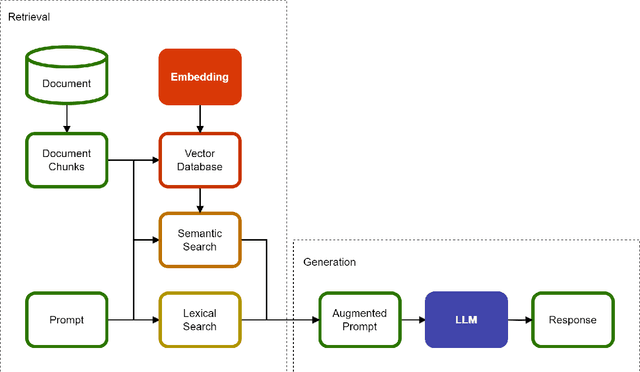

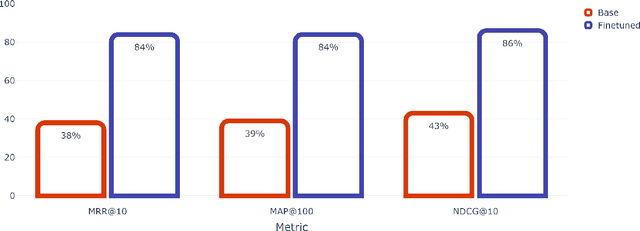
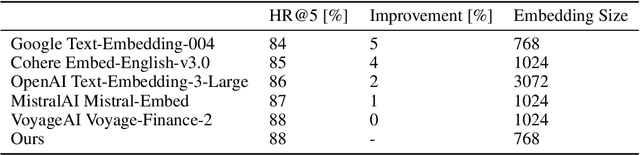
Risk management in finance involves recognizing, evaluating, and addressing financial risks to maintain stability and ensure regulatory compliance. Extracting relevant insights from extensive regulatory documents is a complex challenge requiring advanced retrieval and language models. This paper introduces RiskData, a dataset specifically curated for finetuning embedding models in risk management, and RiskEmbed, a finetuned embedding model designed to improve retrieval accuracy in financial question-answering systems. The dataset is derived from 94 regulatory guidelines published by the Office of the Superintendent of Financial Institutions (OSFI) from 1991 to 2024. We finetune a state-of-the-art sentence BERT embedding model to enhance domain-specific retrieval performance typically for Retrieval-Augmented Generation (RAG) systems. Experimental results demonstrate that RiskEmbed significantly outperforms general-purpose and financial embedding models, achieving substantial improvements in ranking metrics. By open-sourcing both the dataset and the model, we provide a valuable resource for financial institutions and researchers aiming to develop more accurate and efficient risk management AI solutions.