 Add to Chrome
 Add to Firefox
 Add to Edge
Going PLACES: Participatory Localized Red Teaming for Text-to-Image Safety in the Global South
May 18, 2026
Despite the global deployment of text-to-image (T2I) models, their safety frameworks are largely calibrated to a Western-centric default, creating significant vulnerabilities for the rest of the world. To embrace cultural pluralism and bring historically under-represented perspectives in T2I safety, we conduct localised community-centered red teaming studies in the Global South. Our two-fold approach prioritizes localization and participation, by focusing on secondary urban centers in these regions, and conducting community engagement and training workshops to contextualize local norms. As a result, we present PLACES, a dataset comprising over 26,000 examples of T2I model failures collected in partnership with universities in Ghana, Nigeria, and two regions of India (Karnataka and Punjab). Analysis of prompts collected reveals a wide-ranging diversity in socio-cultural and linguistic attributes, when compared to existing geography-agnostic crowdsourced red-teaming data. We observe unique adversarial patterns enabled by local cultural and linguistic nuances, and distinct clusters within region around specific themes, such as religion in India. Moreover, we uncover structural contextual gaps in existing safety frameworks by identifying novel harms showing normative dissonance (e.g., violating religious norms, ignoring local customs, and ominous symbolism). This work argues that expanding T2I safety requires moving beyond mere scale to incorporate deeply localised, participatory methodologies for data collection and contextualization. Content warning: This paper includes examples containing potentially harmful or offensive content.

A Unified Framework to Quantify Cultural Intelligence of AI
Mar 01, 2026As generative AI technologies are increasingly being launched across the globe, assessing their competence to operate in different cultural contexts is exigently becoming a priority. While recent years have seen numerous and much-needed efforts on cultural benchmarking, these efforts have largely focused on specific aspects of culture and evaluation. While these efforts contribute to our understanding of cultural competence, a unified and systematic evaluation approach is needed for us as a field to comprehensively assess diverse cultural dimensions at scale. Drawing on measurement theory, we present a principled framework to aggregate multifaceted indicators of cultural capabilities into a unified assessment of cultural intelligence. We start by developing a working definition of culture that includes identifying core domains of culture. We then introduce a broad-purpose, systematic, and extensible framework for assessing cultural intelligence of AI systems. Drawing on theoretical framing from psychometric measurement validity theory, we decouple the background concept (i.e., cultural intelligence) from its operationalization via measurement. We conceptualize cultural intelligence as a suite of core capabilities spanning diverse domains, which we then operationalize through a set of indicators designed for reliable measurement. Finally, we identify the considerations, challenges, and research pathways to meaningfully measure these indicators, specifically focusing on data collection, probing strategies, and evaluation metrics.
Amplify Initiative: Building A Localized Data Platform for Globalized AI
Apr 18, 2025Current AI models often fail to account for local context and language, given the predominance of English and Western internet content in their training data. This hinders the global relevance, usefulness, and safety of these models as they gain more users around the globe. Amplify Initiative, a data platform and methodology, leverages expert communities to collect diverse, high-quality data to address the limitations of these models. The platform is designed to enable co-creation of datasets, provide access to high-quality multilingual datasets, and offer recognition to data authors. This paper presents the approach to co-creating datasets with domain experts (e.g., health workers, teachers) through a pilot conducted in Sub-Saharan Africa (Ghana, Kenya, Malawi, Nigeria, and Uganda). In partnership with local researchers situated in these countries, the pilot demonstrated an end-to-end approach to co-creating data with 155 experts in sensitive domains (e.g., physicians, bankers, anthropologists, human and civil rights advocates). This approach, implemented with an Android app, resulted in an annotated dataset of 8,091 adversarial queries in seven languages (e.g., Luganda, Swahili, Chichewa), capturing nuanced and contextual information related to key themes such as misinformation and public interest topics. This dataset in turn can be used to evaluate models for their safety and cultural relevance within the context of these languages.
MTTN: Multi-Pair Text to Text Narratives for Prompt Generation
Jan 21, 2023
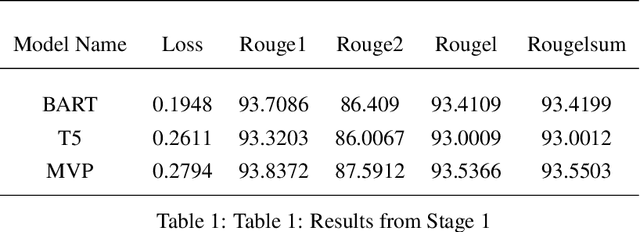
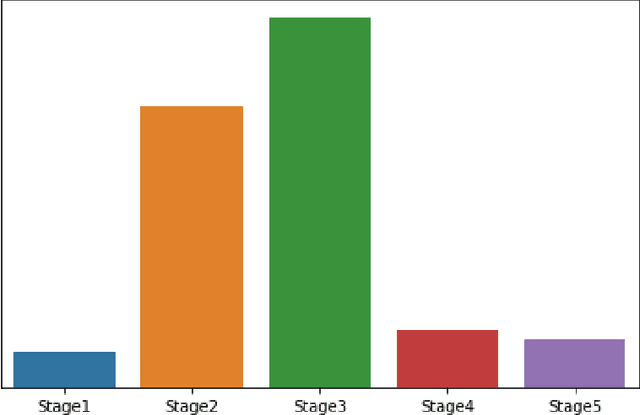
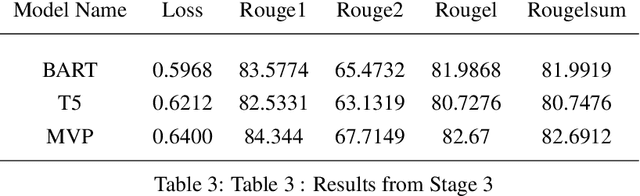
The explosive popularity of diffusion models[ 1][ 2][ 3 ] has provided a huge stage for further development in generative-text modelling. As prompt based models are very nuanced, such that a carefully generated prompt can produce truely breath taking images, on the contrary producing powerful or even meaningful prompt is a hit or a miss. To lavish on this we have introduced a large scale derived and synthesized dataset built with on real prompts and indexed with popular image-text datasets like MS-COCO[4 ], Flickr[ 5], etc. We have also introduced staging for these sentences that sequentially reduce the context and increase the complexity, that will further strengthen the output because of the complex annotations that are being created. MTTN consists of over 2.4M sentences that are divided over 5 stages creating a combination amounting to over 12M pairs, along with a vocab size of consisting more than 300 thousands unique words that creates an abundance of variations. The original 2.4M million pairs are broken down in such a manner that it produces a true scenario of internet lingo that is used globally thereby heightening the robustness of the dataset, and any model trained on it.