 Add to Chrome
 Add to Firefox
 Add to Edge
A Proactive Multi-Agent Dialogue Framework for Assessing Social Language Disorder Traits in Autism
May 21, 2026
Characteristic linguistic behaviors associated with Social Language Disorder (SLD) in autism spectrum disorder, including echoic repetition, pronoun displacement, and stereotyped media quoting, are largely absent from spontaneous conversation and only emerge under specific conversational conditions. In structured clinical assessments, this latency means that questioning strategy selection is a critical yet underappreciated determinant of how much diagnostic information a conversation yields. Whether large language models (LLMs) can be guided to proactively select questioning strategies that systematically surface these latent traits remains largely unexplored. Here we present TPA (Think, Plan, Ask), a proactive multi-agent dialogue framework applied to the language assessment component of the Autism Diagnostic Observation Schedule Module 4 (ADOS-2), in which a doctor agent explicitly reasons about which traits remain unobserved before selecting a clinically grounded strategy and generating a targeted question. A patient agent grounded in real ADOS-2 clinical data enables reproducible evaluation without real patient participation, validated across three independent experiments confirming adequate fidelity to real patient language. Evaluated on 484 episodes from 35 patients, TPA outperforms six competitive dialogue planning baselines across all primary metrics, achieving 82.1% SLD trait coverage, 16.6% higher than automated replay of real clinical dialogues conducted by trained clinicians (65.5%), with substantially greater per-turn diagnostic efficiency (AUCC: 0.628 vs. 0.458, absolute gain +0.170). These results demonstrate that proactive questioning strategy selection substantially improves the efficiency of automated SLD trait assessment, with direct implications for scalable AI-assisted clinical screening.

Video-based Analysis Reveals Atypical Social Gaze in People with Autism Spectrum Disorder
Sep 01, 2024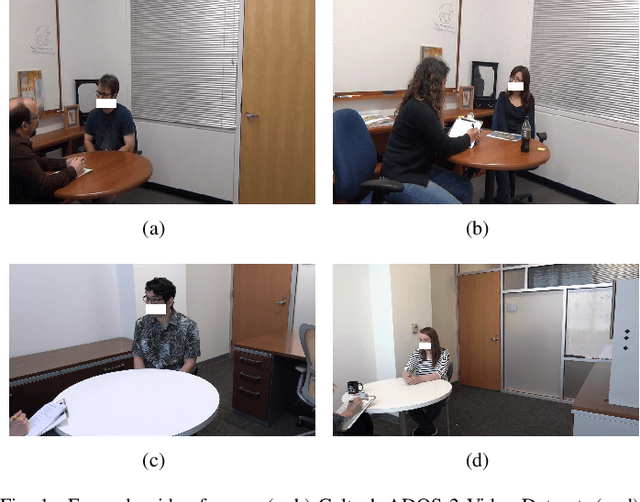
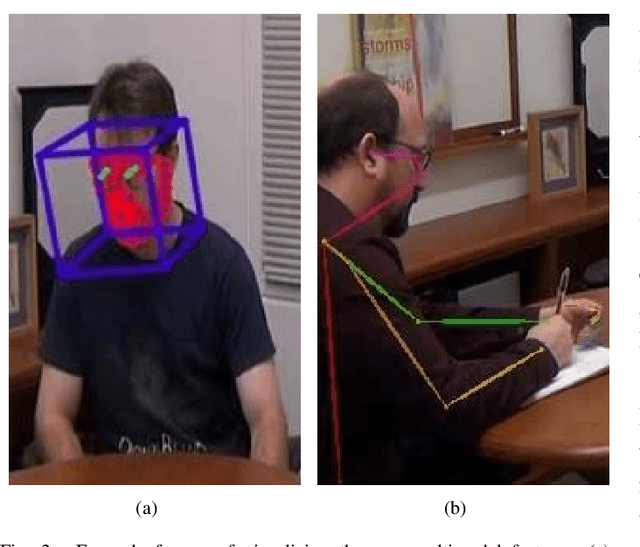
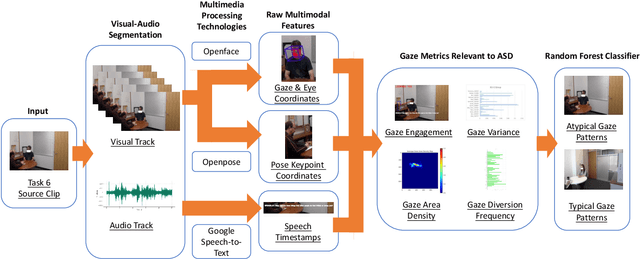

In this study, we present a quantitative and comprehensive analysis of social gaze in people with autism spectrum disorder (ASD). Diverging from traditional first-person camera perspectives based on eye-tracking technologies, this study utilizes a third-person perspective database from the Autism Diagnostic Observation Schedule, 2nd Edition (ADOS-2) interview videos, encompassing ASD participants and neurotypical individuals as a reference group. Employing computational models, we extracted and processed gaze-related features from the videos of both participants and examiners. The experimental samples were divided into three groups based on the presence of social gaze abnormalities and ASD diagnosis. This study quantitatively analyzed four gaze features: gaze engagement, gaze variance, gaze density map, and gaze diversion frequency. Furthermore, we developed a classifier trained on these features to identify gaze abnormalities in ASD participants. Together, we demonstrated the effectiveness of analyzing social gaze in people with ASD in naturalistic settings, showcasing the potential of third-person video perspectives in enhancing ASD diagnosis through gaze analysis.
Exploiting ChatGPT for Diagnosing Autism-Associated Language Disorders and Identifying Distinct Features
May 03, 2024
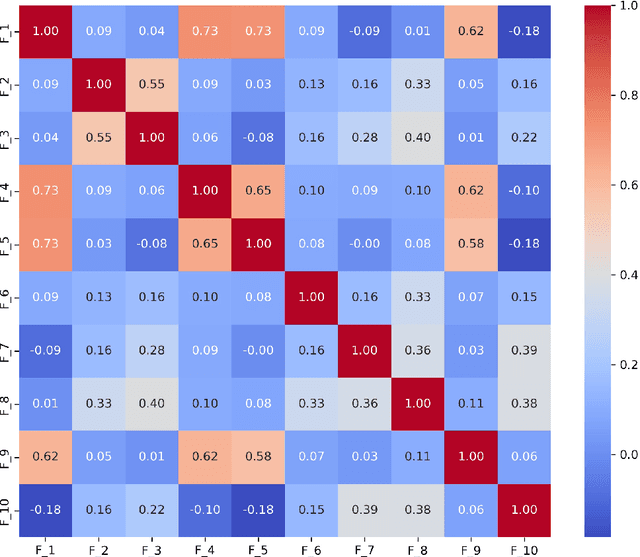

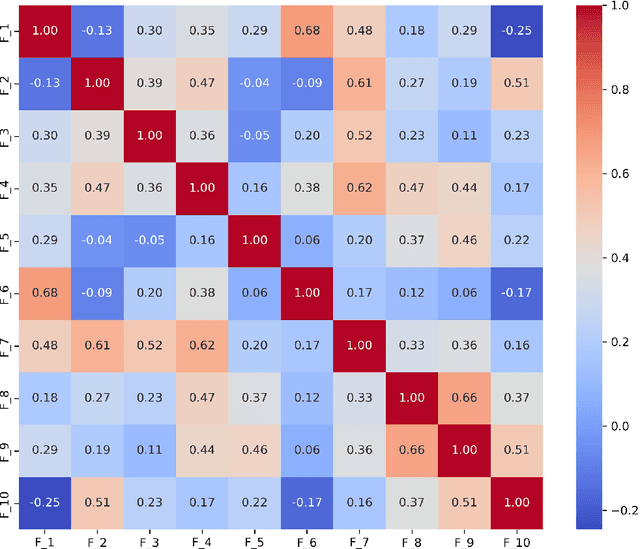
Diagnosing language disorders associated with autism is a complex and nuanced challenge, often hindered by the subjective nature and variability of traditional assessment methods. Traditional diagnostic methods not only require intensive human effort but also often result in delayed interventions due to their lack of speed and specificity. In this study, we explored the application of ChatGPT, a state of the art large language model, to overcome these obstacles by enhancing diagnostic accuracy and profiling specific linguistic features indicative of autism. Leveraging ChatGPT advanced natural language processing capabilities, this research aims to streamline and refine the diagnostic process. Specifically, we compared ChatGPT's performance with that of conventional supervised learning models, including BERT, a model acclaimed for its effectiveness in various natural language processing tasks. We showed that ChatGPT substantially outperformed these models, achieving over 13% improvement in both accuracy and F1 score in a zero shot learning configuration. This marked enhancement highlights the model potential as a superior tool for neurological diagnostics. Additionally, we identified ten distinct features of autism associated language disorders that vary significantly across different experimental scenarios. These features, which included echolalia, pronoun reversal, and atypical language usage, were crucial for accurately diagnosing ASD and customizing treatment plans. Together, our findings advocate for adopting sophisticated AI tools like ChatGPT in clinical settings to assess and diagnose developmental disorders. Our approach not only promises greater diagnostic precision but also aligns with the goals of personalized medicine, potentially transforming the evaluation landscape for autism and similar neurological conditions.