 Add to Chrome
 Add to Firefox
 Add to Edge
Real-Time State Estimation in Smart Grids over 5G Networks: Experimental Validation Using Raspberry Pis and Typhoon HIL
Jun 26, 2026
Reliable, low-latency communication is critical for real-time monitoring and control in modern Smart Grids (SGs). The emergence of 5G networks, with enhanced reliability, significantly lower latency, and native support for massive machine-type communication, offers strong potential to enable advanced grid applications such as state estimation (SE) and fault detection. While existing studies investigate 5G for SG use cases, most rely on simulations or analytical models; experimental validation using real hardware and SG data remains limited. This paper fills this gap by presenting a fully experimental validation of real-time SE over a commercial 5G network using a 5G-based multi-node testbed built with Raspberry Pi (RPi)-based SG nodes and a Typhoon Hardware-in-the-Loop (HIL) real-time simulator. We first characterize 5G communication performance using simulated SG data under varying reporting rates and deployment environments by evaluating Key Performance Indicators (KPIs) such as end-to-end delay, jitter, and frame loss. Experimental results show that the worst-case mean delay observed for the 5G is approximately 6.5x lower than that of our previous LTE cat-M study at the corresponding reporting rate. We then stream real-time voltage, current, and phase-angle measurements-generated by an IEEE 4-node feeder model in Typhoon HIL simulator-to a remote Phasor Data Concentrator (PDC) for SE and fault detection. Results demonstrate that 5G-enabled measurements support accurate SE under both steady-state and dynamic load variations. Furthermore, fault-detection experiments confirm reliable and prompt fault detection, with detection delays as low as 0.80 s.

KitBit: A New AI Model for Solving Intelligence Tests and Numerical Series
Jun 17, 2022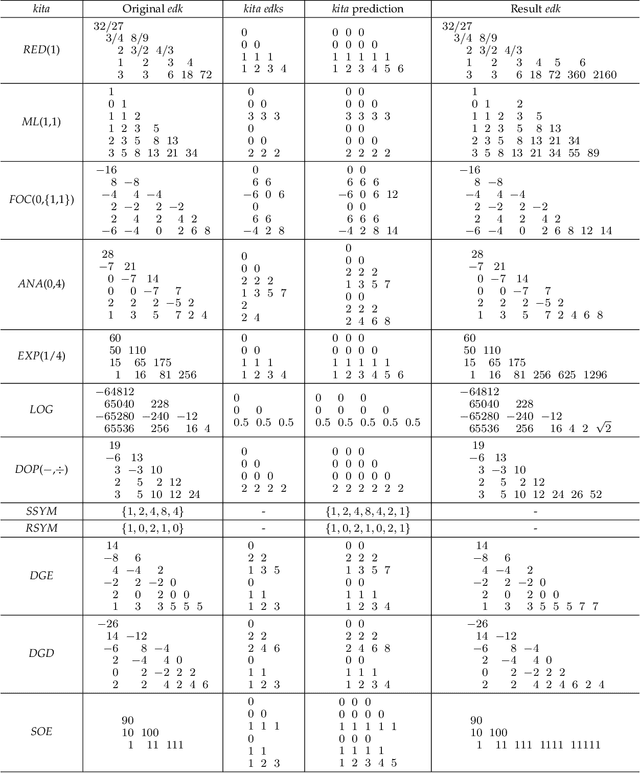
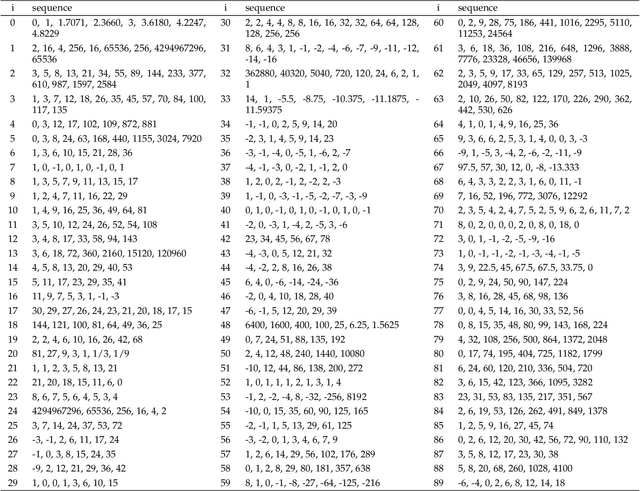


The resolution of intelligence tests, in particular numerical sequences, has been of great interest in the evaluation of AI systems. We present a new computational model called KitBit that uses a reduced set of algorithms and their combinations to build a predictive model that finds the underlying pattern in numerical sequences, such as those included in IQ tests and others of much greater complexity. We present the fundamentals of the model and its application in different cases. First, the system is tested on a set of number series used in IQ tests collected from various sources. Next, our model is successfully applied on the sequences used to evaluate the models reported in the literature. In both cases, the system is capable of solving these types of problems in less than a second using standard computing power. Finally, KitBit's algorithms have been applied for the first time to the complete set of entire sequences of the well-known OEIS database. We find a pattern in the form of a list of algorithms and predict the following terms in the largest number of series to date. These results demonstrate the potential of KitBit to solve complex problems that could be represented numerically.
2017 Robotic Instrument Segmentation Challenge
Feb 21, 2019
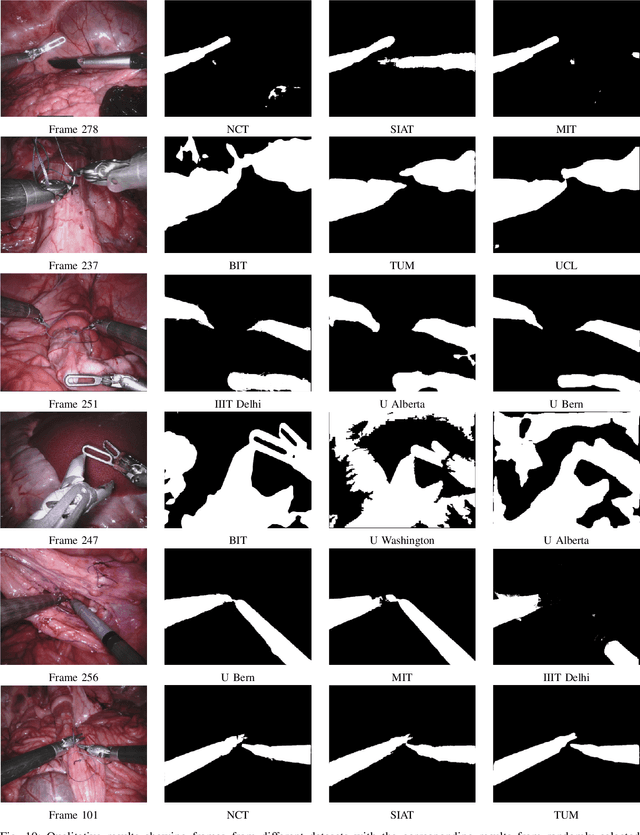
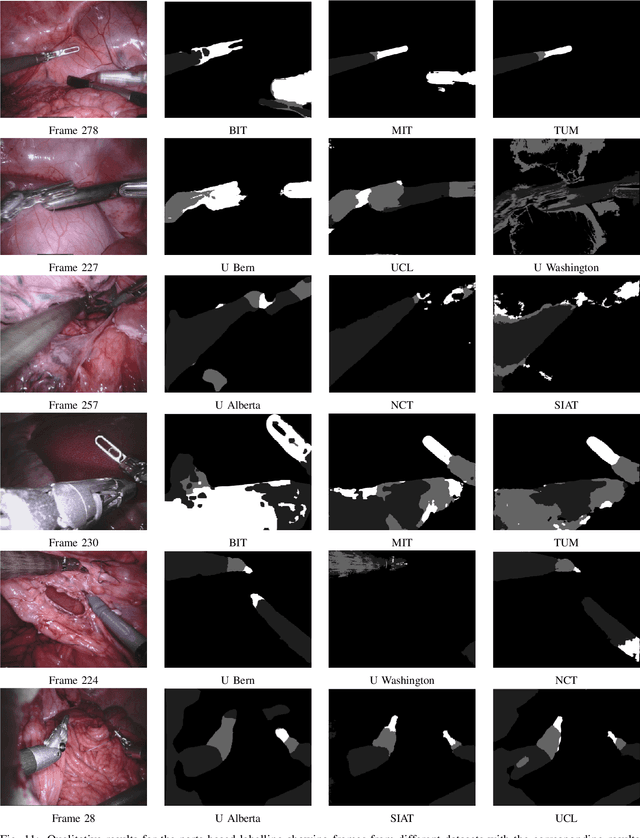
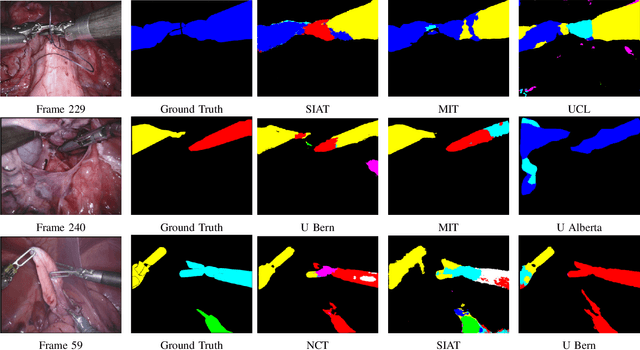
In mainstream computer vision and machine learning, public datasets such as ImageNet, COCO and KITTI have helped drive enormous improvements by enabling researchers to understand the strengths and limitations of different algorithms via performance comparison. However, this type of approach has had limited translation to problems in robotic assisted surgery as this field has never established the same level of common datasets and benchmarking methods. In 2015 a sub-challenge was introduced at the EndoVis workshop where a set of robotic images were provided with automatically generated annotations from robot forward kinematics. However, there were issues with this dataset due to the limited background variation, lack of complex motion and inaccuracies in the annotation. In this work we present the results of the 2017 challenge on robotic instrument segmentation which involved 10 teams participating in binary, parts and type based segmentation of articulated da Vinci robotic instruments.