 Add to Chrome
 Add to Firefox
 Add to Edge
MIBE: Multi-subject Interaction Benchmark and Evaluator for Personalized Image Generation
Jul 01, 2026
Multi-subject personalized image generation requires the precise rendering of all requested reference identities and their specified interactions based on a guiding prompt. However, state-of-the-art models still struggle with this process, frequently omitting subjects, failing to preserve reference appearances, or misattributing interactions. Furthermore, existing metrics designed primarily for single-subject fidelity cannot reliably capture these errors, suffering severe degradation in ranking separability and failing to align with human preference as the subject count increases. To address this gap, we introduce Multi-subject Interaction Benchmark and Evaluator (MIBE), a unified framework comprising a Multi-subject Interaction Benchmark (MIB) and a Multi-subject Interaction Evaluator (MIE). MIB systematically covers diverse relation types and scene complexities through a decoupled data regime. This consists of a 60K-pair VLM-labeled Silver Set for scalable metric training and a 4K-pair double-blind Human Evaluation Gold Set covering a diverse range of state-of-the-art generators, with the Silver Set reaching 95.1% cross-VLM preference agreement. To demonstrate the utility of this benchmark, we present MIE, a lightweight, reference-conditioned evaluator trained exclusively on the Silver Set with a dual-head ranking and diagnosis objective. MIE exhibits strong cross-generator generalization on the Gold Set, achieving 0.922 overall pairwise accuracy against human preference, including 0.982 on seen generators and 0.884 on unseen generators. By outperforming a broad spectrum of baseline metrics, including CLIP and DINO variants, MIE demonstrates that diagnostic supervision can preserve ranking separability and human alignment where traditional evaluators collapse.

Three-way causal attribute partial order structure analysis
Mar 29, 2023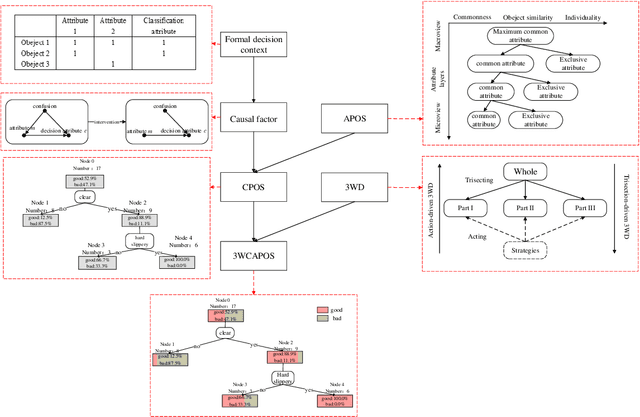
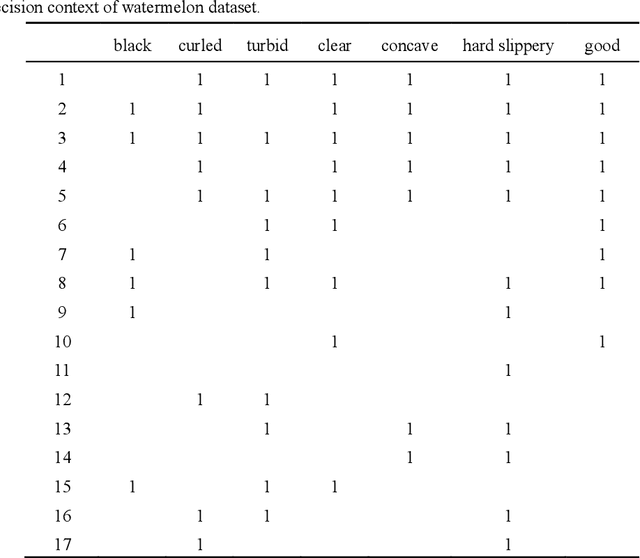
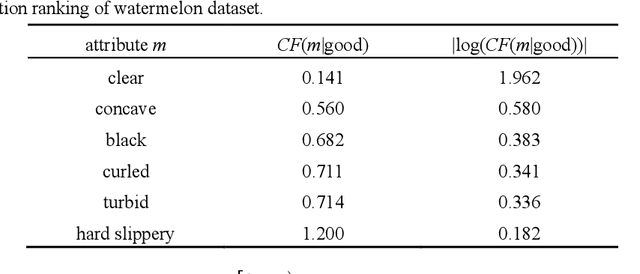
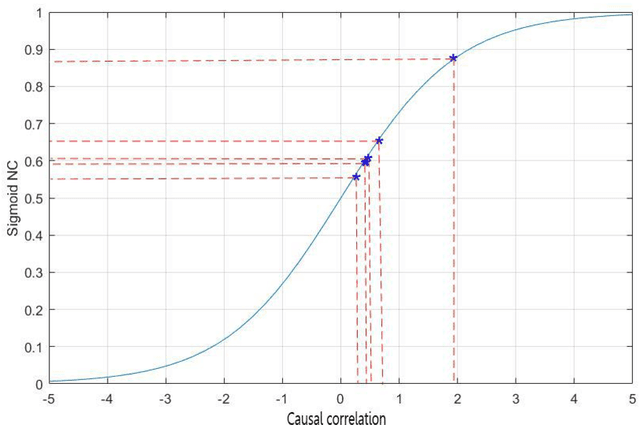
As an emerging concept cognitive learning model, partial order formal structure analysis (POFSA) has been widely used in the field of knowledge processing. In this paper, we propose the method named three-way causal attribute partial order structure (3WCAPOS) to evolve the POFSA from set coverage to causal coverage in order to increase the interpretability and classification performance of the model. First, the concept of causal factor (CF) is proposed to evaluate the causal correlation between attributes and decision attributes in the formal decision context. Then, combining CF with attribute partial order structure, the concept of causal attribute partial order structure is defined and makes set coverage evolve into causal coverage. Finally, combined with the idea of three-way decision, 3WCAPOS is formed, which makes the purity of nodes in the structure clearer and the changes between levels more obviously. In addition, the experiments are carried out from the classification ability and the interpretability of the structure through the six datasets. Through these experiments, it is concluded the accuracy of 3WCAPOS is improved by 1% - 9% compared with classification and regression tree, and more interpretable and the processing of knowledge is more reasonable compared with attribute partial order structure.
Stochastic Stepwise Ensembles for Variable Selection
Mar 02, 2011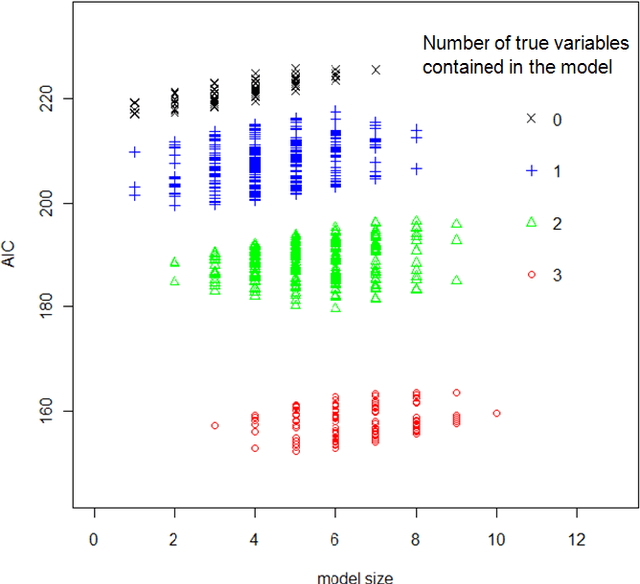
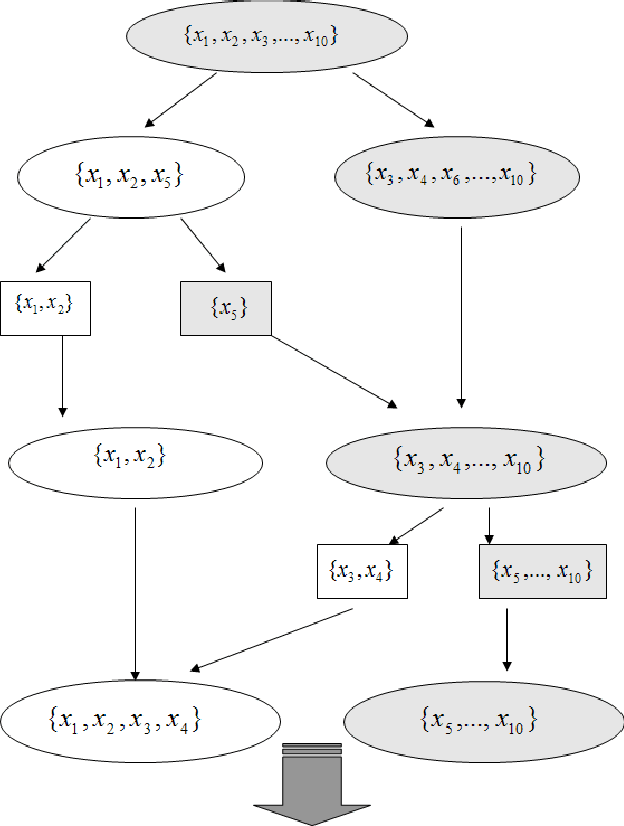
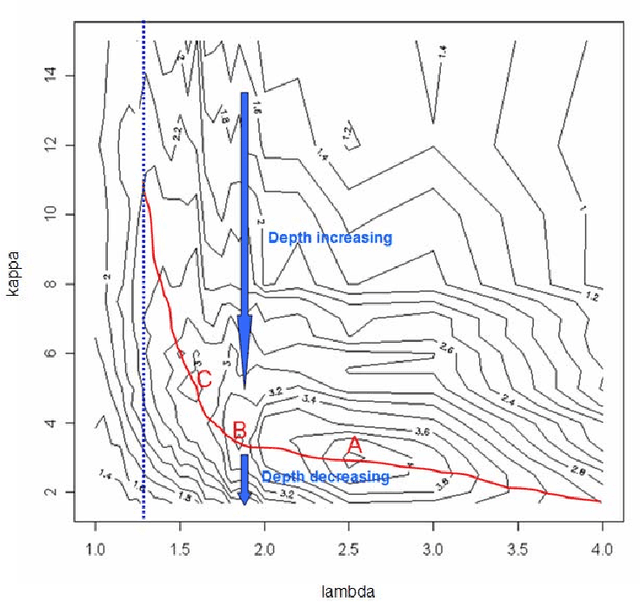
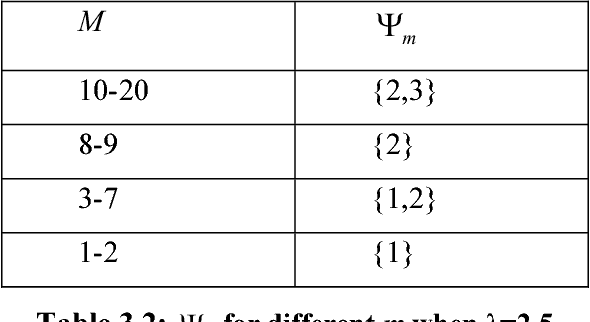
In this article, we advocate the ensemble approach for variable selection. We point out that the stochastic mechanism used to generate the variable-selection ensemble (VSE) must be picked with care. We construct a VSE using a stochastic stepwise algorithm, and compare its performance with numerous state-of-the-art algorithms.