 Add to Chrome
 Add to Firefox
 Add to Edge
Cluster-Specific Predictive Modeling: A Scalable Solution for Resource-Constrained Wi-Fi Controllers
Mar 23, 2026
This manuscript presents a comprehensive analysis of predictive modeling optimization in managed Wi-Fi networks through the integration of clustering algorithms and model evaluation techniques. The study addresses the challenges of deploying forecasting algorithms in large-scale environments managed by a central controller constrained by memory and computational resources. Feature-based clustering, supported by Principal Component Analysis (PCA) and advanced feature engineering, is employed to group time series data based on shared characteristics, enabling the development of cluster-specific predictive models. Comparative evaluations between global models (GMs) and cluster-specific models demonstrate that cluster-specific models consistently achieve superior accuracy in terms of Mean Absolute Error (MAE) values in high-activity clusters. The trade-offs between model complexity (and accuracy) and resource utilization are analyzed, highlighting the scalability of tailored modeling approaches. The findings advocate for adaptive network management strategies that optimize resource allocation through selective model deployment, enhance predictive accuracy, and ensure scalable operations in large-scale, centrally managed Wi-Fi environments.

Studying the Role of Synthetic Data for Machine Learning-based Wireless Networks Traffic Forecasting
Jan 12, 2026Synthetic data generation is an appealing tool for augmenting and enriching datasets, playing a crucial role in advancing artificial intelligence (AI) and machine learning (ML). Not only does synthetic data help build robust AI/ML datasets cost-effectively, but it also offers privacy-friendly solutions and bypasses the complexities of storing large data volumes. This paper proposes a novel method to generate synthetic data, based on first-order auto-regressive noise statistics, for large-scale Wi-Fi deployments. The approach operates with minimal real data requirements while producing statistically rich traffic patterns that effectively mimic real Access Point (AP) behavior. Experimental results show that ML models trained on synthetic data achieve Mean Absolute Error (MAE) values within 10 to 15 of those obtained using real data when trained on the same APs, while requiring significantly less training data. Moreover, when generalization is required, synthetic-data-trained models improve prediction accuracy by up to 50 percent compared to real-data-trained baselines, thanks to the enhanced variability and diversity of the generated traces. Overall, the proposed method bridges the gap between synthetic data generation and practical Wi-Fi traffic forecasting, providing a scalable, efficient, and real-time solution for modern wireless networks.
Distributed MIMO for 6G sub-Networks in the Unlicensed Spectrum
Oct 23, 2023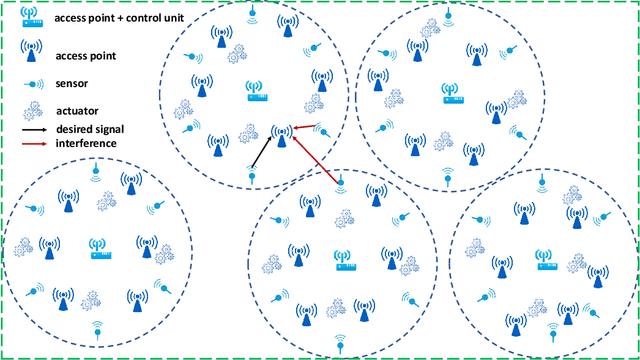
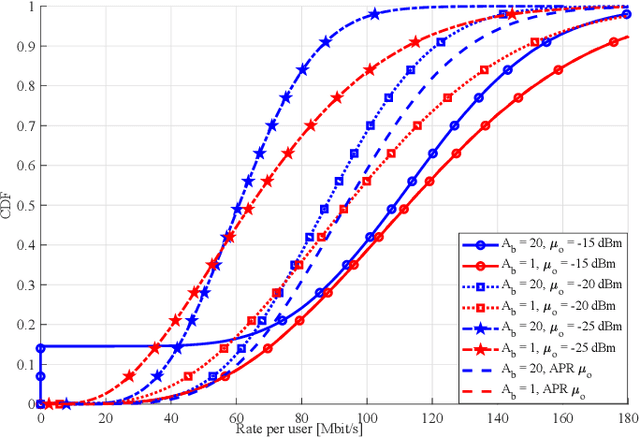
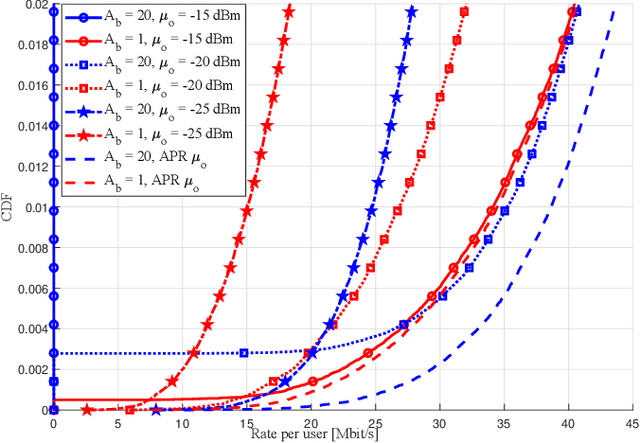

In this paper, we consider the sixth generation (6G) sub-networks, where hyper reliable low latency communications (HRLLC) requirements are expected to be met. We focus on a scenario where multiple sub-networks are active in the service area and assess the feasibility of using the 6 GHz unlicensed spectrum to operate such deployment, evaluating the impact of listen before talk (LBT). Then, we explore the benefits of using distributed multiple input multiple output (MIMO), where the available antennas in every sub-network are distributed over a number of access points (APs). Specifically, we compare different configurations of distributed MIMO with respect to centralized MIMO, where a single AP with all antennas is located at the center of every sub-network.
What Will Wi-Fi 8 Be? A Primer on IEEE 802.11bn Ultra High Reliability
Mar 18, 2023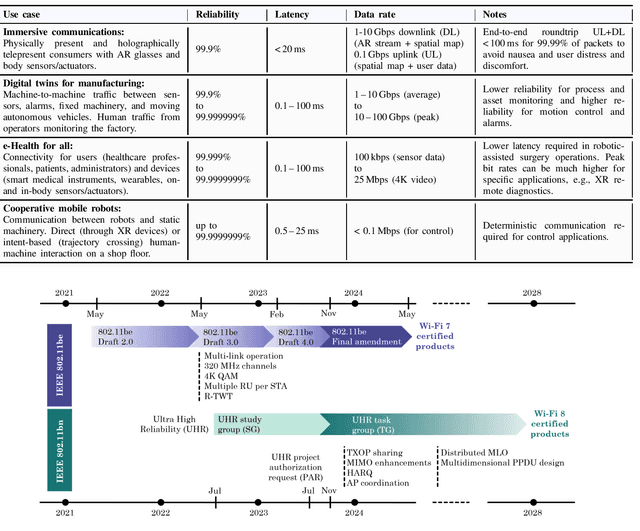
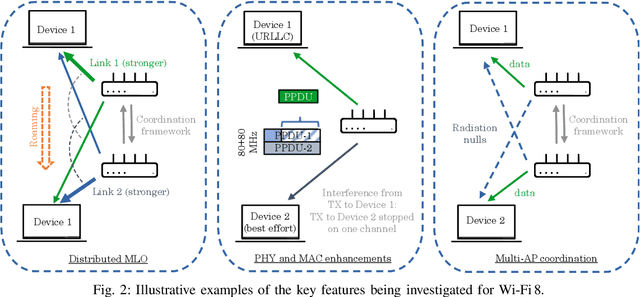

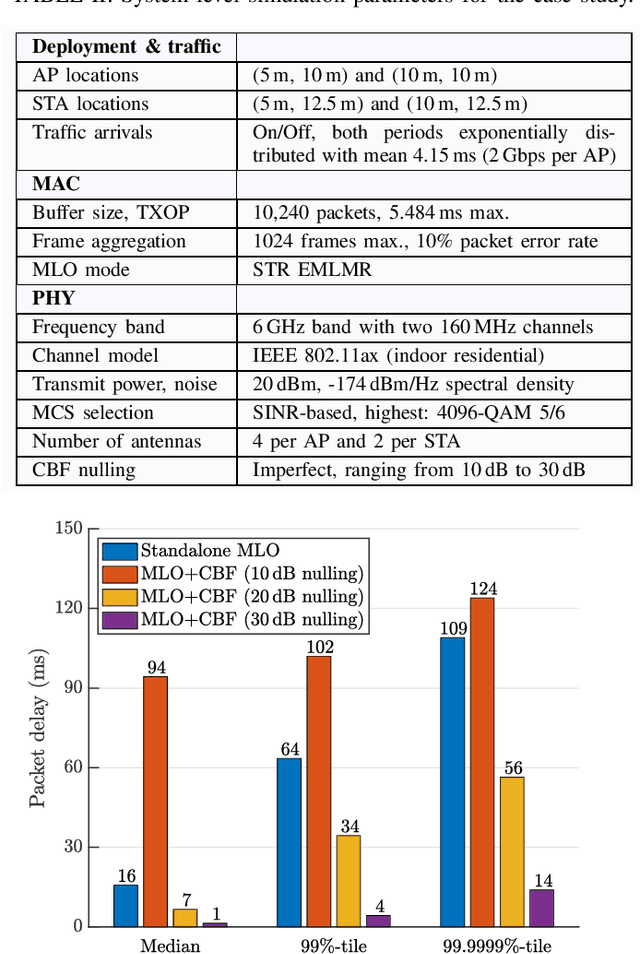
What will Wi-Fi 8 be? Driven by the strict requirements of emerging applications, next-generation Wi-Fi is set to prioritize Ultra High Reliability (UHR) above all. In this paper, we explore the journey towards IEEE 802.11bn UHR, the amendment that will form the basis of Wi-Fi 8. After providing an overview of the nearly completed Wi-Fi 7 standard, we present new use cases calling for further Wi-Fi evolution. We also outline current standardization, certification, and spectrum allocation activities, sharing updates from the newly formed UHR Study Group. We then introduce the disruptive new features envisioned for Wi-Fi 8 and discuss the associated research challenges. Among those, we focus on access point coordination and demonstrate that it could build upon 802.11be multi-link operation to make Ultra High Reliability a reality in Wi-Fi 8.