 Add to Chrome
 Add to Firefox
 Add to Edge
Leave No Stone Unturned: Uncovering Holistic Audio-Visual Intrinsic Coherence for Deepfake Detection
Mar 25, 2026
The rapid progress of generative AI has enabled hyper-realistic audio-visual deepfakes, intensifying threats to personal security and social trust. Most existing deepfake detectors rely either on uni-modal artifacts or audio-visual discrepancies, failing to jointly leverage both sources of information. Moreover, detectors that rely on generator-specific artifacts tend to exhibit degraded generalization when confronted with unseen forgeries. We argue that robust and generalizable detection should be grounded in intrinsic audio-visual coherence within and across modalities. Accordingly, we propose HAVIC, a Holistic Audio-Visual Intrinsic Coherence-based deepfake detector. HAVIC first learns priors of modality-specific structural coherence, inter-modal micro- and macro-coherence by pre-training on authentic videos. Based on the learned priors, HAVIC further performs holistic adaptive aggregation to dynamically fuse audio-visual features for deepfake detection. Additionally, we introduce HiFi-AVDF, a high-fidelity audio-visual deepfake dataset featuring both text-to-video and image-to-video forgeries from state-of-the-art commercial generators. Extensive experiments across several benchmarks demonstrate that HAVIC significantly outperforms existing state-of-the-art methods, achieving improvements of 9.39% AP and 9.37% AUC on the most challenging cross-dataset scenario. Our code and dataset are available at https://github.com/tuffy-studio/HAVIC.

Hierarchical Reinforcement Learning for RIS-Assisted Energy-Efficient RAN
Jan 07, 2023Reconfigurable intelligent surface (RIS) is emerging as a promising technology to boost the energy efficiency (EE) of 5G beyond and 6G networks. Inspired by this potential, in this paper, we investigate the RIS-assisted energy-efficient radio access networks (RAN). In particular, we combine RIS with sleep control techniques, and develop a hierarchical reinforcement learning (HRL) algorithm for network management. In HRL, the meta-controller decides the on/off status of the small base stations (SBSs) in heterogeneous networks, while the sub-controller can change the transmission power levels of SBSs to save energy. The simulations show that the RIS-assisted sleep control can achieve significantly lower energy consumption, higher throughput, and more than doubled energy efficiency than no-RIS conditions.
On the Impacts of Phase Shifting Design and Eavesdropping Uncertainty on Secrecy Metrics of RIS-aided Systems
Feb 12, 2022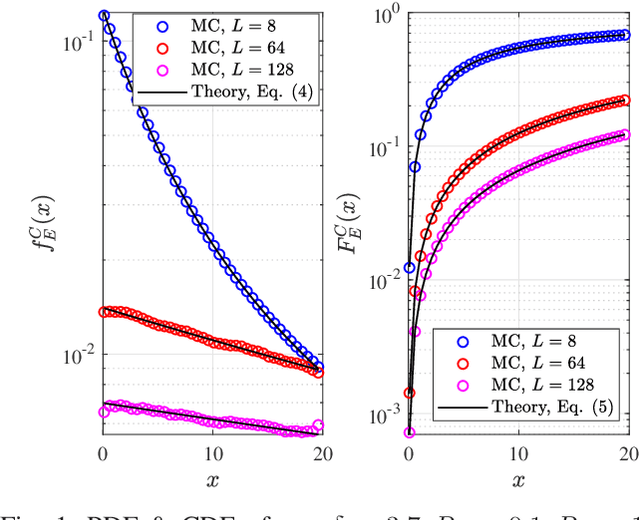
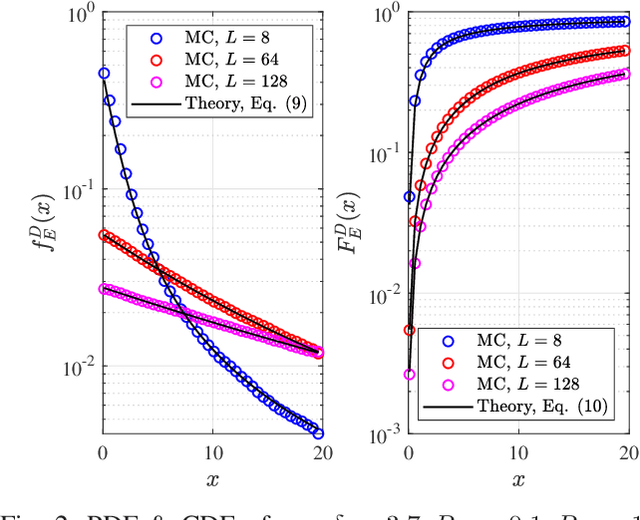
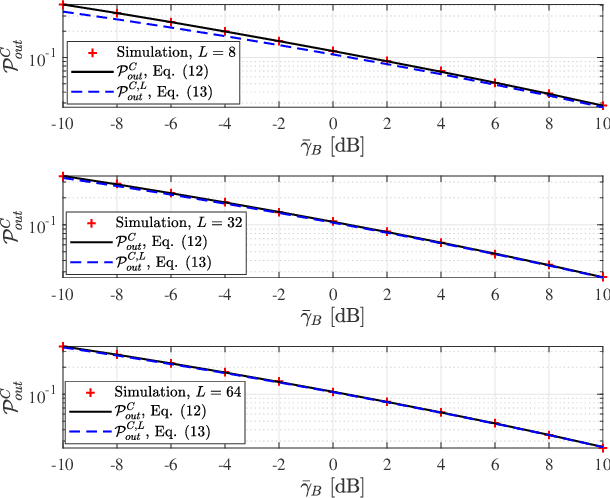
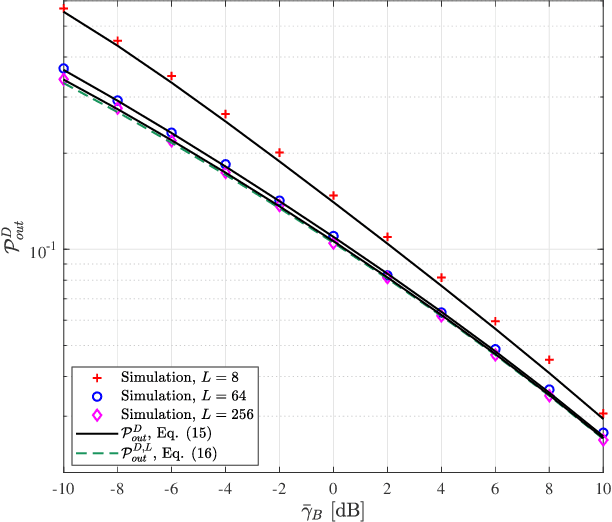
This paper investigates the secrecy outage probability (SOP), the lower bound of SOP, and the probability of non-zero secrecy capacity (PNZ) of reconfigurable intelligent surface (RIS)-assisted systems from an information-theoretic perspective. In particular, we consider the impacts of eavesdroppers' location uncertainty and the phase adjustment uncertainty, namely imperfect coherent phase shifting and discrete phase shifting on RIS. More specifically, analytical and simulation results are presented to show that (i) the SOP gain due to the increase of the RIS reflecting elements number gradually decreases; and (ii) both phase shifting designs demonstrate the same PNZ secrecy performance, in other words, the random discrete phase shifting outperforms the imperfect coherent phase shifting design with reduced complexity.
Effective Rate of RIS-aided Networks with Location and Phase Estimation Uncertainty
Dec 17, 2021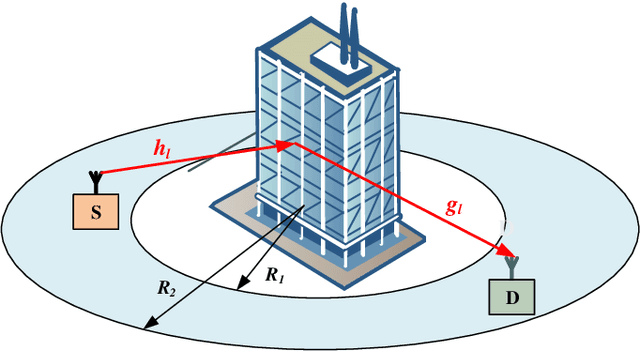
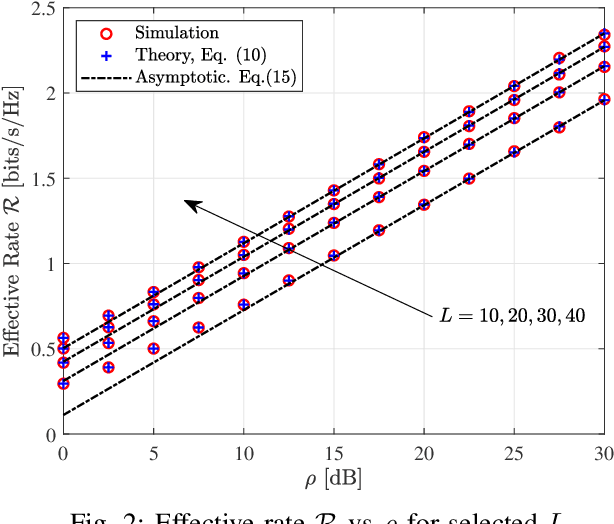
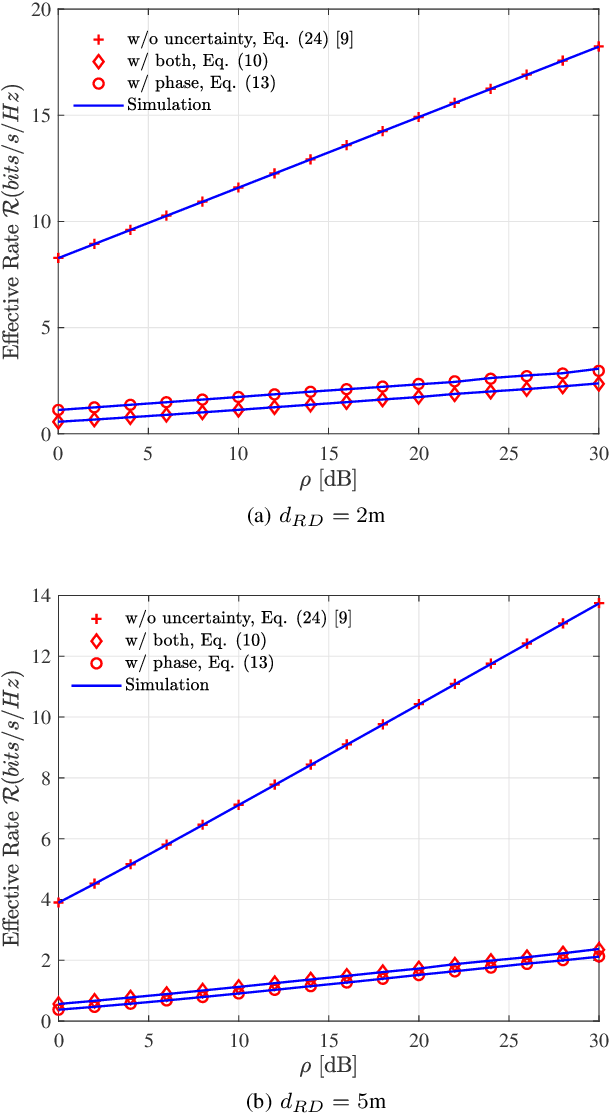
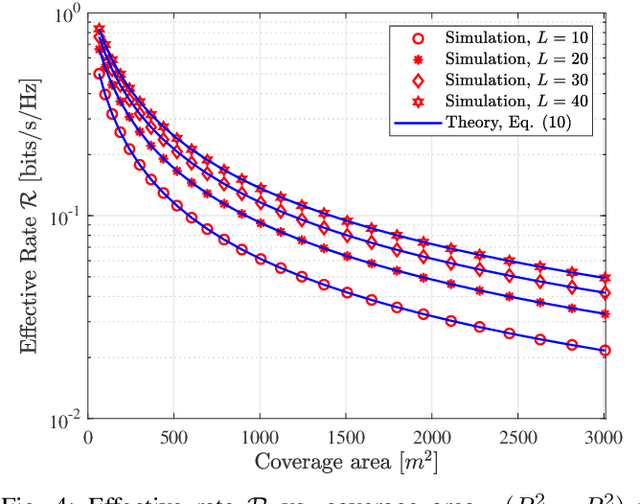
Reconfigurable Intelligent Surfaces (RIS) are planar structures connected to electronic circuitry, which can be employed to steer the electromagnetic signals in a controlled manner. Through this, the signal quality and the effective data rate can be substantially improved. While the benefits of RIS-assisted wireless communications have been investigated for various scenarios, some aspects of the network design, such as coverage, optimal placement of RIS, etc., often require complex optimization and numerical simulations, since the achievable effective rate is difficult to predict. This problem becomes even more difficult in the presence of phase estimation errors or location uncertainty, which can lead to substantial performance degradation if neglected. Considering randomly distributed receivers within a ring-shaped RIS-assisted wireless network, this paper mainly investigates the effective rate by taking into account the above-mentioned impairments. Furthermore, exact closed-form expressions for the effective rate are derived in terms of Meijer's $G$-function, which (i) reveals that the location and phase estimation uncertainty should be well considered in the deployment of RIS in wireless networks; and (ii) facilitates future network design and performance prediction.