 Add to Chrome
 Add to Firefox
 Add to Edge
ICT-NLP at SemEval-2026 Task 3: Less Is More -- Multilingual Encoder with Joint Training and Adaptive Ensemble for Dimensional Aspect Sentiment Regression
May 11, 2026
This paper describes our system to SemEval-2026 Task 3 Track A Subtask 1 on Dimensional Aspect Sentiment Regression (DimASR). We propose a lightweight and resource-efficient system built entirely on multilingual pre-trained encoders, without relying on LLMs or external corpora. We adopt joint multilingual and multi-domain training to facilitate cross-lingual transfer and alleviate data sparsity, introduce a bounded regression transformation that improves training stability while constraining predictions within the valid range, and employ an adaptive ensemble strategy via subset search to reduce prediction variance. Experimental results demonstrate that our system achieves strong and consistent performance, ranking 1st on zho-res, 2nd on zho-lap, and 3rd on jpn-hot, with all remaining datasets placed within the top half of participating teams.

Privacy Attack in Federated Learning is Not Easy: An Experimental Study
Sep 28, 2024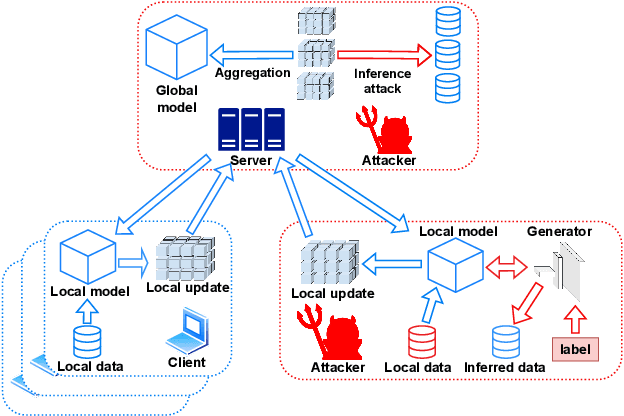

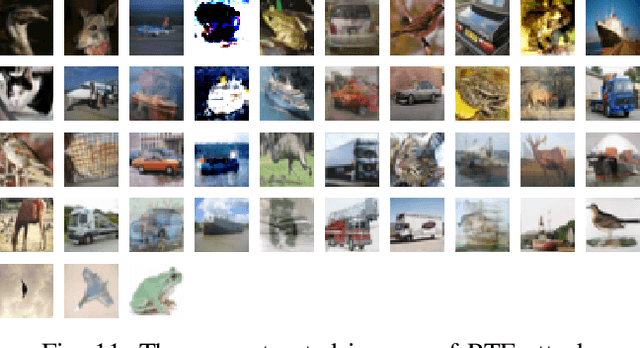
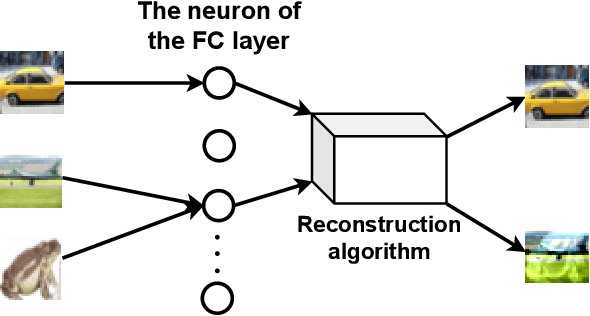
Federated learning (FL) is an emerging distributed machine learning paradigm proposed for privacy preservation. Unlike traditional centralized learning approaches, FL enables multiple users to collaboratively train a shared global model without disclosing their own data, thereby significantly reducing the potential risk of privacy leakage. However, recent studies have indicated that FL cannot entirely guarantee privacy protection, and attackers may still be able to extract users' private data through the communicated model gradients. Although numerous privacy attack FL algorithms have been developed, most are designed to reconstruct private data from a single step of calculated gradients. It remains uncertain whether these methods are effective in realistic federated environments or if they have other limitations. In this paper, we aim to help researchers better understand and evaluate the effectiveness of privacy attacks on FL. We analyze and discuss recent research papers on this topic and conduct experiments in a real FL environment to compare the performance of various attack methods. Our experimental results reveal that none of the existing state-of-the-art privacy attack algorithms can effectively breach private client data in realistic FL settings, even in the absence of defense strategies. This suggests that privacy attacks in FL are more challenging than initially anticipated.