 Add to Chrome
 Add to Firefox
 Add to Edge
Evolving Interdependent Operators with Large Language Models for Multi-Objective Combinatorial Optimization
Jan 25, 2026
Neighborhood search operators are critical to the performance of Multi-Objective Evolutionary Algorithms (MOEAs) and rely heavily on expert design. Although recent LLM-based Automated Heuristic Design (AHD) methods have made notable progress, they primarily optimize individual heuristics or components independently, lacking explicit exploration and exploitation of dynamic coupling relationships between multiple operators. In this paper, multi-operator optimization in MOEAs is formulated as a Markov decision process, enabling the improvement of interdependent operators through sequential decision-making. To address this, we propose the Evolution of Operator Combination (E2OC) framework for MOEAs, which achieves the co-evolution of design strategies and executable codes. E2OC employs Monte Carlo Tree Search to progressively search combinations of operator design strategies and adopts an operator rotation mechanism to identify effective operator configurations while supporting the integration of mainstream AHD methods as the underlying designer. Experimental results across AHD tasks with varying objectives and problem scales show that E2OC consistently outperforms state-of-the-art AHD and other multi-heuristic co-design frameworks, demonstrating strong generalization and sustained optimization capability.

Scheduling Distributed Flexible Assembly Lines using Safe Reinforcement Learning with Soft Shielding
Nov 21, 2023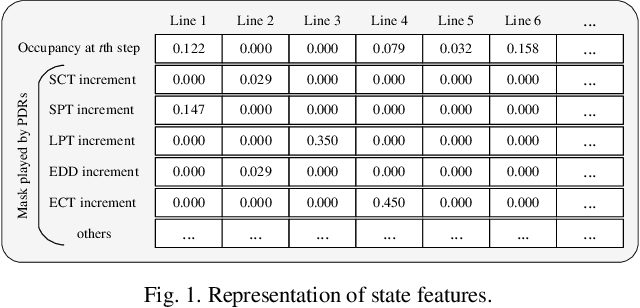
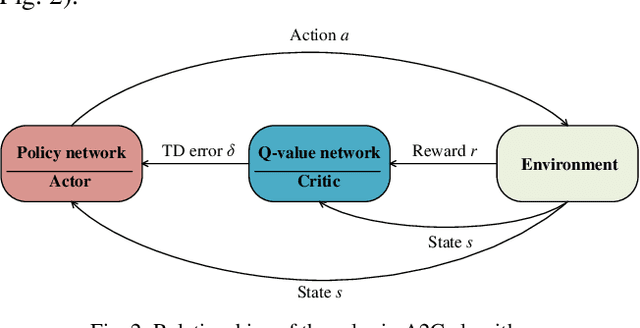
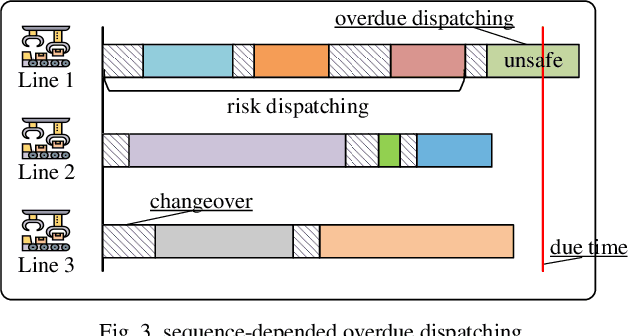
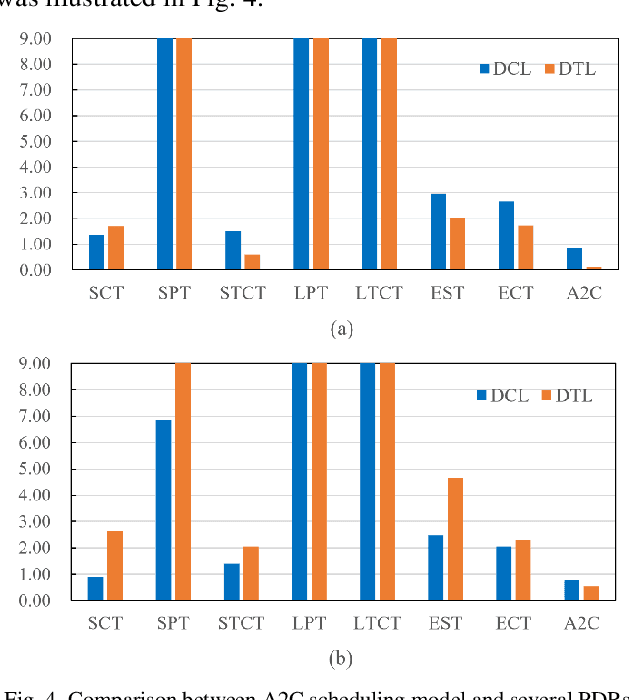
Highly automated assembly lines enable significant productivity gains in the manufacturing industry, particularly in mass production condition. Nonetheless, challenges persist in job scheduling for make-to-job and mass customization, necessitating further investigation to improve efficiency, reduce tardiness, promote safety and reliability. In this contribution, an advantage actor-critic based reinforcement learning method is proposed to address scheduling problems of distributed flexible assembly lines in a real-time manner. To enhance the performance, a more condensed environment representation approach is proposed, which is designed to work with the masks made by priority dispatching rules to generate fixed and advantageous action space. Moreover, a Monte-Carlo tree search based soft shielding component is developed to help address long-sequence dependent unsafe behaviors and monitor the risk of overdue scheduling. Finally, the proposed algorithm and its soft shielding component are validated in performance evaluation.