 Add to Chrome
 Add to Firefox
 Add to Edge
Chatting about Upper-Body Expressive Human Pose and Shape Estimation
Apr 20, 2026
Expressive Human Pose and Shape Estimation (EHPS) plays a crucial role in various AR/VR applications and has witnessed significant progress in recent years. However, current state-of-the-art methods still struggle with accurate parameter estimation for facial and hand regions and exhibit limited generalization to wild images. To address these challenges, we present CoEvoer, a novel one-stage synergistic cross-dependency transformer framework tailored for upper-body EHPS. CoEvoer enables explicit feature-level interaction across different body parts, allowing for mutual enhancement through contextual information exchange. Specifically, larger and more easily estimated regions such as the torso provide global semantics and positional priors to guide the estimation of finer, more complex regions like the face and hands. Conversely, the localized details captured in facial and hand regions help refine and calibrate adjacent body parts. To the best of our knowledge, CoEvoer is the first framework designed specifically for upper-body EHPS, with the goal of capturing the strong coupling and semantic dependencies among the face, hands, and torso through joint parameter regression. Extensive experiments demonstrate that CoEvoer achieves state-of-the-art performance on upper-body benchmarks and exhibits strong generalization capability even on unseen wild images.

Real-time simulation enabled navigation control of magnetic soft continuum robots in confined lumens
Mar 11, 2025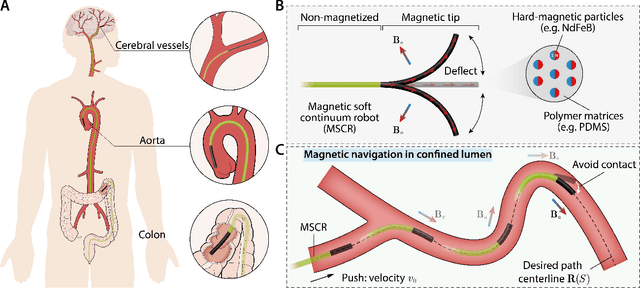
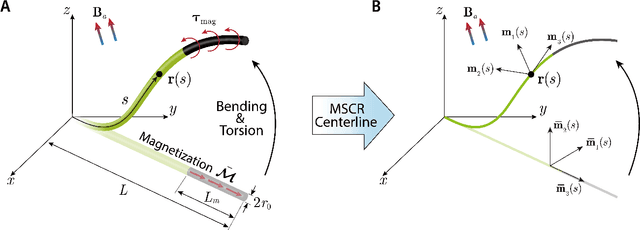
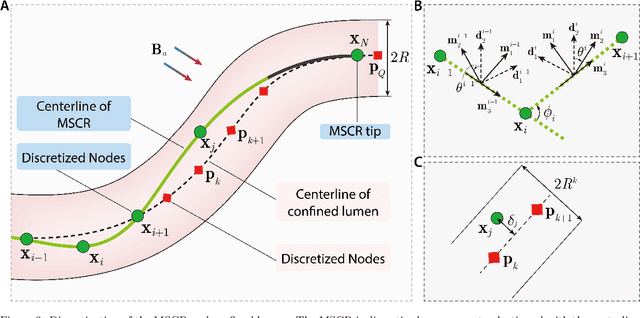
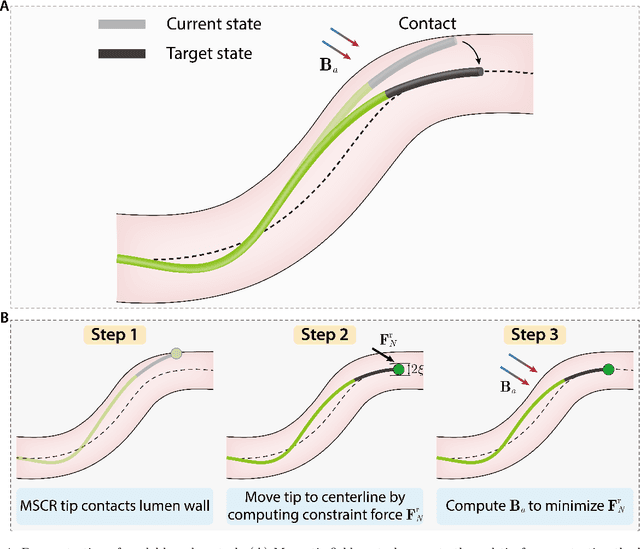
Magnetic soft continuum robots (MSCRs) have emerged as a promising technology for minimally invasive interventions, offering enhanced dexterity and remote-controlled navigation in confined lumens. Unlike conventional guidewires with pre-shaped tips, MSCRs feature a magnetic tip that actively bends under applied magnetic fields. Despite extensive studies in modeling and simulation, achieving real-time navigation control of MSCRs in confined lumens remains a significant challenge. The primary reasons are due to robot-lumen contact interactions and computational limitations in modeling MSCR nonlinear behavior under magnetic actuation. Existing approaches, such as Finite Element Method (FEM) simulations and energy-minimization techniques, suffer from high computational costs and oversimplified contact interactions, making them impractical for real-world applications. In this work, we develop a real-time simulation and navigation control framework that integrates hard-magnetic elastic rod theory, formulated within the Discrete Differential Geometry (DDG) framework, with an order-reduced contact handling strategy. Our approach captures large deformations and complex interactions while maintaining computational efficiency. Next, the navigation control problem is formulated as an inverse design task, where optimal magnetic fields are computed in real time by minimizing the constrained forces and enhancing navigation accuracy. We validate the proposed framework through comprehensive numerical simulations and experimental studies, demonstrating its robustness, efficiency, and accuracy. The results show that our method significantly reduces computational costs while maintaining high-fidelity modeling, making it feasible for real-time deployment in clinical settings.