 Add to Chrome
 Add to Firefox
 Add to Edge
Semantic-based Internet of Embodied Intelligence: Visions and Frontiers
Jul 01, 2026
Recent advances in generative artificial intelligence (AI) and embodied intelligence (EI) enable autonomous agents to interact with the physical world. However, scaling these systems into networks of multiple agents, namely the Internet of EI (IoEI), faces critical bottlenecks. These include the overhead of massive multimodal data transmission and the decoupling of logical reasoning from physical constraints. To address these challenges, we envision the Semantic-based IoEI (SIoEI), which leverages semantic information as a unified metric throughout the agent lifecycle. We systematically define four key dimensions of EI: perception, intelligence, control, and communication. We further elaborate how semantic empowerment revolutionizes environmental perception, cognition and task planning, action generation and robust control, and communication and networking. We also present a case study to verify that, the semantic-empowered end-to-end process significantly improves channel robustness and reduces end-to-end latency for EI. Finally, we outline critical open research directions for the SIoEI paradigm.

Order assignment and picking station scheduling for multiple stations in KIVA warehouses
Aug 20, 2021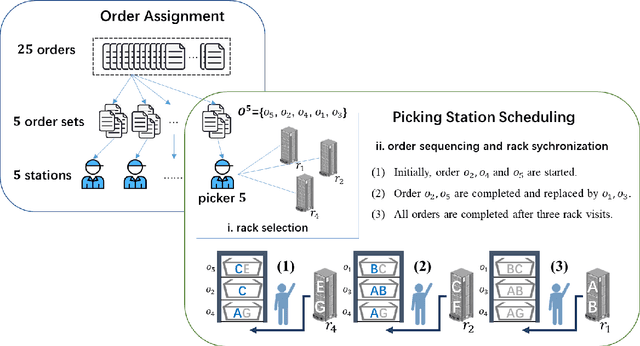
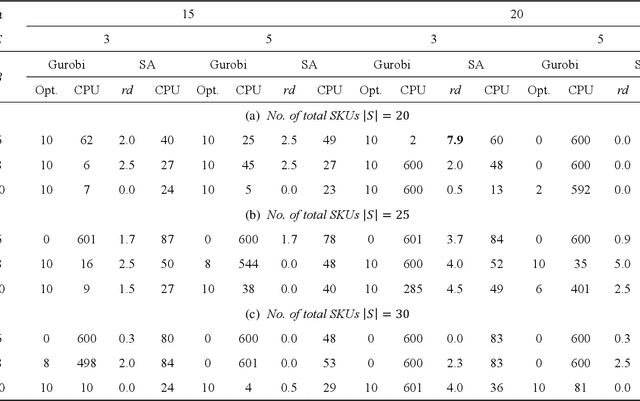
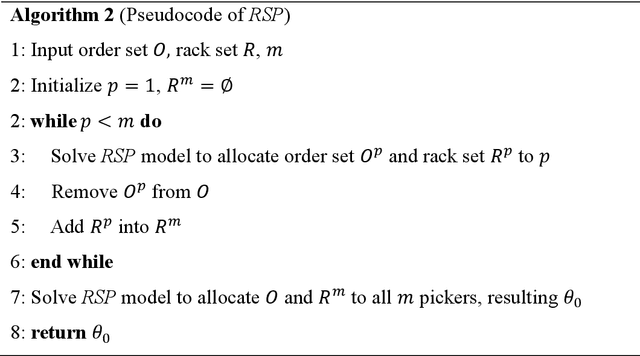
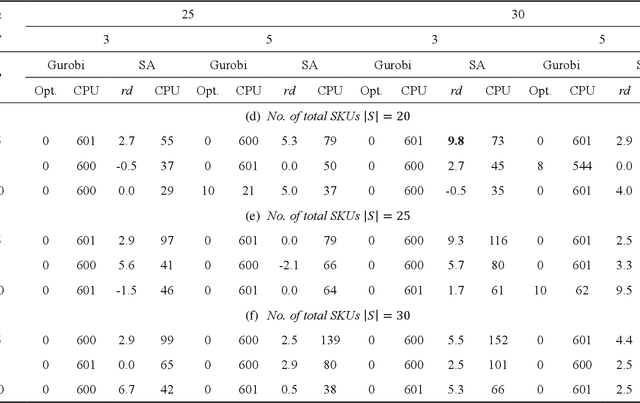
The picking efficiency of warehouses assisted by KIVA robots benefit from exploiting synergy effect between order assignment and picking station scheduling. We treat an integrated optimization which contains both allocating orders and racks to multiple stations and concurrently sequencing their interlinked processing flows at each individual one. The various decisions included in our problem, which are closely associated and must be solved in real time, are often tackled separately for ease of treatment in past. We, however, develop a comprehensive mathematical model under the consideration of the minimum total rack visits. The problem can be proven NP-hard. Consequently, an efficient algorithm based on simulated annealing and dynamic programming is developed. The experimental results show that the proposed approach has more advantage in the light of solution quality as compared with actual rule-based policies. Moreover, the results reveal that ignoring order assignment policy leads to considerable optimality gaps under realistically sized settings.