 Add to Chrome
 Add to Firefox
 Add to Edge
Multimodal Machine Learning for Early Prediction of Metastasis in a Swedish Multi-Cancer Cohort
Mar 31, 2026
Multimodal Machine Learning offers a holistic view of a patient's status, integrating structured and unstructured data from electronic health records (EHR). We propose a framework to predict metastasis risk one month prior to diagnosis, using six months of clinical history from EHR data. Data from four cancer cohorts collected at Karolinska University Hospital (Stockholm, Sweden) were analyzed: breast (n = 743), colon (n = 387), lung (n = 870), and prostate (n = 1890). The dataset included demographics, comorbidities, laboratory results, medications, and clinical text. We compared traditional and deep learning classifiers across single modalities and multimodal combinations, using various fusion strategies and a Transparent Reporting of a multivariable prediction model for Individual Prognosis Or Diagnosis (TRIPOD) 2a design, with an 80-20 development-validation split to ensure a rigorous, repeatable evaluation. Performance was evaluated using AUROC, AUPRC, F1 score, sensitivity, and specificity. We then employed a multimodal adaptation of SHAP to analyze the classifiers' reasoning. Intermediate fusion achieved the highest F1 scores on breast (0.845), colon (0.786), and prostate cancer (0.845), demonstrating strong predictive performance. For lung cancer, the intermediate fusion achieved an F1 score of 0.819, while the text-only model achieved the highest, with an F1 score of 0.829. Deep learning classifiers consistently outperformed traditional models. Colon cancer, the smallest cohort, had the lowest performance, highlighting the importance of sufficient training data. SHAP analysis showed that the relative importance of modalities varied across cancer types. Fusion strategies offer distinct strengths and weaknesses. Intermediate fusion consistently delivered the best results, but strategy choices should align with data characteristics and organizational needs.

CHiL(L)Grader: Calibrated Human-in-the-Loop Short-Answer Grading
Mar 12, 2026Scaling educational assessment with large language models requires not just accuracy, but the ability to recognize when predictions are trustworthy. Instruction-tuned models tend to be overconfident, and their reliability deteriorates as curricula evolve, making fully autonomous deployment unsafe in high-stakes settings. We introduce CHiL(L)Grader, the first automated grading framework that incorporates calibrated confidence estimation into a human-in-the-loop workflow. Using post-hoc temperature scaling, confidence-based selective prediction, and continual learning, CHiL(L)Grader automates only high-confidence predictions while routing uncertain cases to human graders, and adapts to evolving rubrics and unseen questions. Across three short-answer grading datasets, CHiL(L)Grader automatically scores 35-65% of responses at expert-level quality (QWK >= 0.80). A QWK gap of 0.347 between accepted and rejected predictions confirms the effectiveness of the confidence-based routing. Each correction cycle strengthens the model's grading capability as it learns from teacher feedback. These results show that uncertainty quantification is key for reliable AI-assisted grading.
RAG-E: Quantifying Retriever-Generator Alignment and Failure Modes
Jan 29, 2026Retrieval-Augmented Generation (RAG) systems combine dense retrievers and language models to ground LLM outputs in retrieved documents. However, the opacity of how these components interact creates challenges for deployment in high-stakes domains. We present RAG-E, an end-to-end explainability framework that quantifies retriever-generator alignment through mathematically grounded attribution methods. Our approach adapts Integrated Gradients for retriever analysis, introduces PMCSHAP, a Monte Carlo-stabilized Shapley Value approximation, for generator attribution, and introduces the Weighted Attribution-Relevance Gap (WARG) metric to measure how well a generator's document usage aligns with a retriever's ranking. Empirical analysis on TREC CAsT and FoodSafeSum reveals critical misalignments: for 47.4% to 66.7% of queries, generators ignore the retriever's top-ranked documents, while 48.1% to 65.9% rely on documents ranked as less relevant. These failure modes demonstrate that RAG output quality depends not solely on individual component performance but on their interplay, which can be audited via RAG-E.
SemEval-2025 Task 9: The Food Hazard Detection Challenge
Mar 25, 2025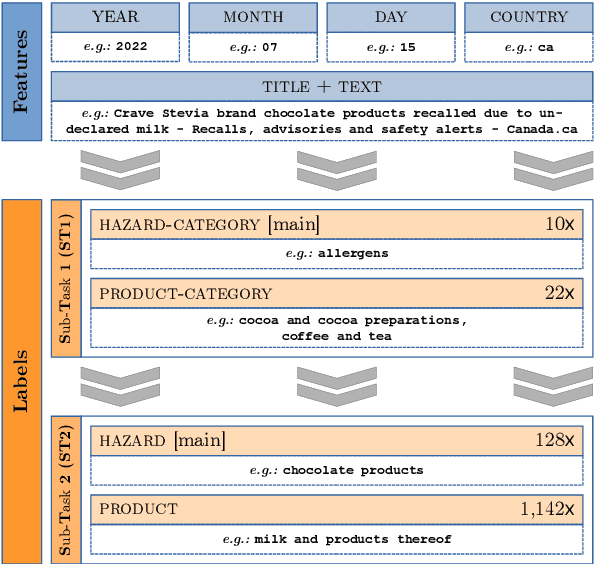
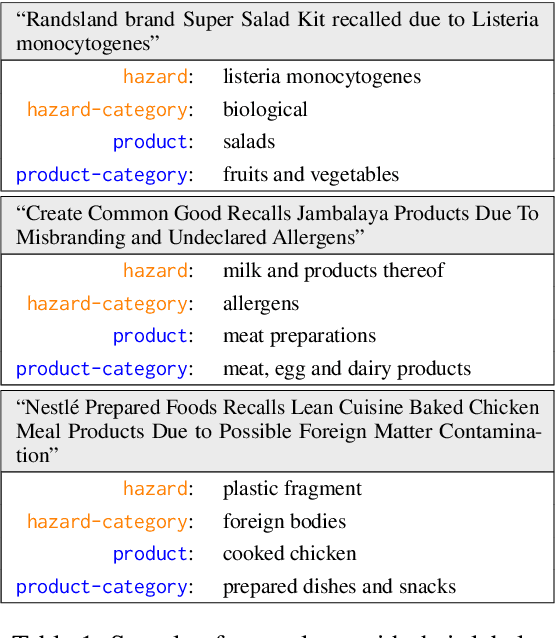
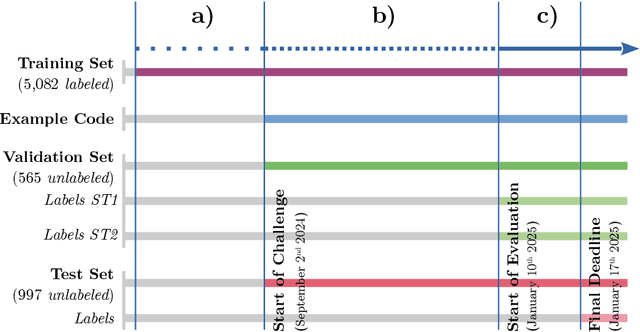
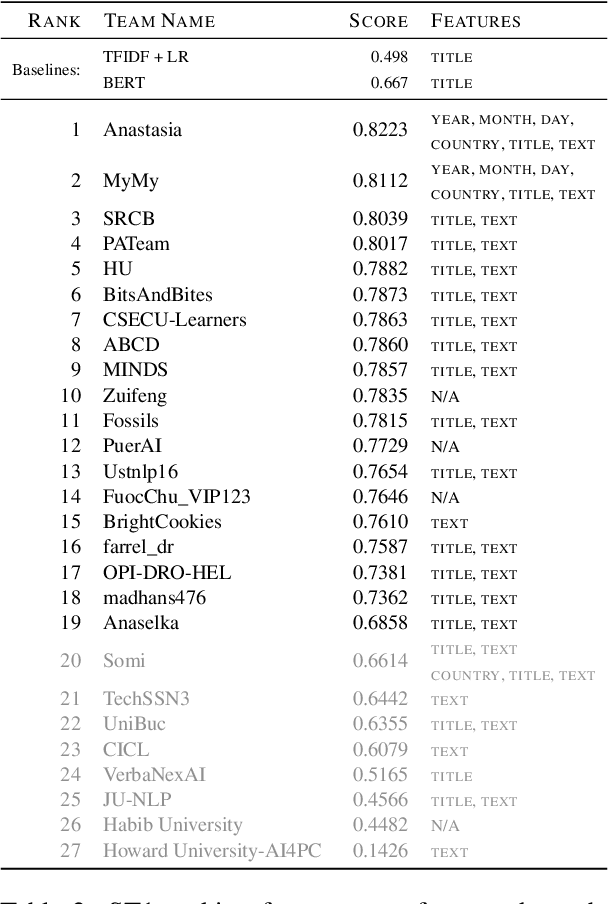
In this challenge, we explored text-based food hazard prediction with long tail distributed classes. The task was divided into two subtasks: (1) predicting whether a web text implies one of ten food-hazard categories and identifying the associated food category, and (2) providing a more fine-grained classification by assigning a specific label to both the hazard and the product. Our findings highlight that large language model-generated synthetic data can be highly effective for oversampling long-tail distributions. Furthermore, we find that fine-tuned encoder-only, encoder-decoder, and decoder-only systems achieve comparable maximum performance across both subtasks. During this challenge, we gradually released (under CC BY-NC-SA 4.0) a novel set of 6,644 manually labeled food-incident reports.
Evaluating the Reliability of Self-Explanations in Large Language Models
Jul 19, 2024This paper investigates the reliability of explanations generated by large language models (LLMs) when prompted to explain their previous output. We evaluate two kinds of such self-explanations - extractive and counterfactual - using three state-of-the-art LLMs (2B to 8B parameters) on two different classification tasks (objective and subjective). Our findings reveal, that, while these self-explanations can correlate with human judgement, they do not fully and accurately follow the model's decision process, indicating a gap between perceived and actual model reasoning. We show that this gap can be bridged because prompting LLMs for counterfactual explanations can produce faithful, informative, and easy-to-verify results. These counterfactuals offer a promising alternative to traditional explainability methods (e.g. SHAP, LIME), provided that prompts are tailored to specific tasks and checked for validity.
CICLe: Conformal In-Context Learning for Largescale Multi-Class Food Risk Classification
Mar 18, 2024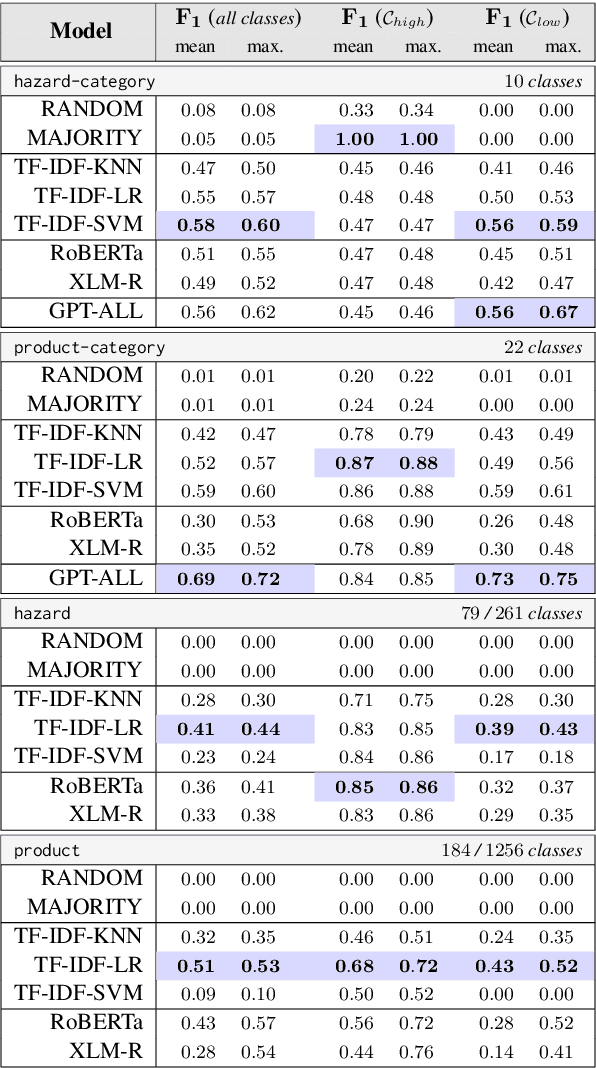
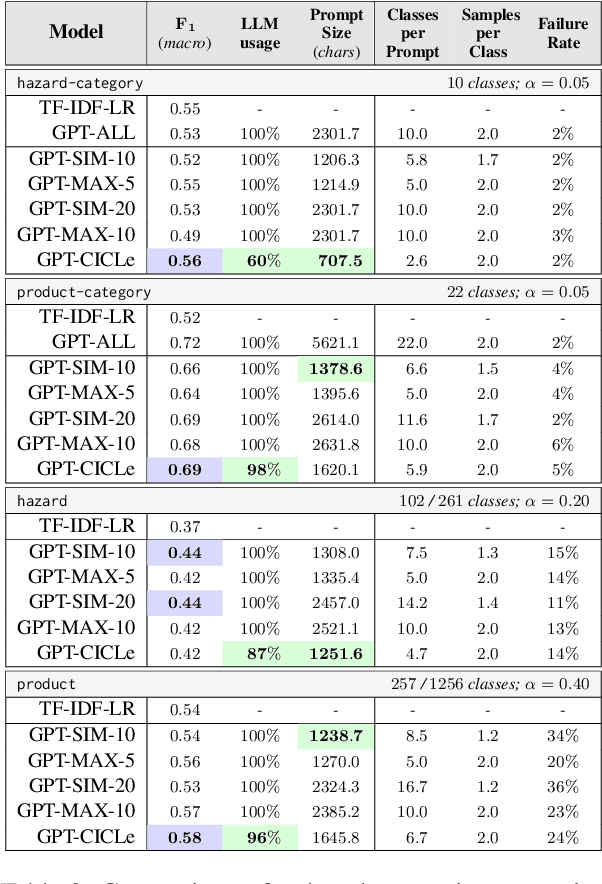
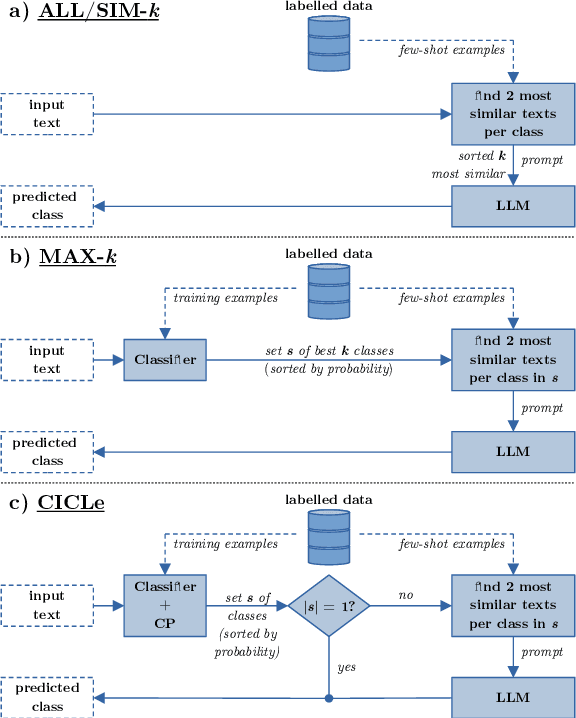
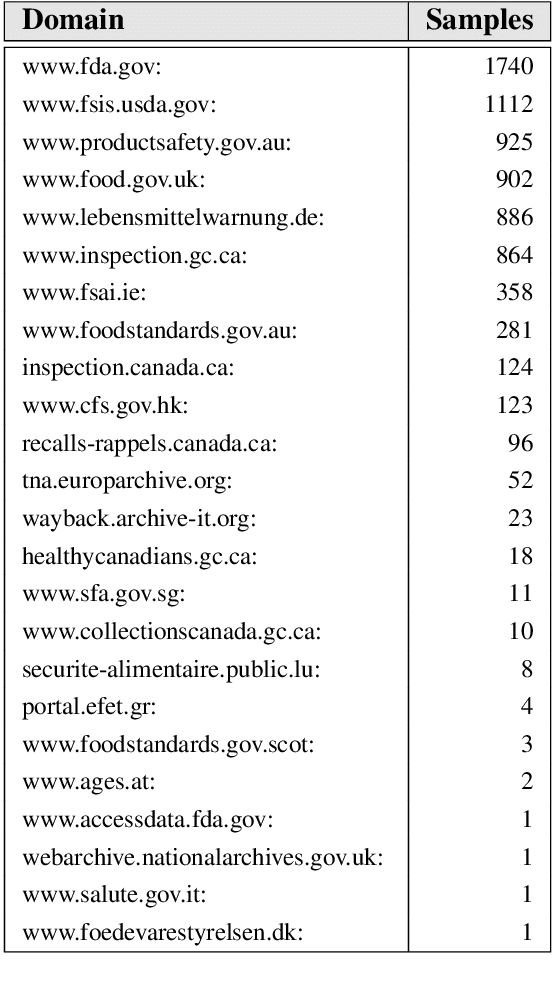
Contaminated or adulterated food poses a substantial risk to human health. Given sets of labeled web texts for training, Machine Learning and Natural Language Processing can be applied to automatically detect such risks. We publish a dataset of 7,546 short texts describing public food recall announcements. Each text is manually labeled, on two granularity levels (coarse and fine), for food products and hazards that the recall corresponds to. We describe the dataset and benchmark naive, traditional, and Transformer models. Based on our analysis, Logistic Regression based on a tf-idf representation outperforms RoBERTa and XLM-R on classes with low support. Finally, we discuss different prompting strategies and present an LLM-in-the-loop framework, based on Conformal Prediction, which boosts the performance of the base classifier while reducing energy consumption compared to normal prompting.
Early prediction of the risk of ICU mortality with Deep Federated Learning
Dec 05, 2022Intensive Care Units usually carry patients with a serious risk of mortality. Recent research has shown the ability of Machine Learning to indicate the patients' mortality risk and point physicians toward individuals with a heightened need for care. Nevertheless, healthcare data is often subject to privacy regulations and can therefore not be easily shared in order to build Centralized Machine Learning models that use the combined data of multiple hospitals. Federated Learning is a Machine Learning framework designed for data privacy that can be used to circumvent this problem. In this study, we evaluate the ability of deep Federated Learning to predict the risk of Intensive Care Unit mortality at an early stage. We compare the predictive performance of Federated, Centralized, and Local Machine Learning in terms of AUPRC, F1-score, and AUROC. Our results show that Federated Learning performs equally well as the centralized approach and is substantially better than the local approach, thus providing a viable solution for early Intensive Care Unit mortality prediction. In addition, we show that the prediction performance is higher when the patient history window is closer to discharge or death. Finally, we show that using the F1-score as an early stopping metric can stabilize and increase the performance of our approach for the task at hand.