 Add to Chrome
 Add to Firefox
 Add to Edge
Three-way conflict analysis based on alliance and conflict functions
Dec 24, 2025
Trisecting agents, issues, and agent pairs are essential topics of three-way conflict analysis. They have been commonly studied based on either a rating or an auxiliary function. A rating function defines the positive, negative, or neutral ratings of agents on issues. An auxiliary function defines the alliance, conflict, and neutrality relations between agents. These functions measure two opposite aspects in a single function, leading to challenges in interpreting their aggregations over a group of issues or agents. For example, when studying agent relations regarding a set of issues, a standard aggregation takes the average of an auxiliary function concerning single issues. Therefore, a pair of alliance +1 and conflict -1 relations will produce the same result as a pair of neutrality 0 relations, although the attitudes represented by the two pairs are very different. To clarify semantics, we separate the two opposite aspects in an auxiliary function into a pair of alliance and conflict functions. Accordingly, we trisect the agents, issues, and agent pairs and investigate their applications in solving a few crucial questions in conflict analysis. Particularly, we explore the concepts of alliance sets and strategies. A real-world application is given to illustrate the proposed models.

Three-way decision with incomplete information based on similarity and satisfiability
Dec 24, 2025
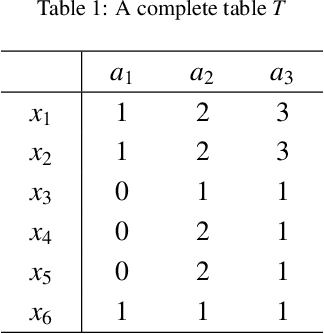
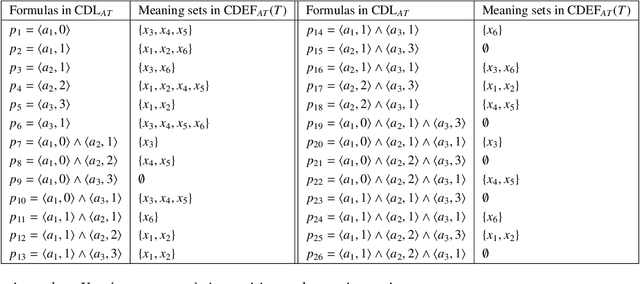

Three-way decision is widely applied with rough set theory to learn classification or decision rules. The approaches dealing with complete information are well established in the literature, including the two complementary computational and conceptual formulations. The computational formulation uses equivalence relations, and the conceptual formulation uses satisfiability of logic formulas. In this paper, based on a briefly review of these two formulations, we generalize both formulations into three-way decision with incomplete information that is more practical in real-world applications. For the computational formulation, we propose a new measure of similarity degree of objects as a generalization of equivalence relations. Based on it, we discuss two approaches to three-way decision using alpha-similarity classes and approximability of objects, respectively. For the conceptual formulation, we propose a measure of satisfiability degree of formulas as a quantitative generalization of satisfiability with complete information. Based on it, we study two approaches to three-way decision using alpha-meaning sets of formulas and confidence of formulas, respectively. While using similarity classes is a common method of analyzing incomplete information in the literature, the proposed concept of approximability and the two approaches in conceptual formulation point out new promising directions.
Attribute reduction and rule acquisition of formal decision context based on two new kinds of decision rules
Jul 04, 2021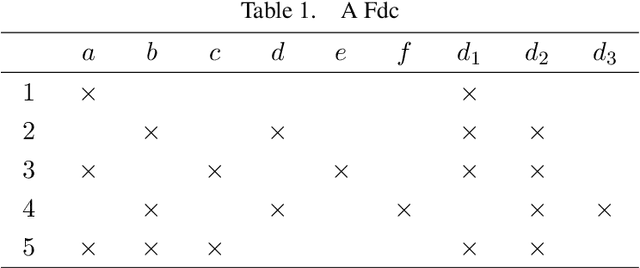
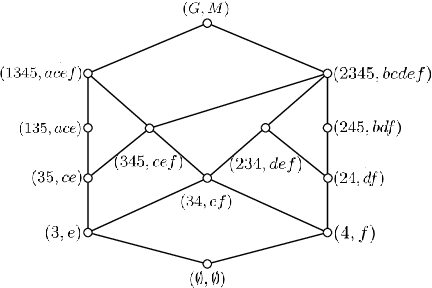
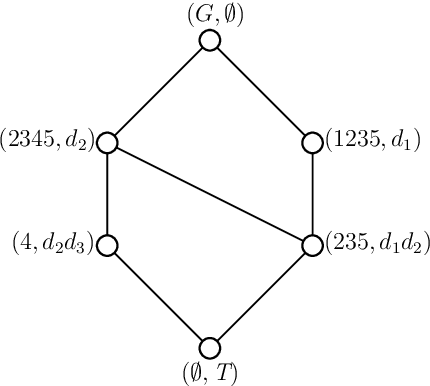
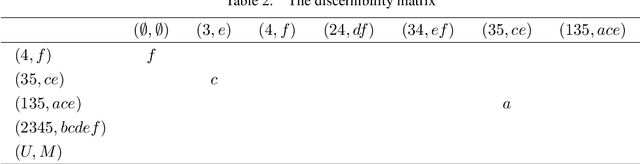
This paper mainly studies the rule acquisition and attribute reduction for formal decision context based on two new kinds of decision rules, namely I-decision rules and II-decision rules. The premises of these rules are object-oriented concepts, and the conclusions are formal concept and property-oriented concept respectively. The rule acquisition algorithms for I-decision rules and II-decision rules are presented. Some comparative analysis of these algorithms with the existing algorithms are examined which shows that the algorithms presented in this study behave well. The attribute reduction approaches to preserve I-decision rules and II-decision rules are presented by using discernibility matrix.