 Add to Chrome
 Add to Firefox
 Add to Edge
Adaptive and Explicit safe: Triggering Latent Safety Awareness in Large Reasoning Models
Jun 15, 2026
While Large Reasoning Models (LRMs) excel at complex tasks, they remain highly vulnerable to sophisticated jailbreaks and direct harmful queries. To address this vulnerability, prior works depend heavily on external manual data annotation for safety alignment. However, we observe that LRMs can inherently identify safety risks when being re-presented with original queries alongside their own reasoning trajectories -- a capability we term Latent Safety Awareness. To leverage this safety awareness, we first employ Supervised Fine-Tuning (SFT) to explicitly induce safe tags to trigger safety analysis and guidance following the initial reasoning content for unsafe queries, while preserving standard responses for general queries to ensure adaptive triggering. Subsequently, we apply Direct Preference Optimization (DPO) to further enhance the correctness and stability of the safety analysis and guidance. Notably, responses required for both training stages are entirely generated by models being optimized. With (Safe Trigger) SFT and DPO, experimental results demonstrate significant safety enhancement. For example, the Attack Success Rate (ASR) of DeepSeek-R1-Distill-Llama-8B, on average, drops 24.65% and 36.72% on harmful and jailbreak benchmarks, respectively. Finally, our Safe Trigger method exerts almost no negative impact on general performance or user experience.

Compressive Sensing Based Sparse MIMO Array Optimization for Wideband Near-Field Imaging
Aug 09, 2022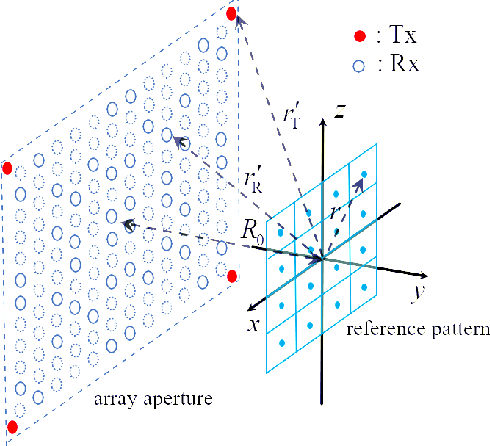
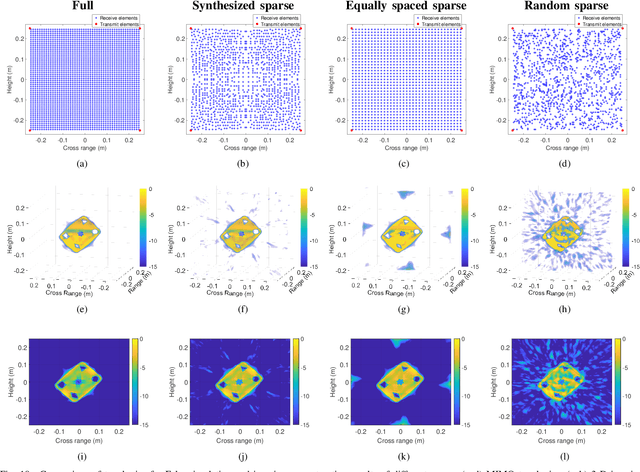
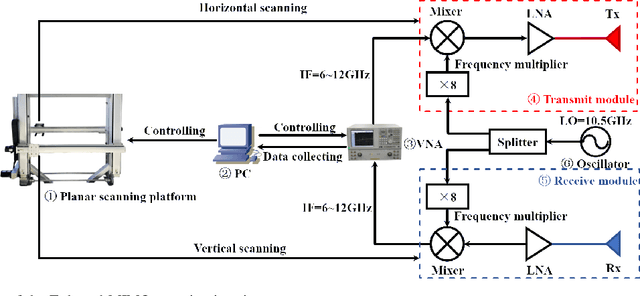
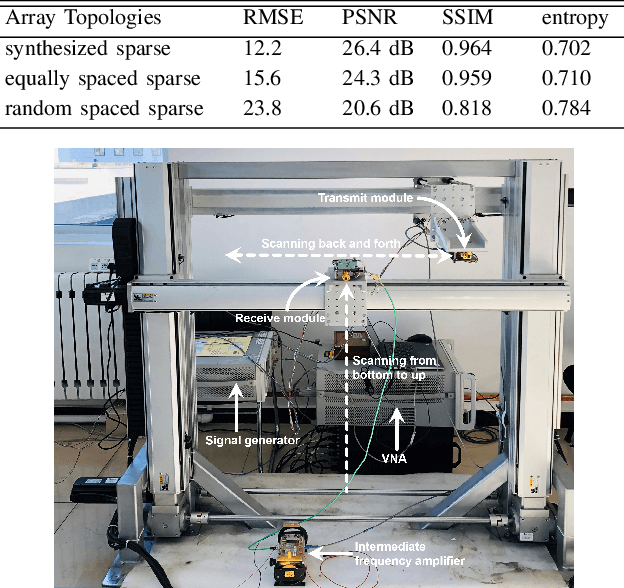
In the area of near-field millimeter-wave imaging, the generalized sparse array synthesis (SAS) method is in great demand. The traditional methods usually employ the greedy algorithms, which may have the convergence problem. This paper proposes a convex optimization model for the multiple-input multiple-output (MIMO) array design based on the compressive sensing (CS) approach. We generate a block shaped reference pattern, to be used as an optimizing target. The pattern occupies the entire imaging area of interest in order to involve the effect of each pixel into the optimization model. In MIMO scenarios, we can fix the transmit subarray and synthesize the receive subarray, and vice versa, or doing the synthesis sequentially. The problems associated with focusing, sidelobes suppression, and grating lobes suppression of the synthesized array are examined in details. Numerical and experimental results demonstrate that the synthesized sparse array can offer better image qualities than the sparse arrays with equally spaced or randomly spaced antennas with the same number of antenna elements.