 Add to Chrome
 Add to Firefox
 Add to Edge
Diffolio: A Diffusion Model for Multivariate Probabilistic Financial Time-Series Forecasting and Portfolio Construction
Nov 10, 2025
Probabilistic forecasting is crucial in multivariate financial time-series for constructing efficient portfolios that account for complex cross-sectional dependencies. In this paper, we propose Diffolio, a diffusion model designed for multivariate financial time-series forecasting and portfolio construction. Diffolio employs a denoising network with a hierarchical attention architecture, comprising both asset-level and market-level layers. Furthermore, to better reflect cross-sectional correlations, we introduce a correlation-guided regularizer informed by a stable estimate of the target correlation matrix. This structure effectively extracts salient features not only from historical returns but also from asset-specific and systematic covariates, significantly enhancing the performance of forecasts and portfolios. Experimental results on the daily excess returns of 12 industry portfolios show that Diffolio outperforms various probabilistic forecasting baselines in multivariate forecasting accuracy and portfolio performance. Moreover, in portfolio experiments, portfolios constructed from Diffolio's forecasts show consistently robust performance, thereby outperforming those from benchmarks by achieving higher Sharpe ratios for the mean-variance tangency portfolio and higher certainty equivalents for the growth-optimal portfolio. These results demonstrate the superiority of our proposed Diffolio in terms of not only statistical accuracy but also economic significance.

LeStrat-Net: Lebesgue style stratification for Monte Carlo simulations powered by machine learning
Dec 18, 2024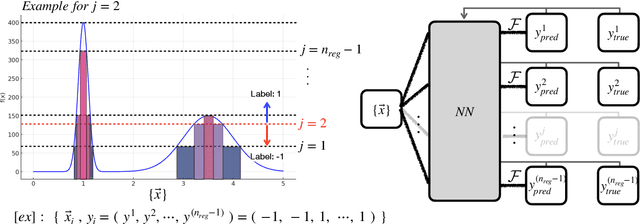
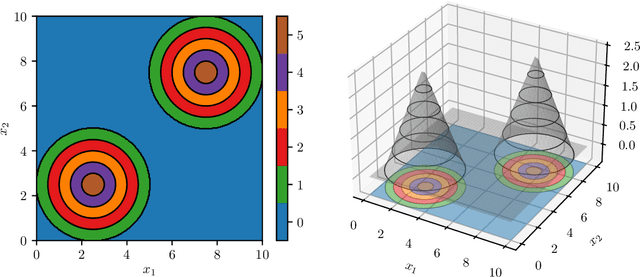
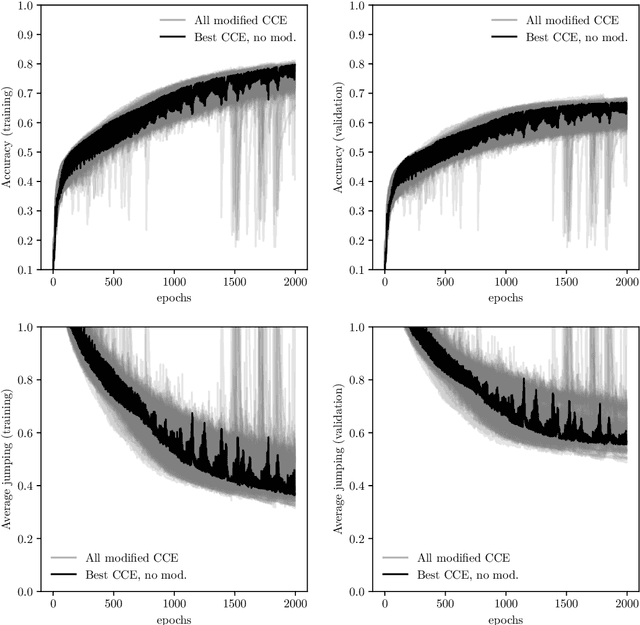
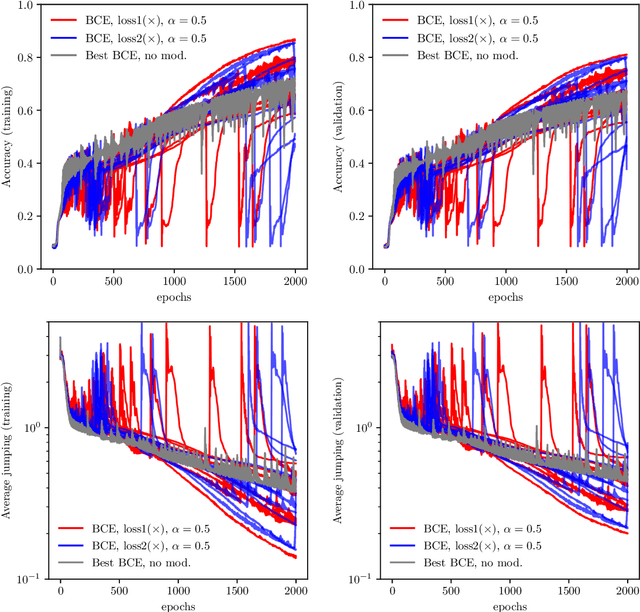
We develop a machine learning algorithm to turn around stratification in Monte Carlo sampling. We use a different way to divide the domain space of the integrand, based on the height of the function being sampled, similar to what is done in Lebesgue integration. This means that isocontours of the function define regions that can have any shape depending on the behavior of the function. We take advantage of the capacity of neural networks to learn complicated functions in order to predict these complicated divisions and preclassify large samples of the domain space. From this preclassification we can select the required number of points to perform a number of tasks such as variance reduction, integration and even event selection. The network ultimately defines the regions with what it learned and is also used to calculate the multi-dimensional volume of each region.